
Inbox Zero Day is an annual reminder, held on 6 October, to get email back under control. It encourages people and teams to clear the backlog, answer what is outstanding and build habits that stop the pile returning.
Merlin Mann coined Inbox Zero in a 2006 series on his blog 43 Folders. He saw email overload draining people’s time and attention, largely because they had no system for turning messages into actions.
The awareness day came later. Holiday calendars credit the email app Superhuman with launching Inbox Zero Day in October 2020.
Mann’s method was never about a message count. He asked three questions of every email, including what action it requires. For a customer-facing team, that action is usually a reply.
For B2B teams, the target on Inbox Zero Day should be zero customers waiting on a reply, not zero messages in a folder. Archiving 400 emails looks tidy, but it does nothing for the client whose question has sat unanswered since Friday.
That is the problem timetoreply was built to solve. We help teams reply quickly and consistently, which is the version of inbox zero customers actually notice.
timetoreply is email analytics software that tracks email response times for every person, team and shared mailbox in Outlook and Google Workspace. Teams set SLA response time targets and get countdown timers and alerts in the inbox, while managers see everything still waiting on one dashboard.
The results are measurable:
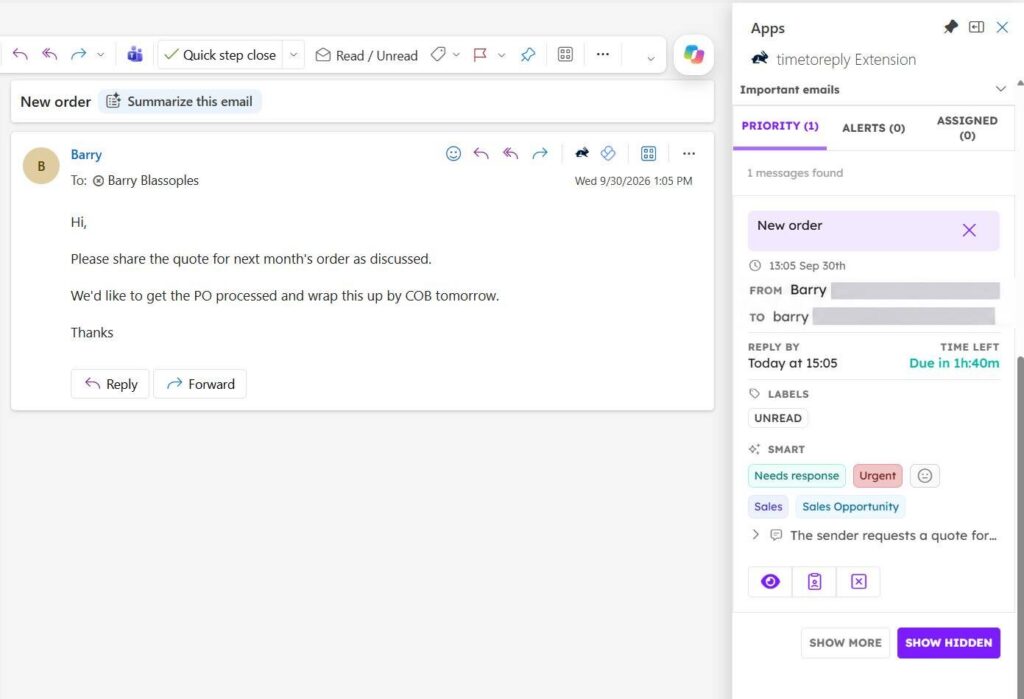
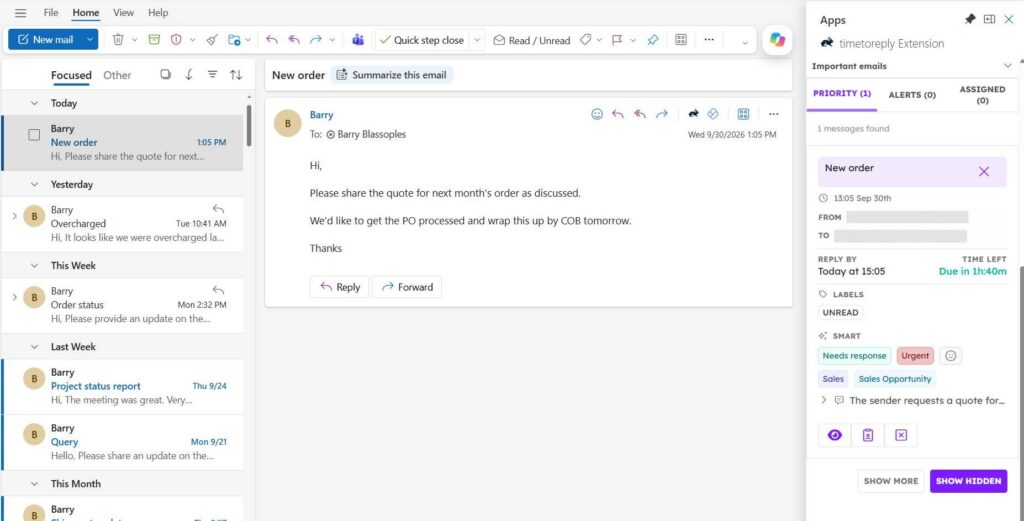
Slow replies are one of the earliest signs that a customer relationship is weakening. Long waits, repeated follow-ups and a shift in tone tend to appear in the inbox well before a customer says they are leaving.
A customer relationship health score brings signals like these together to show which accounts are likely to renew or churn. timetoreply’s Smart Data layer adds sentiment, urgency and intent to response-time data, so managers can spot at-risk accounts early. Ontellus, a timetoreply customer, saw the link first-hand: its client health checks named responsiveness as a primary factor in good service.
The payoff is well documented. Research by Bain & Company’s Frederick Reichheld, cited in Harvard Business Review, found that raising customer retention by 5% can increase profits by 25% to 95%.
1. Find what is still waiting. List every unanswered customer email, oldest first, across personal and shared inboxes.
2. Reply before you archive. Clear customer threads first, then tidy the rest.
3. Set a target that outlasts 6 October. Agree a reply-time SLA for each mailbox and review it weekly.
timetoreply backfills 14 days of data when you connect, so you can see your real starting point. Book a demo to try it on your own inboxes.
When is Inbox Zero Day in 2026?
Inbox Zero Day falls on 6 October every year. In 2026 it is on Tuesday, 6 October, so most teams can mark it during a normal working day.
Who invented Inbox Zero?
Merlin Mann coined Inbox Zero in a 2006 blog series on 43 Folders. Holiday calendars credit the email app Superhuman with launching the separate awareness day in 2020.
How does email response time affect customer retention?
Slow replies frustrate customers and are an early sign that a relationship is weakening. Teams that reply quickly and consistently catch problems sooner and give customers fewer reasons to leave.
Get live inbox alerts and reply quickly to customer emails with timetoreply

Head of Customer Success @ timetoreply
Barry Blassoples is the Head of Customer Success at timetoreply, where he helps customer-facing teams boost revenue and protect brand reputation by providing actionable insights to improve their business email response times. He has over 15 years of leadership experience across customer success, sales, and marketing roles in high-growth tech companies.



Trusted by high-performing inbound sales teams and customer-facing teams globally.
Close more deals and delight more customers with the faster, smarter, deeper email analytics and performance optimization software that works straight from your team’s inbox.