
Let’s face it — customer success analytics now matter more than ever. Today’s customers expect fast responses and personalized experiences tailored to their needs.
Here’s the thing: most businesses don’t lack data. Yet, most focus on tracking sales numbers, even though improving customer success matters just as much.
Comprehensive customer success analytics removes guesswork. It enables customer success teams to analyze customer behavior, product usage, and communication patterns.
With clear insights, teams can quickly identify and address engagement patterns, customer satisfaction issues, and rising churn risk.
This payoff is clear: stronger customer relationships, better customer retention, and enhanced customer experiences.
In this guide, we’ll examine how customer success analytics transforms the customer journey and drives growth.
Customer success analytics involves using tools to track data across multiple departments. The goal? To understand customer behavior, boost retention, and increase their satisfaction.
Earlier, customer success analytics focused on getting new customers. Now, it’s about what happens next in the customer journey.
To do this, managers need an effective customer success analytics framework that tracks key customer data. Over time, you see patterns that you can act on.
After generating insights, you can fix problems before customers leave. That’s the real win.
And here’s the good news.
It’s not hard.
Use tools like shared mailbox reporting software, CRM systems, and support platforms. They help with various tasks, such as tracking email performance and seeing all conversations in one place.
Now you get visibility because everything sits on a unified platform. Making decisions becomes easier, issues get resolved faster, and relationships grow stronger.
Also Read:
Customer success analytics only works when it leverages key metrics to measure performance. These metrics show customer behavior, revealing risks and opportunities for revenue growth.
Here are the most important ones you should track
A customer health score combines several indicators into a single metric. It shows the overall health of a company’s relationship with its customers.
Formula:
| Health score = (usage + satisfaction + support + engagement) ÷ total factors |
It covers product usage frequency (usage), support requests and response times (support), customer satisfaction ratings (satisfaction), and overall interaction levels (engagement).
Score drops signal potential problems. Customers may feel confused, or support responses may be slow.
Communication performance tracking tools like timetoreply give a detailed overview of email volumes, reply times, live stats, and smart recommendations for your team.
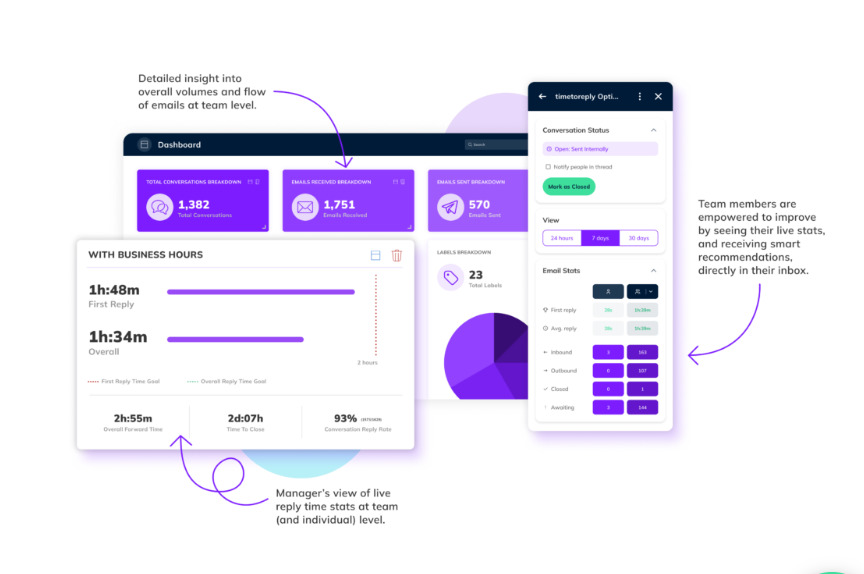
Image via timetoreply
NPS uses survey responses to show you how likely customers are to recommend your brand. It’s based on a rating scale from 1 to 10. It’s one of the most popular ways to measure loyalty.
Formula:
| NPS = % promoters − % detractors |
(Detractors = 0–6, Passive = 7-8, Promoters = scores 9-10)
A high NPS indicates strong customer relationships and growth. Low scores? That’s a warning sign showing that customers aren’t happy with their journey.
For example, if you have 45% Promoters, 36% Passives, 19% Detractors, your score is +26. That’s good because there are many loyal customers.
Customer churn tracks the number of existing customers who stop using your product over time. You want to keep this low. Even small increases can hurt your expansion revenue dreams.
Formula:
| Churn rate = (customers lost ÷ total customers at start) × 100 |
High churn? That usually means something’s wrong: maybe onboarding is confusing, support is slow, or customers don’t get your product.
With the right customer success analytics and customer support tools, you can spot trouble early. That lets you reach out, fix issues, and keep customers happy.
Product usage data reveals how customers interact with a product. Customer success analytics teams monitor engagement patterns, feature adoption, login frequency, and more.
Formula:
| Usage rate = (active users ÷ total users) × 100 |
If usage goes up, customers see value. But if it drops, they might be frustrated or confused or something might be missing.
Also Read:
Customer lifetime value estimates the net revenue retention from a customer over time. Ideally, every business wants to keep its most valuable customers.
Formula:
| CLV = average purchase value × purchase frequency × customer lifespan |
Example:
Say a customer spends $200 per order and shops 5 times a year. If they shop with you for 5 years, their lifetime would be $5,000.
Calculation: $200 × 5 × 5 = $5,000
Customer success analytics helps you with customer segmentation to identify these valuable customers. Then, you can identify improvements that enhance experience and reduce churn rate.
Teams managing strategic relationships often rely on key account management email software. It helps maintain consistent engagement with your most valuable clients.
This metric measures how many customers actively use specific product features.
Formula:
| Feature adoption rate = (users of feature ÷ total users) × 100 |
High adoption is good, as it means customers understand the product’s value. Low adoption is not something you want. It shows confusion and usability challenges.
Customer success analytics helps identify these.
It enables customer success teams to track usage trends and offer customers more support. If customers’ product usage is low, you can refine onboarding processes or simplify training materials.
First response time measures how quickly a support team replies to a customer’s first inquiry.
Formula:
| First response time = total time to first replies ÷ number of tickets |
Speed shapes customer perception. In fact, 77% of customers expect an immediate reply when they contact a company.
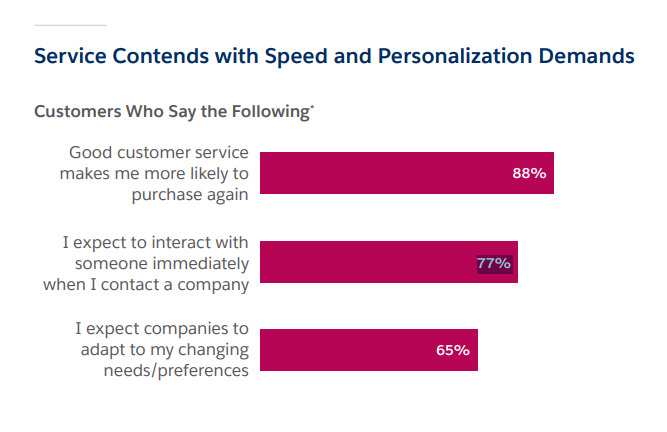
Image via Salesforce
Average email response time tracks how quickly agents reply in ongoing conversations.
Formula:
| Average response time = total response time ÷ number of replies |
Customers expect fast and consistent communication. Long gaps can be frustrating and hurt engagement.
With this metric, customer success managers can maintain reliable communication standards that keep customers engaged.
Also Read:
First Contact Resolution measures how often problems are solved during the first interaction.
Formula:
| FCR = (cases resolved on first contact ÷ total cases) × 100 |
High FCR rates signal efficiency, and that happens when the customer success team is well-trained.
Email analytics and reporting tools can help CS teams track support tickets and customer feedback. You get actionable insights that impact customer success initiatives.
Refining workflow, for instance, improves customer retention and long-term growth.
Customer Satisfaction Score is derived from short surveys after a support interaction. Customers are asked how satisfied they are with the experience.
Formula:
| CSAT = (satisfied responses ÷ total responses) × 100 |
(4-5 rating is considered “Satisfied” on a 5-point scale.)
High CSAT scores show that customers feel heard and supported. Over time, that feeling builds trust and strengthens loyalty.
Customer retention is just as important as customer acquisition. Customer retention rate measures how many existing customers continue to use a product over time.
Formula:
| Retention rate = ((customers at end − new customers) ÷ customers at start) × 100 |
Higher retention is a key indicator of long-term success. Happy customers lead to higher lifetime value.
And the financial impact is huge.
Even a small increase in customer retention can mean more revenue growth. Customer success analytics helps CS teams track health scores and engagement.
Email productivity metrics show how efficiently your teams handle communication. It measures the number of messages handled per agent and overall team performance.
Formula (example):
| Emails per agent = total emails handled ÷ number of agents |
Here’s why this metric matters.
Overloaded agents slow response times and reduce quality. A customer success analytics tool like timetoreply helps track an agent’s performance and how it scores against your expectations.
That allows you to balance workloads before service drops, scaring off customers.
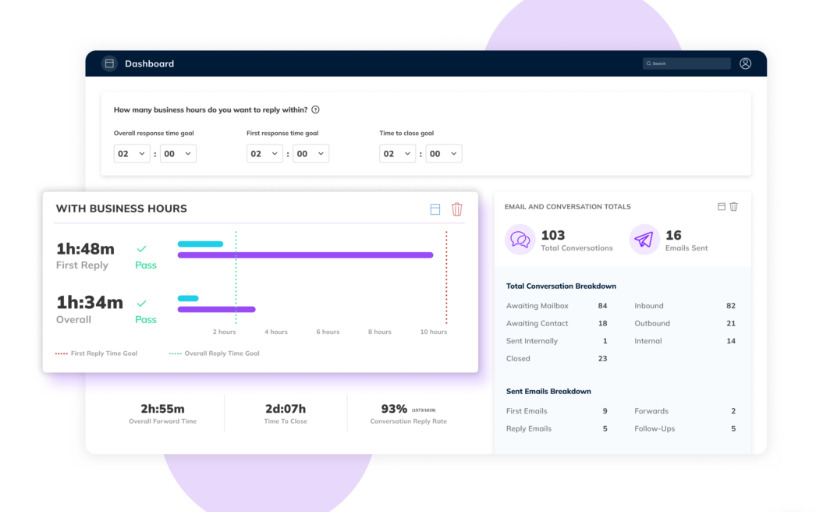
Image via timetoreply
Also Read:
This metric measures how quickly new customers get their first meaningful benefit from a product.
Formula:
| TTV = Time from signup to first value achieved |
The faster customers see value, the more likely they are to stay engaged.
You want a shorter TTV. It improves engagement, boosts customer retention, and strengthens loyalty.
With customer success analytics, CS teams can identify challenges and track trends. By acting on those insights, value realization happens sooner.
Do it consistently to improve customer health and grow recurring revenue.
For SaaS businesses, retention drives long-term revenue growth. Keeping subscribers requires strong relations with existing customers, and customer success analytics help with that.
Here are some of the top benefits of analytics for SaaS businesses.
Customers rarely decide to leave overnight. Most of the time, the warning signs appear early.
It usually goes like this:
Customer behavior subtly shifts, product usage declines, and negative customer feedback increases.
Qualitative insights can help you respond quickly.
When customer health scores decline, teams receive an alert. Customer success analytics helps CS teams analyse customer data for actionable insights.
Waiting for customers to complain before fixing issues is risky. By the time they do that, frustration may already be too high.
With customer success analytics and predictive analytics, CS teams can identify early signals. Being proactive helps resolve issues before they escalate, which increases customer retention.
Customer success metrics track communication performance and metrics like response time and issue resolution.
Fast responses enhance a smooth customer experience, while slow replies kill it.
Customer success analytics tools help teams improve the customer journey. They monitor communication by analysing support tickets for actionable insights.
When you improve the average response time, customer satisfaction increases. So, if you use Microsoft 365 data or Outlook, you need a reliable email analytics tool like timetoreply to help turn data into powerful live reports.
This tool gives an overview of your team’s performance. It tracks how many emails each person received and replied to, and the average reply time.
Here is an example of how it looks:
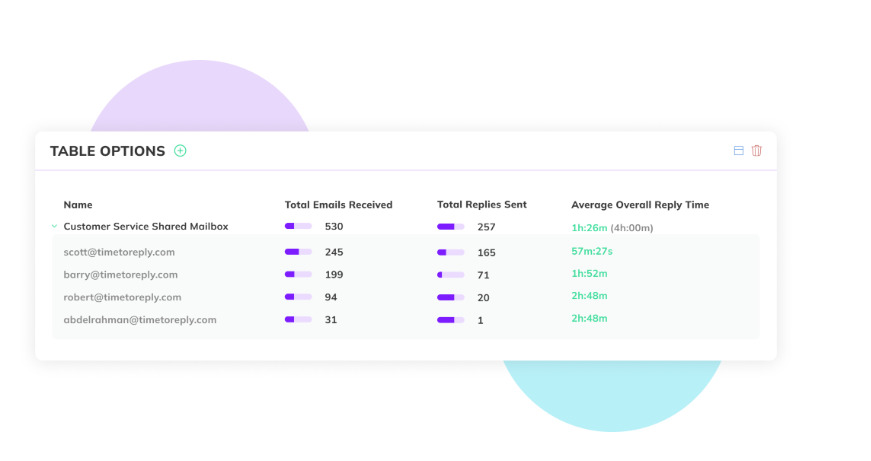
Image via timetoreply
Also Read:
Resolving issues quickly builds trust.
But repeated problems? They do the opposite.
Through customer success analytics, your customer-facing teams can analyse historical data. Looking at past support tickets often reveals patterns and helps better interpret data.
For instance:
Repeated complaints about a feature may indicate confusion within the customer journey. Once teams recognize the pattern, they can refine the interface or improve documentation.
The payoff?
Better product usage and fewer repeated issues. That means reduced support workload and stronger customer retention.
Your support team has a huge impact on customer experience. Yet, inefficiencies often go unnoticed.
Until something happens…
Customer success metrics save you from brewing trouble. It provides valuable insights into how support teams actually operate.
That allows customer success managers to track ticket volume, response delays, and workload patterns.
Here’s something else:
Customer success analytics reveals unexpected issues. Response times may spike during certain hours. That means you might need better workload distribution or automation tools.
So, with the right customer success analytics tools, CS teams can optimize workflow to deliver better service to existing customers.
Email remains a core communication channel for many SaaS companies. But managing large volumes of messages can be overwhelming.
This is where customer success analytics comes into play.
It analyzes communication metrics, including response time, conversation length, and follow-up frequency. Over time, these indicators reveal communication patterns.
By implementing email analytics and reporting tools, teams can track response behavior across departments, which allows them to set clearer performance benchmarks.
This improves response quality and consistency.
Also Read:
Customer success strategies should rely on key data types, not assumptions.
That’s why customer success analytics plays a critical role. It combines different data sources to support smarter decision-making.
You get powerful insights to help refine your customer success playbook.
Growth often means new challenges for SaaS companies. When managing thousands of customers, operations can quickly become complex.
Analytics dashboards centralize critical quantitative data from customer health scores to communication performance.
With a clear overview of operations, you can monitor team productivity and identify struggling accounts early.
So, if you are a part of a large organization, performance optimization software like timetoreply helps you manage high email volumes. It helps you meet customer service SLAs effectively.
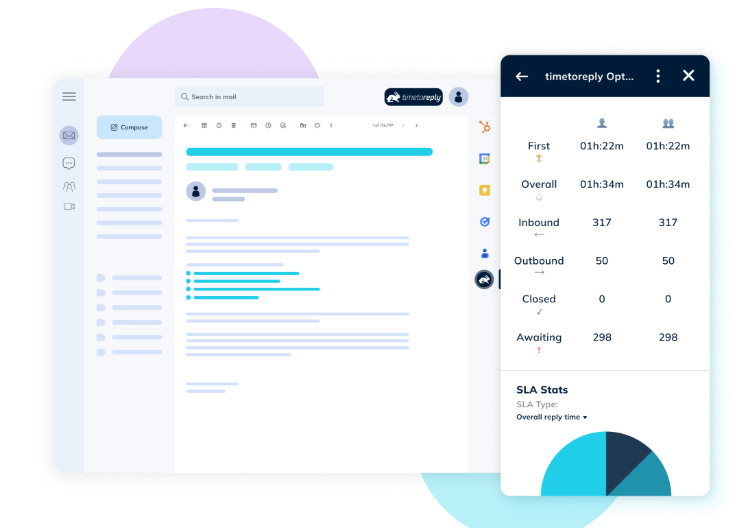
Image via timetoreply
Also Read:
Analytics works best when insights turn into clear processes. Without an effective customer success analytics framework, data stays just that — data.
Here’s how to do it.
Start with measurable goals. Without them, you lose focus, and tracking progress becomes difficult.
Here, it’s all about your priorities. The key question is: “What matters most to your business?”
Is it retention, churn reduction, customer satisfaction, or something else?
With clear goals, you can find the right customer success analytics tools and strategies for insights that drive better results.
Here are some ways in which you can collect data to analyse customer experience and set your goals.
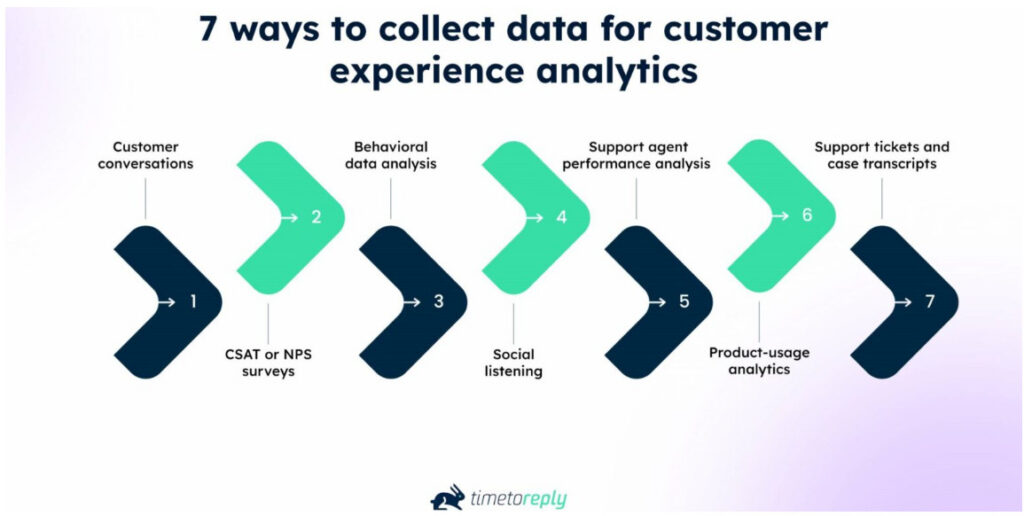
Image via timetoreply
Now onto the operational side.
Customer success analytics tools make it easy to track key customer success metrics such as response times, engagement, and communication performance.
What really matters is visibility. When data is centralized, teams can quickly identify delays and fix problems.
With the right email analytics tool, you can improve response speed and strengthen that impact on loyalty.
Also Read:
Customer success metrics yield better results when data from multiple systems is connected.
Here’s the thing:
Customer insights often live across several platforms — CRM systems, product usage analytics, and support tickets.
When using source data from these various sources, you get the full picture of the customer journey. And that clarity leads to accuracy and smarter decisions.
Clear communication standards enhance customer relationships.
Here, consistency wins. So, you should set expectations for response times for customer inquiries.
But standards alone aren’t enough.
You also need to monitor how well each team performs. Customer success analytics allows managers to monitor response performance and quickly fix delays.
One way to do that is through training programs focused on empathy, clarity, and problem-solving skills. These skills help teams respond more effectively to customer needs.
With a tool like timetoreply, you can easily track each team member’s performance. It shows you the total emails received and sent, along with their average times and whether they’re within the agreed limits.
Example of timtoreply a team performance tracking tool dashboard:
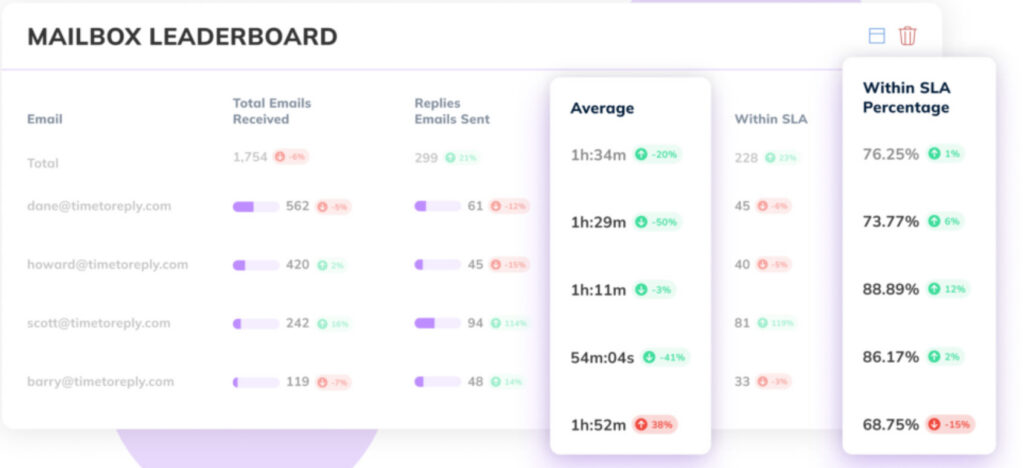
Image via timetoreply
Also Read:
1. What is customer success analytics?
Customer success analytics examines data from customer interactions, product usage, and support performance. This helps you understand customer behavior and improve services to boost satisfaction and retention.
2. Why are customer success metrics important for SaaS companies?
For SaaS companies, customer success analytics identifies disengaged users and weak engagement, enabling faster intervention. This leads to higher retention, loyalty, and recurring revenue.
3. What metrics are included in customer success analytics?
Customer success analytics tracks metrics like churn rate, retention rate, and lifetime value to show customer retention and revenue. Teams also monitor experience metrics such as response time and resolution time that help evaluate service quality.
4. How does customer success analytics reduce customer churn?
Customer success analytics tools help spot patterns like reduced product usage and repeated support issues. This enables quick interventions that restore confidence and reduce churn risk.
5. What tools help track customer success analytics?
Tools like CSM systems, analytics dashboards, and communication tools track and centralize customer data from sources such as call recordings, product usage, and support tickets. Integrating these tools gives CS teams clear insights into trends and opportunities for improving customer experience.
6. How does response time affect customer loyalty?
Response time directly impacts customer experience. Quick replies make customers feel valued, while delays cause frustration. Tracking and improving response time builds confidence, trust, and long-term relationships.
7. What is the difference between customer service analytics and customer success analytics?
Customer service analytics focuses on support operations, measuring response speed, ticket resolution, and communication quality. Customer analytics goes deeper, analyzing the entire journey, including engagement, product usage, satisfaction, and long-term behavior. This deeper understanding helps predict outcomes and improve experience and retention.
8. How do companies measure customer health scores?
Customer health scores combine indicators like product usage, engagement, and support activity. Monitoring these provides early warnings and helps prevent churn.
Also Read:
Customer loyalty used to hinge on product quality. It’s not the case anymore. Today, experience matters just as much and the support team’s responsiveness takes center stage.
Effective use of customer success analytics can change the game. It helps you analyze behavior and communication trends, giving you early warnings of churn.
That lets you address issues early with faster responses, personalized support, or improved product quality. Customers notice this effort, which often leads to stronger relationships. This translates to higher retention and supports long-term growth.
Invest in customer success analytics tools like timetoreply to enhance user experience. You can book a demo to understand all that it offers and how it can help.
Get live inbox alerts and reply quickly to customer emails with timetoreply

Head of Customer Success @ timetoreply
Barry Blassoples is the Head of Customer Success at timetoreply, where he helps customer-facing teams boost revenue and protect brand reputation by providing actionable insights to improve their business email response times. He has over 15 years of leadership experience across customer success, sales, and marketing roles in high-growth tech companies.


Trusted by high-performing inbound sales teams and customer-facing teams globally.
Close more deals and delight more customers with the faster, smarter, deeper email analytics and performance optimization software that works straight from your team’s inbox.