Customer service challenges are no longer just slow replies or the occasional unhappy customer.
For modern companies, customer service challenges affect customer satisfaction, loyalty, and long-term business growth. As customers expect faster, more personalized support across multiple channels, even strong teams can struggle to keep up.
Today’s customer service team handles more inquiries and complex customer needs than ever before. Support teams juggle email, chat, and other communication channels while maintaining service quality and delivering good customer service at scale.
When processes break down, the result is frustrated customers, overwhelmed service agents, and inconsistent customer experiences.
The good news? Most common customer service challenges are easy to solve.
By understanding the root causes and implementing the right tools and strategies, your customer service team can transform these obstacles into opportunities for exceptional customer service.
Let’s explore the most pressing customer service challenges you’ll face and, more importantly, how to fix them.
Customer service challenges are recurring obstacles that prevent support teams from delivering timely, consistent, and effective assistance. They often stem from gaps in processes, tools, or resources rather than individual performance.
Common customer service challenges include slow response times, poor visibility into customer conversations, and difficulty meeting customer expectations across multiple channels. If left unaddressed, these service challenges reduce customer satisfaction and weaken overall customer experience.
Most customer service challenges don’t appear alone. They compound over time, affecting service quality, team morale, and customer loyalty. Below are the most significant challenges facing modern customer support teams, along with some practical ways to address them.
One of the most significant customer service challenges is slow response time.
Customers expect seamless support and quick answers to their inquiries. When service agents take too long to respond, frustrated customers often perceive this as bad customer service.
Delays can lead to dissatisfied customers, negative feedback, and even churn.
This issue usually isn’t caused by lazy customer service agents. Instead, it’s a process problem. Support teams manage high ticket volumes, multiple communication channels, and shifting priorities.
Without clear visibility into aging customer conversations, urgent messages slip through the cracks. As a result, service agents spend their day reacting to income issues and escalations instead of delivering great customer service.
How to fix it:
Here’s an example of a timetoreply dashboard, highlighting team response times and individual performance metrics.
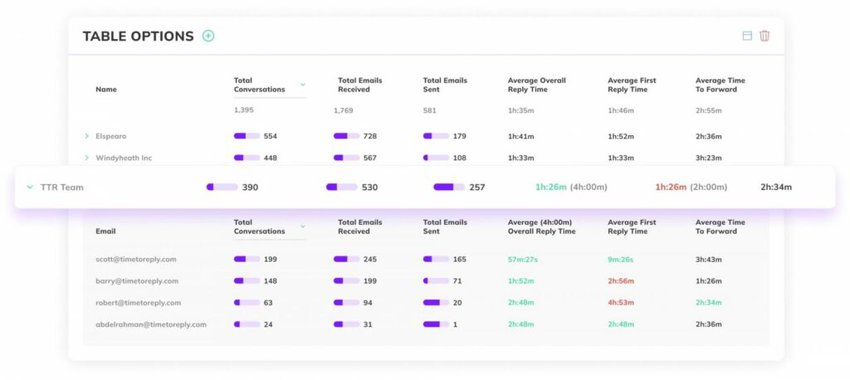
Image via timetoreply
Also Read:
Customers hate repeating themselves.
When customer service agents lack visibility into previous customer interactions, purchase history, or ongoing issues, every conversation starts from scratch. This wastes time and signals that you don’t value the customer relationship.
This problem becomes more challenging as teams grow and communication channels multiply. Customer data often lives in silos, spread across inboxes, tools, and individuals.
Without a shared view of customer interactions, service agents struggle to understand the full customer journey. The result is inconsistent service quality, longer service resolution times, and missed opportunities to exceed customer expectations.
You need proper context to personalize responses, anticipate customer needs, or identify patterns in customer pain points.
How to fix it:
Inconsistent response quality is one of the most common customer service challenges, especially in growing support teams. When one client receives outstanding customer service while another gets a mediocre response, you’ve got a quality control problem.
Inconsistent service quality confuses customers and undermines trust, even when response times are acceptable. The root cause is rarely effort. More often, customer service representatives lack shared standards or ongoing training.
Without standardized processes, team members start improvising their approach, leading to variations in tone, accuracy, and problem resolution.
Additionally, when support agents are overwhelmed or undertrained, quality inevitably suffers, especially during peak periods or service outages.
Here’s what happens next: Customers start requesting specific team members, which creates bottlenecks.
How to fix it:
Also Read:
These customer service challenges are persistent among growing organizations. As customer inquiries increase, support teams often feel stuck in constant reaction mode.
New tickets arrive faster than service agents can resolve them, leading to slow response times, rising backlogs, and frustrated customers. This challenge becomes even more apparent during product launches, service outages, or seasonal spikes.
That said, even steady growth can overwhelm an understaffed customer service department. As backlogs build, your team could face impossible choices. It could respond quickly but superficially, or be thorough while customers wait longer.
Without scalable support processes, customer service teams struggle to maintain service quality while juggling multiple channels. Overworked support agents experience burnout, which could lead to more mistakes and less helpful customer interactions.
How to fix it:
Here’s how timetoreply analytics show live ticket volumes, reply times, and trends to managers and team members for smarter scheduling.
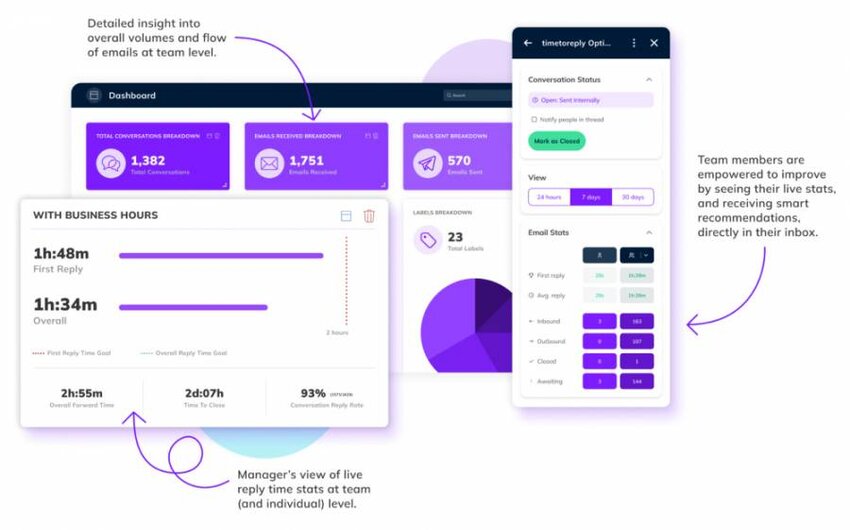
Image via timetoreply
Today’s customers reach out via email, phone, chat, social media, and messaging apps.
Switching between these channels mid-conversation creates one of the most common customer service challenges: maintaining consistency and continuity across interactions.
When your responses vary wildly depending on the channel, the customer experience feels fragmented and unreliable. This creates confusion and erodes trust, especially as customers expect seamless support no matter which channel they use.
This issue often arises when teams treat channels as separate workflows. Other times, siloed teams could be managing different channels independently.
It could also be the result of disconnected customer service tools, priorities, and response standards, as well as a lack of information transfer across platforms. Whatever the reason, poor communication across channels leads to unhappy customers and negative feedback.
How to fix it:
Also Read:
Nothing signals bad customer service faster than when customers have to explain the same problem repeatedly.
Recurring technical issues, product defects, or process gaps can cause your customers to contact you over and over again. Unfortunately, this leads to a buildup of frustration, which could lessen loyalty.
Repetitive issues often indicate systemic problems rather than individual customer pain points.
Perhaps your product has a persistent bug, or your onboarding process consistently confuses new users. Whatever the cause, these patterns represent customer service challenges that demand root cause analysis, not band-aid solutions.
Each repeat contact consumes support capacity that could address new customer needs. Word spreads about persistent problems, damaging your reputation. Even your customer service agents become demoralized answering the same questions endlessly.
How to fix it:
Among modern customer service challenges, lack of visibility into response performance is one of the most damaging — and least obvious.
Teams often assume they’re responding quickly because messages are being answered eventually. In reality, delays hide in follow-ups, internal handoffs, and overlooked customer conversations.
When response performance isn’t visible, accountability disappears. Service agents may unintentionally deprioritize certain customers, while managers rely on averages that mask real problems.
Without clear data, you’ll struggle to identify bottlenecks, track accountability, or measure service quality. This blind spot often leads to missed SLAs, frustrated customers, and inconsistent customer interactions.
Over time, the absence of performance insights weakens customer satisfaction and prevents companies from building a truly customer-centric culture.
How to fix it:
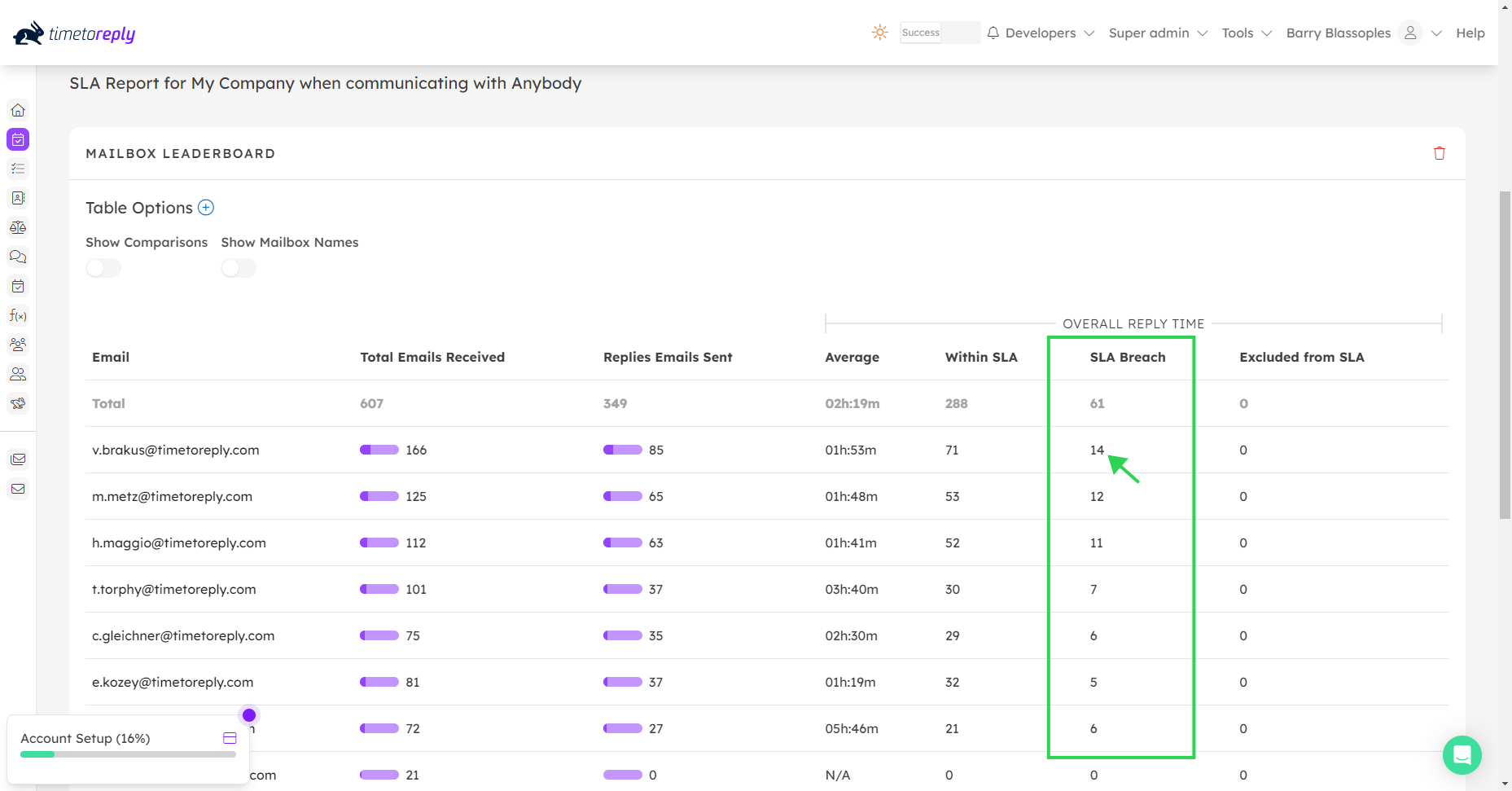
Here’s an example of a timetoreply mailbox leaderboard that makes agent response performance visible for accountability.
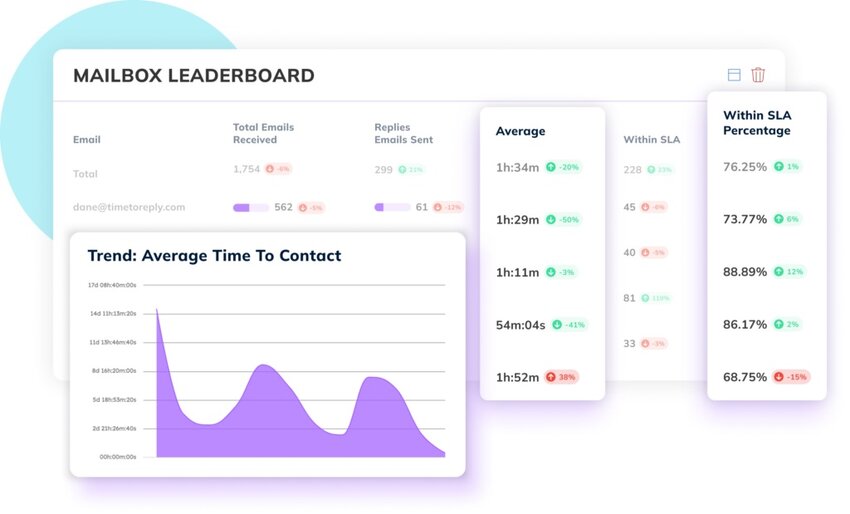
Image via timetoreply
Also Read:
This is one of those customer service challenges that quietly undermines service quality.
When every customer message looks equally urgent, support teams struggle to decide which deserves immediate attention. As a result, critical customer concerns wait alongside low-impact requests, and response times suffer across the board.
This challenge often emerges in shared inboxes and high-volume environments.
Without clear prioritization frameworks, customer service agents default to first-in-first-out processing. This democratic approach ignores business realities, given that not all conversations carry equal weight.
Some require immediate escalation to prevent or reduce churn, while others can wait without consequence. High-value customers, time-sensitive issues, and complex technical problems are prime examples that require prompt attention.
How to fix it:
One of the most fixable yet persistent customer service challenges businesses face is inadequate knowledge sharing.
When information lives in people’s heads instead of shared systems, customer service agents struggle to resolve issues quickly and efficiently. Customers receive partial answers, inconsistent guidance, or unnecessary delays.
This challenge grows as teams expand or operate across shifts, with service quality varying wildly based on who receives inquiries. When experienced team members leave, years of accumulated wisdom disappear with them.
Poor knowledge sharing weakens service quality and prevents you from building a customer-centric culture. It can lead to repeated mistakes, dissatisfied customers, and a customer service experience that struggles to meet customer expectations.
How to fix it:
Also Read:
Missed or unclear SLAs are one of the most critical customer service challenges for modern support teams. Customers expect timely responses and seamless support, but when SLAs are vague or not enforced, service agents struggle to meet expectations.
When SLAs are missed, poorly defined, or invisible to the people who need to meet them, they lose meaning. This causes your support agents to operate without the urgency that realistic deadlines create. They may not be able to keep promises, which disappoints customers.
Many organizations treat customer service SLAs as paperwork exercises rather than operational commitments. They set arbitrary targets without measuring actual performance, create complex agreements nobody understands, or fail to track compliance in real time.
These unclear standards make it almost impossible to meet customer expectations, damaging customer relationships.
How to fix it:
Here’s an example of a timetoreply mailbox leaderboard showing team reply times against SLA compliance metrics.
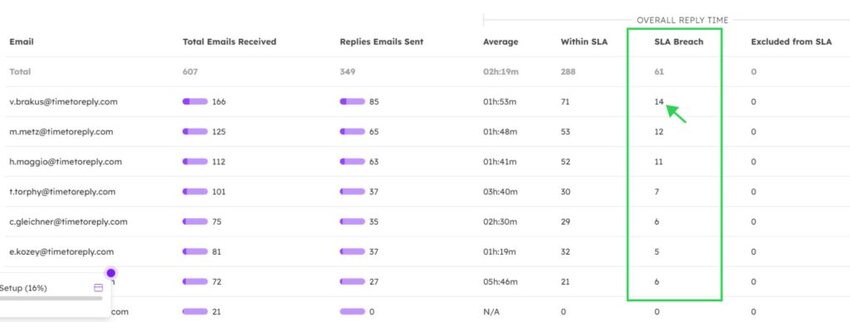
Image via timetoreply
Finding and retaining talented and reliable customer service representatives ranks among the toughest operational customer service challenges.
High turnover drains institutional knowledge, while constant recruiting consumes management bandwidth. At the same time, new agents negatively impact customer satisfaction while they’re learning on the job.
As customer needs grow more complex, companies need service agents who can think critically, communicate clearly, and adapt quickly. Finding and supporting those individuals isn’t easy.
The challenge doesn’t end at recruitment. New customer service agents often struggle to get up to speed when processes are unclear or when performance expectations are vague.
Without proper enablement, even strong hires deliver inconsistent service. This increases pressure on experienced team members and weakens the customer experience.
How to fix it:
Also Read:
1. What are the most common customer service challenges?
The most common customer service challenges include slow response times, poor message prioritization, inconsistent service quality, and limited visibility into customer interactions. Many teams also struggle with high ticket volumes, unclear SLAs, and knowledge gaps.
These service challenges often compound, making it harder to maintain customer satisfaction and deliver a consistent customer experience. Addressing them requires clear processes, accountability, and tools that provide visibility into performance.
2. Why do customer service challenges keep recurring even in experienced teams?
Customer service challenges often persist because teams focus on symptoms instead of root causes. Simply adding more agents to your support team or answering faster doesn’t fix broken processes.
Without clear accountability, shared visibility, and data-driven insights, the same service challenges reappear, even in customer service departments with skilled service agents.
3. How can I improve my team’s response times without sacrificing quality?
To do so, you must:
4. How can response-time data improve service quality?
Response-time data reveals where customer interactions stall. It highlights hidden delays during follow-ups or handovers. Platforms like timetoreply provide this visibility across shared inboxes.
Use this to monitor performance, identify bottlenecks, and ensure SLAs are met. With accurate data, customer service teams can address service challenges proactively and maintain consistent service quality without relying on guesswork.
5. What role do SLAs play in managing customer service challenges?
SLAs help align customer expectations with internal support processes. Clear SLAs guide prioritization, accountability, and performance measurement. They set explicit expectations about response and resolution times, and create accountability for your customer service department.
When SLAs are unclear or unrealistic, service agents struggle to meet expectations. Tracking SLA adherence at the conversation level helps reduce customer service challenges related to trust and consistency.
6. How do I prevent customer service team burnout?
Prevent customer service team burnout by monitoring workload distribution to ensure tickets are assigned fairly across all service agents. Use analytics to identify who’s handling disproportionate volumes or complex cases, then rebalance accordingly.
Provide adequate staffing during peak periods, establish realistic performance expectations, and offer ongoing training to build knowledge. Create supportive team cultures where agents can share challenging customer conversations. Lastly, recognize excellent work regularly to maintain morale and job satisfaction.
7. What’s the best way to handle high ticket volumes during peak periods?
Effective volume management requires multiple strategies working together:
8. What’s the best way to measure customer service performance?
Measuring performance requires tracking metrics like first response time, average resolution time, SLA compliance rates, customer satisfaction scores, and ticket volume trends.
You should also monitor individual agent performance, repeat contact rates, channel-specific response patterns, and workload distribution across your support teams.
Tools like timetoreply provide comprehensive dashboards that track email metrics in real time. This helps you identify improvement opportunities and recognize top performers. This visibility improves efficiency and addresses customer service challenges proactively.
Also Read:
Every customer service team faces obstacles that impact response times, service quality, and customer satisfaction.
The difference between struggling organizations and thriving ones isn’t the absence of customer service challenges, but rather how they address them.
Success requires visibility into what’s actually happening across your customer interactions. You need concrete data showing where delays occur, which agents need support, and whether you’re meeting customer expectations that drive loyalty.
Timetoreply transforms invisible performance patterns into actionable insights. Tracking response times, monitoring SLA compliance, and revealing workload imbalances, it helps your team deliver exceptional customer service consistently.
Ready to solve your biggest support obstacles? Start your 15-day free trial of timetoreply today, no credit card required. Discover how data-driven management turns customer inquiries into opportunities for outstanding service.
Get live inbox alerts and reply quickly to customer emails with timetoreply

Head of Customer Success @ timetoreply
Barry Blassoples is the Head of Customer Success at timetoreply, where he helps customer-facing teams boost revenue and protect brand reputation by providing actionable insights to improve their business email response times. He has over 15 years of leadership experience across customer success, sales, and marketing roles in high-growth tech companies.


Trusted by high-performing inbound sales teams and customer-facing teams globally.
Close more deals and delight more customers with the faster, smarter, deeper email analytics and performance optimization software that works straight from your team’s inbox.