
The impact of delayed email responses on logistics customer service shouldn’t be ignored. You can lose customer trust, lower retention rates, and increase pressure on support teams. When customers wait too long for updates or for issues to be resolved, they can become frustrated.
As a result, they begin to consider other logistics companies. This situation isn’t ideal because it affects your finances and damages your brand reputation.
In this blog post, we’ll discuss the impact of delayed email responses on logistics customer service and practical tips to help you improve it.
Avoid delaying email responses in logistics customer service. This leads to frustrated customers, damaged brand trust, operational inefficiencies, and missed revenue. A quick response can improve customer retention and strengthen brand reputation.
Email responses are a major competitive advantage in the logistics industry. How fast you reply professionally to email logistics inquiries can determine whether they continue doing business with your company.
In fact, according to a study by customer experience and marketing expert Jay Baer, two-thirds of customers say speed is as important as price. This highlights the impact of delayed email responses on logistics customer service.
Here are four reasons you need quick customer replies.
Customers are less likely to remain loyal to a logistics company when email responses are slow or inconsistent. It makes them feel you don’t value their time.
There’s a critical link between response time and customer loyalty. Even a minor delay in responding to or resolving a customer request can cause frustration and dissatisfaction. This is particularly true when considering the impact of delayed email responses on logistics customer service, where slow communication can lead to frustration.
In fact, studies show that more than two-thirds of consumers stop doing business with a brand after receiving poor customer service.
In contrast, timely and informative email responses show attentiveness, professionalism, and commitment to addressing customer needs properly.
Delayed email responses affect your logistics company’s reputation by creating negative customer experiences. These lead to negative reviews and discourage others from using your services.
The impact of delayed email responses on logistics customer service is evident as customers grow frustrated. These delays create dissatisfaction and tarnish your brand image. This undermines the logistics provider’s reputation and erodes trust.
Dissatisfied customers are more likely to share their negative experiences through online reviews, social media, and word of mouth. This can significantly deter potential customers and damage the brand’s reputation further.
Conversely, quick responses and transparent communication foster positive perception and build trust. Timely and effective email support cultivates better customer experiences. This strengthens business reputation and enhances brand image.
Also Read:
Delays in email responses can lead to operational inefficiencies. You could have supply chain disruptions and shipment delays. As goods stay longer in warehouses, storage fees and overall running costs increase.
The impact of delayed email responses on logistics customer service goes beyond customer satisfaction. It also affects operational efficiency and creates unnecessary expenses.
Unaddressed customer inquiries can negatively impact subsequent actions and decisions. For instance, a customer may need clarification on documentation before it is processed.
The impact of delayed email responses on logistics customer service affects the speed and efficiency of the shipping process. This results in missed deadlines, storage fees, and increased operational costs.
When teams delay email responses, it results in constant backlogs. Team members feel pressured to catch up. This reduces email productivity and increases employee burnout.
This highlights that the impact of delayed email responses in logistics customer service isn’t just external. Internal stakeholders also suffer.
Customer service agents may feel overwhelmed by an influx of overdue emails. They can experience heightened stress, burnout, and decreased job satisfaction. Employees who feel unsupported are less likely to remain engaged or motivated. This increases turnover and further degrades customer service quality.
Slow replies can upset customers, delay shipments, increase costs, and create a growing email backlog. Fast replies improve customer experience and help your team work more efficiently.
Also Read:

Delayed email responses in logistics customer service are mainly caused by operational overload, limited staffing, inefficient systems, and competing priorities within shipment workflows. These issues slow down email responses, especially when demand is high.
Before we proceed to the solutions, let’s try to understand the root cause of the slow response time in logistics customer service.
Let’s get started.
Logistics email delays usually happen when teams receive more requests than they can handle. Inquiries can surge during peak shipping seasons, such as holidays, after service disruptions, or following marketing promotions.
When this happens, customer emails about shipments, documents, and delivery updates can quickly pile up. This creates a backlog for the logistics support team.
Customer facing teams often operate with fixed staffing levels designed to handle average daily volumes. When email quantity exceeds this capacity, backlog grows fast. Reps struggle to clear existing messages while new ones continue to arrive.
Each day the backlog continues, it worsens the impact of delayed email responses on logistics customer service.
Logistics companies often face slow email response times when support teams can’t keep up with demand. This delays shipment issue resolution, tracking requests, and delivery confirmations.
Logistics companies often face high turnover among customer service staff due to heavy workloads. In Tech.co’s 2025 surveys, 31% of logistics managers reported high employee turnover as a big challenge.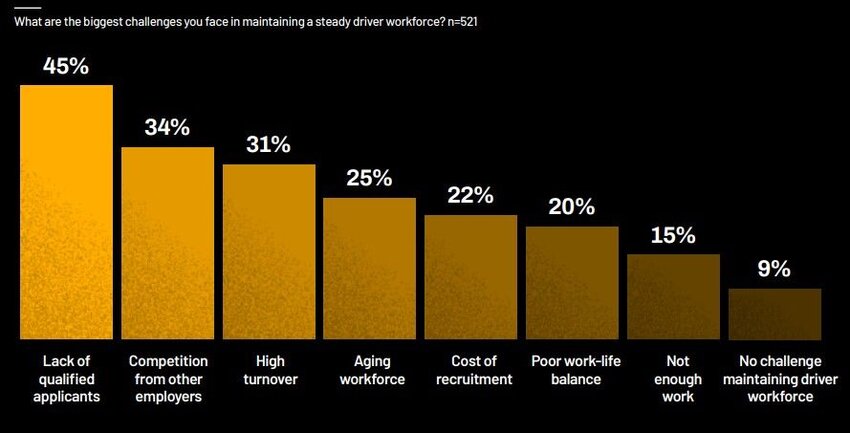
Image via Tech.co
Constant hiring and training can slow productivity. New employees often take longer to handle email while learning the company’s systems and processes.
When teams are understaffed, each rep must handle large queue of inquiries. As such, it inevitably extends response times.
Also Read:
Outdated or disconnected systems delay logistics communication. It becomes harder to track shipment-related emails. You also can’t coordinate with vendors fast or quickly access customer history for accurate context in interactions.
It often leads to disorganized inboxes, missed messages, and a lack of streamlined workflow. This can directly contribute to the impact of delayed email responses on logistics customer service.
However, implementing modern, well-integrated email management and CRM platforms with ticketing functionalities can streamline processes. These systems offer automated email routing, centralized communication histories, and inquiry tracking.
Logistics customer service departments prioritize urgent shipment disruptions, such as delayed freight, customs holds, or damaged goods. This can push general emails into the backlog. While this is necessary for operations, it results in slower response times for standard inquiries, such as tracking updates or billing questions.
Many logistics companies usually implement formal triage systems. They prioritize inquiries based on urgency and potential business impact. While this approach enhances operational efficiency and helps increase productivity, it can unintentionally contribute to the impact of delayed email responses on logistics customer service.
You need a balanced triage model that handles urgent shipment issues and routine customer messages together. This improves customer experience at every touchpoint.
Balanced triage systems and better tools improve average email response time across communication channels.

Gain data-driven insights by tracking email response time and patterns in customer communications. It shows you which workflows create customer service bottlenecks.
For example, email customer service analytics can reveal that customs-related emails consistently exceed SLA targets or that order status inquiries increase after delivery delays. A data-driven approach gives you a clear picture of the situation.
This allows you to create a strategy to improve first-contact resolution and vendor coordination. As a result, you can deliver a better and more personalized customer experience. You can also make informed decisions about resource allocation.
Also Read:
A standard email response time sets clear expectations for how quickly logistics emails should be answered. It maintains consistent customer service, even during peak periods.
Establish email response time benchmarks to mitigate the negative impact of delayed email responses on logistics customer service. Implement Service Level Agreements (SLAs) that define expected response windows for different inquiries. This helps maintain consistent service quality and accountability.
Over time, customer service teams can optimize their performance to exceed standards. This shows their commitment to customers and driving business success.
Empathy helps customer service teams reduce frustration during shipment delays and service disruptions. It helps them understand and respond to customer concerns when issues can’t be fixed right away.
Acknowledging the customer’s feelings, providing regular updates, and offering sincere apologies can turn a negative experience into a positive one. For example, you can assure a customer waiting on delayed medical supplies with regular status updates and realistic timelines.
This empathetic and transparent approach helps mitigate the impact of delayed email responses on logistics customer service. This reduces frustration and anxiety while increasing customer satisfaction and trust.
Automation uses technology to perform tasks, such as routing inquiries to the right agent. Tools like the timetoreply Optimizer prioritize emails based on SLA deadlines.
Automation tools can categorize, route, and generate template responses. As a result, you won’t spend too much time addressing inquiries. Automated acknowledgments and prioritization reassure customers and ensure critical issues receive immediate attention.
Automated alerts for custom SLAs can also remind customer service teams of any customer requests that have not been responded to or resolved.
Combining this technology with cloud-based software and CRM systems can further reduce the impact of delayed email responses on logistics customer service.
These systems enable real-time tracking, efficient workflow management, and seamless communication across departments to ensure faster response times and better customer outcomes.
Prioritizing emails means setting clear rules for urgency. For example, lost shipments get faster replies than quote requests. This improves service speed and customer satisfaction.
Leverage email analytics software when prioritizing urgent inquiries. It directly routes and flags urgent emails, ensuring timely responses to critical matters while maintaining reasonable response times for standard inquiries. Here’s how to implement an effective priority system:
During peak hours, email volume surges. This leads to backlogs and burnout. You can mitigate the impact of delayed email responses on logistics customer service by managing workload distribution effectively.
Resource allocation, prioritization, automation, and training help manage email backlog during peak hours. Real-time dashboards and customer self-service options can further streamline the process.
Use technology tools that allow customer service teams to optimize their email performance and ensure no customer email goes unanswered.
Team development means ongoing training for customer service reps. Key areas include email best practices, empathetic communication, automation tools, and team collaboration.
You won’t be able to reduce the negative impact of delayed email responses on logistics customer service if your team isn’t properly supported.
Provide ongoing training so agents have the tools and knowledge to handle email inquiries efficiently. This training should also focus on honing essential customer service skills.
Find the root cause of delays instead of guessing where the problem is. Use technology to save time and make sure urgent emails come first. Give your team the support they need, and communicate with empathy when delays happen.
Also Read:
Logistics companies can reduce the impact of delayed email responses by combining data insights, automation, and staff training. Empathy also reduces customer frustration and maintains trust during logistics disruptions.
1. How to tell the client about a delay in email response?
You could say, “I apologize for the delayed response. We’ve been experiencing higher-than-usual email volume. But I want to assure you that your inquiry is important to us, and I’m here to help you now.”
Then, thank the client for their understanding and patience. For instance, “Thank you for your patience and understanding during this time.”
2. How to tackle a customer whose delivery is late?
To handle a customer whose delivery is late:
3. What is a delayed response?
A delayed response is a reply to something, such as an email or message, that arrives later than expected or is considered unacceptable.
4. How would you handle an unexpected delay during a time-sensitive delivery?
During an unexpected delay, prioritize clear communication by notifying the customer immediately. Explain the cause of the delay and provide an updated ETA. Offer alternative solutions or compensation where appropriate.
5. How long is too late to reply to an email?
For business-critical emails, waiting longer than 24 hours is considered too late. However, the specific timeline can vary based on industry standards and customer expectations.
The impact of delayed email responses on logistics customer service includes lost customers, higher operational costs, and damage to brand reputation. In logistics, slow responses create uncertainties around deliveries and issue resolution.
Customers expect faster email responses. That’s why logistics companies need tools and methods that improve efficiency.
Invest in email analytics and response management software like timetoreply. They help increase response times and customer satisfaction.
Ready to improve your logistics email support response time? Book a Demo today. Discover how automation and response time tracking can help your team deliver better customer experiences.
Get live inbox alerts and reply quickly to customer emails with timetoreply

Head of Customer Success @ timetoreply
Barry Blassoples is the Head of Customer Success at timetoreply, where he helps customer-facing teams boost revenue and protect brand reputation by providing actionable insights to improve their business email response times. He has over 15 years of leadership experience across customer success, sales, and marketing roles in high-growth tech companies.



Trusted by high-performing inbound sales teams and customer-facing teams globally.
Close more deals and delight more customers with the faster, smarter, deeper email analytics and performance optimization software that works straight from your team’s inbox.