Quick Summary
Email productivity determines how efficiently your team handles your inbox, responds to customers, and manages workloads at scale. The right habits, tools, and automation workflows can improve focus while preventing email overload. We cover practical email productivity strategies, inbox management tips, automation tools, and best practices for building more efficient email workflows.

Email productivity helps teams respond faster, stay organized, and manage growing inboxes without losing important messages. 

Customer-facing teams now handle larger email volumes and higher response expectations than ever before. Without clear systems, email overload can reduce focus, delay replies, and negatively impact experiences.

Strong email productivity improves customer satisfaction, supports better collaboration, and helps teams work more efficiently every day.

In this guide, we cover practical email productivity strategies, helpful tools, and automation tips. We’ll also look into inbox management techniques and best practices for building better email habits.

What is email productivity?

Email productivity is a measure of how efficiently individuals and teams handle email, from reading and responding to organizing and following up. 

A productive email workflow minimizes time wasted on low-value messages while ensuring high-priority communications get fast, quality responses. 

For customer-facing teams, strong email productivity helps reduce inbox clutter, prioritize important conversations, and improve collaboration. It also supports better customer experiences by helping teams respond consistently and resolve issues faster.

What are the biggest email productivity challenges?

Email productivity often suffers when teams manage high email volumes without clear systems, priorities, or workflows. Slow response times, disorganized inboxes, and constant interruptions can reduce focus and create inconsistent customer experiences. 

  • Inbox overload: High inbound volumes make it hard for customer-facing teams to keep up. In any given day, your team can receive complaints, updates, support requests, and sales inquiries, increasing the risk of missing urgent messages.
  • Poor prioritization: Important emails can get delayed as teams struggle to quickly identify urgent conversations. Without clear tagging systems or workflows, high-priority emails can remain unanswered for too long.
  • Rising speed expectations: Customers now expect faster email responses across their interactions. Delayed and inaccurate replies can damage trust, reduce satisfaction, and increase customer churn.
  • Follow-up gaps: Tracking whether a query was fully resolved is a persistent challenge, especially when inboxes become crowded. Missed follow-ups can slow resolutions and create inconsistent customer experiences.
  • Complex responses: Some emails demand real effort, yet detailed, thoughtful replies take time to craft well. Without strong prioritization, these responses either get rushed or delayed, both of which hurt customer experience.
  • Collaboration breakdowns: When teammates can’t see each other’s email threads, work gets duplicated and responses become inconsistent. Shared visibility is essential for email productivity at scale.
What are the biggest email productivity challenges?

Email productivity challenges go beyond simple volume. Speed expectations, collaboration gaps, and inbox disorganization all compound the problem, and each requires a targeted solution.

Also Read:

Setting up for success

email success

Improving email productivity starts with building the right foundation. The right service, a well-configured environment, and clearly defined policies form the foundation everything else depends on. Get these three elements right, and every efficiency gain you layer on top will compound.

How do you choose the right email service?

Email productivity begins with choosing a service provider that supports organization, collaboration, and efficient communication. The right platform should make it easier to manage inboxes, prioritize messages, automate tasks, and track conversations without creating complexity.

Not all email services offer the same features or customization options. Some platforms focus on simple communication, while others provide advanced automation, shared inboxes, integrations, and reporting tools.

Here’s a basic comparison of some of the most popular email platforms commonly used by customer-facing teams, focusing on key features relevant to email productivity.

Comparison Table

FeatureGmailOutlookApple MailZoho MailProton Mail
IntegrationGoogle WorkspaceMicrosoft 365macOS/iOSZoho AppsLimited
Search funtionalityExcellentGoodGoodGoodBasic
CollaborationExcellentGoodGoodGoodLimited
StorageLimited (free tier)GoodBased on iCloudGoodLimited (free tier)
Security & privacyGoodExcellentExcellentGoodExcellent
User interfaceIntuitiveFeature-richIntuitiveFunctionalSimple
Advanced featuresExtensions requiredBuilt-inBasicGoodLimited
Cost -effectivenessGoodGoodDependent on iCloudExcellentHigher costs

Each platform has its own strengths and weaknesses. However, it’s worth noting that most customer-facing teams use Outlook or Gmail as their email platform of choice.

Essential features to look for when prioritizing email productivity

IntegrationCompatibility with CRM and other email productivity tools like timetoreply.
Email managementAutomation, filtering, sorting, and templates.
CollaborationShared inboxes, commenting, and tagging features.
User experienceIntuitive interface and mobile accessibility.
Security & complianceData security measures and regulatory compliance.
Customization & scalabilityCustomization options and scalability for growth.
Analytics & reportingTools for tracking performance metrics and gaining insights.
Support & trainingQuality of customer support and availability of training resources.
Cost & licensingPricing plans and flexible licensing options.
Why does choosing the right email service matter?
Your email service is the infrastructure everything else runs on. Choosing the wrong one creates friction that no downstream fix can fully resolve.

Also Read:

How can you optimize your email environment?

High-performing customer-facing teams optimize inbox layouts as well as email rules and filters to significantly improve productivity and visibility. Here are some ways you could leverage customization to drive email productivity within your teams:

  • Create folders/labels: Set up folders or labels for different types of emails, such as “Urgent,” “Follow-up,” “Pending,” “Resolved,” and “Sales Leads.” This helps in quickly categorizing and locating messages to increase email productivity.
  • Color coding: Use color-coded labels to differentiate between various categories of emails at a glance. This makes sorting faster and enhances email productivity.
  • Priority inbox: Configure the inbox to show important and unread emails at the top. Platforms like Gmail and Outlook offer priority mailbox settings to automatically sort important emails, boosting email productivity.
  • Email filters/rules: Set up rules to automatically route emails into specific folders or labels based on sender, subject, or keywords. This reduces clutter and saves time.
  • Custom views: Use a split view layout to see the email list on one side and the selected email on the other. This allows for quicker navigation and response to help improve email productivity.
  • Pinned/starred messages: Pin critical emails to the top of the inbox to ensure they’re always easily accessible. Use stars or flags to mark emails that require immediate attention or follow-up.
  • Integrations: Utilize third-party apps like timetoreply that add functionalities like email tracking, scheduling, and analytics. These tools enhance email productivity and streamline team workflows.

A well-organized email environment improves email productivity by making important conversations easier to track, prioritize, and manage.

Why do clear email policies matter?

Clear email policies eliminate ambiguity, improve consistency, reduce confusion, and help teams maintain better email productivity. These policies should cover aspects such as personal vs professional email use and email response times.

  • Personal vs professional emails: Separating personal and work accounts can help customer-facing professionals maintain email productivity and protect sensitive information. It prevents personal messages from cluttering professional inboxes, ensuring clear communication and consistent professionalism.
  • Email response times: Teams should also set email response time benchmarks to ensure timely responses to inbound customer emails. Implement a system to identify and prioritize urgent customer inquiries, so you can address critical issues promptly.

Additionally, leverage specialized email response time tracking software, ensuring you unlock fast email reply value at every touchpoint.

Strong email policies improve email productivity by creating consistent workflows, faster response times, and clearer inbox ownership across teams.

Also Read:

Efficient email practices

email efficiency gif

Efficient email practices are the daily habits and systems that separate high-performing teams from those perpetually buried in their inboxes. Teams that manage inboxes consistently, prioritize messages effectively, and write clear emails can reduce delays and improve communication quality across interactions.

How can you manage your inbox more efficiently?

Efficient inbox management helps teams stay organized, reduce stress, and improve email productivity. Clear inbox systems make it easier to track conversations, prioritize tasks, and respond faster to important emails.

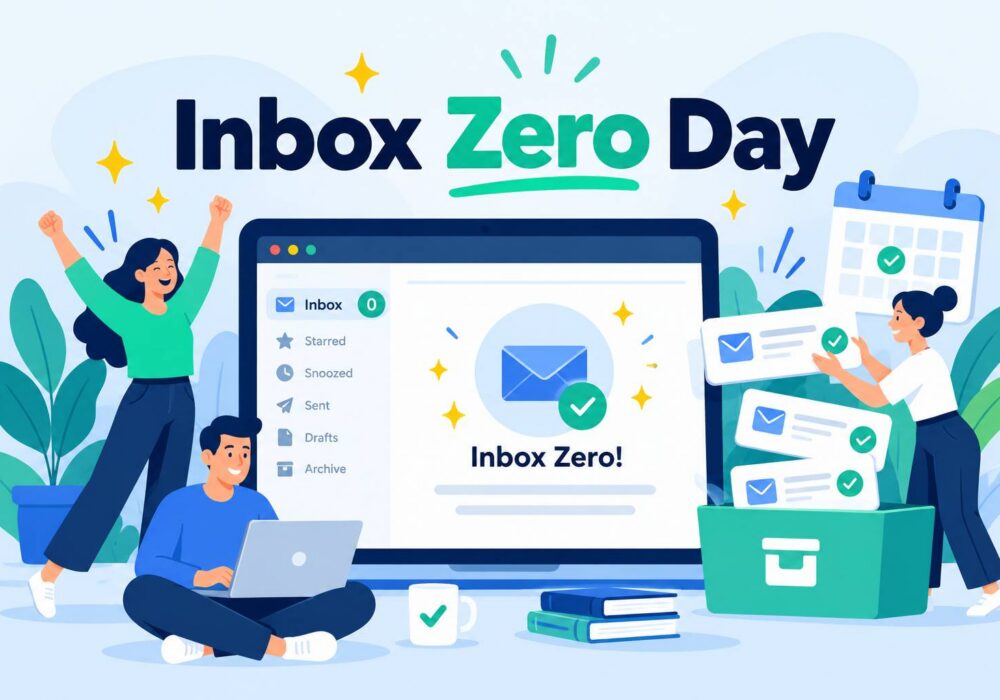
One popular approach is the Inbox Zero method. Productivity expert Merlin Mann introduced this strategy to help professionals keep inboxes empty or close to empty. The goal isn’t perfection, but managing email efficiently to reduce clutter and stress.

Inbox Zero offers several benefits, including:

  • Reduced stress: Maintaining an empty or near-empty inbox reduces the stress associated with managing a large volume of emails
  • Greater email productivity: By dealing with each email promptly and efficiently, customer-facing teams can spend more time on high-value tasks
  • More focus: With fewer emails vying for attention, it’s easier to focus on important tasks without constant distractions
  • Better organization: Categorizing and organizing emails ensures that important information is easily accessible when needed

However, it’s worth noting that “Inbox Zero” is not about keeping the inbox empty at all times. Rather, it’s about having a systematic approach to email management that prevents overload and helps maintain focus and email productivity.

Effective email sorting techniques

Customer-facing teams can apply some common email sorting techniques to bring them closer to Inbox Zero and improve their email productivity, including:

  • Creating specific folders for different categories of emails, such as “Customer Inquiries”, “Support Tickets”, “Sales Leads,” and “Follow-Ups”
  • Using labels for quick identification and filtering of emails
  • Setting rules for the automatic sorting of inbound emails
  • Flagging important emails with keywords that highlight which ones need immediate attention
  • Configuring your inbox to prioritize and display important emails at the top
  • Using stars or flags to mark important emails, with colors signifying urgency or action
  • Enabling threaded or conversation views to group related emails together, making it easier to follow the context of conversations
  • Setting reminders to follow up on emails that require action at a later time, to ensure no queries slip through the cracks
  • Using the ‘focused inbox’ feature available in some email clients to automatically separate important emails from less important ones
  • Creating search or smart folders that auto-populate with emails matching defined criteria, like unread emails from the past 24 hours

Better inbox management improves email productivity by reducing clutter, improving visibility, and helping teams focus on important conversations faster.

Also Read:

How do you write more productive emails?

You can write more productive emails by keeping them clear, concise, and structured — all of which support an excellent customer experience. It’s not rocket science, but there’s an art to it.

Here are some top email productivity tips for crafting clear and concise emails:

  1. Use a clear subject line: Make the subject specific and informative, indicating the main point of the email
  2. Be brief and to the point: Keep the email concise by focusing on the main message and avoiding unnecessary details
  3. Use simple language: Write in plain language and avoid jargon or complex wording to ensure easy understanding
  4. Structure your email: Use short paragraphs, bullet points, or numbered lists to make the email easy to read
  5. State your purpose early: Begin with the main point or purpose of the email to grab the reader’s attention
  6. Include a call to action: Clearly state what the recipient should do next, whether it’s providing information or completing a task
  7. Be polite and professional: Use courteous language and maintain good email communication skills throughout the email
  8. Proofread before sending: Check for spelling, grammar, and punctuation errors to ensure professionalism

Email templates for common responses

Consider using email templates for common responses to customer queries to save time and maintain a consistent quality of response. Here are some of our favorite email response templates to boost your email productivity — feel free to use them in your responses!

  • Customer inquiry response template

Subject: Thank you for reaching out

Hi [Customer Name],

Thank you for getting in touch! We’ve received your inquiry regarding [topic or issue] and are currently reviewing it. You can expect a detailed response from us within [time frame].

If you have any additional information that might help, feel free to reply to this email.

Best regards,

[Your Name]

[Your Position]

  • Follow-up email template

Subject: Following up on our last conversation

Hi [Customer Name],

I just wanted to follow up on my last email regarding [topic]. Please let me know if you had a chance to review it or if there’s anything else I can assist you with.

Looking forward to your response.

Warm regards,

[Your Name]

  • Issue resolution template

Subject: Issue resolved – Thanks for your patience

Hi [Customer Name],

We’re happy to let you know that your issue regarding [brief issue description] has been resolved. Please check on your end and let us know if everything’s working as expected.

Thanks for your patience!

Kind regards,

[Your Name]

Key takeaway
Productive emails improve email productivity by making communication clearer, faster, and easier for recipients to understand.

Also Read:

How should you prioritize and schedule emails?

Categorizing emails by importance is essential for customer-facing teams that want to maintain high levels of email productivity. By applying labels to inbound emails, such as ‘Urgent’, ‘Follow-Up’, ‘Pending’, or ‘Resolved’, customer-facing teams can quickly prioritize important messages. This system ensures no critical email goes unanswered.

Some teams may also want to use automation to increase email productivity. Automated filters can sort messages by importance, sender type (such as high‑value customers), or email category, whether it’s a complaint, query, or sales lead.

Folders and labels are equally essential tools for email productivity. For instance, you can divide emails by categories such as “Customer Inquiries,” “Support Tickets,” “Follow-Ups,” “Sales Leads,” and “Internal Communications.” This way, teams can more easily find important information about specific email conversations.

Setting up email scheduling

Another powerful email productivity strategy for customer-facing teams is email scheduling. This strategy ensures timely responses, workload management, improved customer experience, enhanced efficiency, and better performance tracking.

By leveraging email scheduling, customer service teams can ensure more effective communication, leading to higher customer satisfaction, more streamlined operations, and better email productivity.

Some email productivity tips for effective email scheduling include:

  • Optimize your send times: Schedule emails to be sent at times when customers are most likely to read them, ensuring timely communication and higher engagement rates.
  • Schedule follow-up reminders: Automatically schedule follow-up emails to ensure ongoing issues are addressed without delay.
  • Stagger email sending: Distribute the workload evenly by scheduling emails to be sent at different times, preventing a flood of responses and allowing for more manageable workloads.
  • Always personalize your emails: Use scheduling to time personalized emails for events like birthdays, anniversaries, or special offers, enhancing customer satisfaction and loyalty.
  • Leverage automation: Utilize scheduling tools to automate routine communications, freeing up time for customer service representatives to handle more complex inquiries.
  • Track your email performance: Track open rates and engagement metrics to determine the best times to schedule emails for maximum effectiveness, and use data from scheduled email performance to adjust and refine communication strategies for better email productivity.

Strong prioritization and scheduling systems improve email productivity by helping teams focus on urgent emails without constant inbox interruptions.

Also Read:

Leveraging email tools and technologies

How does email automation improve productivity?

Email automation reduces repetitive manual tasks, improves response consistency, and helps teams maintain better email productivity. Even simple automations like acknowledgment replies improve customer experience from the first touchpoint.

Setting up auto-responses:

  • Immediate acknowledgement: Automatically send replies to let customers know their email has been received and is being processed, improving their experience. This reassures customers that their inquiry is being handled, reducing anxiety and potential follow-up emails.

Are email scheduling tools worth it?

Email scheduling tools give teams control over when messages land. Used well, scheduling improves open rates, reduces response delays, and helps distribute workload more evenly across the day.

  • Optimal timing: Schedule emails to be sent at times when recipients are most likely to engage, increasing open and response rates. Sending emails at the right time ensures better visibility and responsiveness from recipients.
  • Workload management: Plan and distribute emails throughout the day to manage workload efficiently. This helps in preventing burnout and ensures a steady workflow for the team.

How can email integrations improve productivity?

Email integrations connect communication workflows with other business tools, helping teams stay organized and work more efficiently. Integrating email with task management and calendar tools keeps teams organized and accountable, and improves productivity.

Connecting email to task management apps:

  • Seamless workflow: Convert emails into tasks or to-do items directly within your task management app, ensuring important emails are tracked and followed up. This integration prevents important tasks from falling through the cracks, keeps the team organized, and enhances email productivity.
  • Improved organization: Centralize tasks and emails in one place for better organization and tracking. It streamlines processes and saves time by consolidating tools.

Using calendar integration for email management:

  • Schedule follow-ups: Link emails to calendar events to schedule follow-up actions or meetings, ensuring timely responses and actions. This helps in maintaining a reliable timeline with clients.
  • Efficient planning: Automatically add events from emails to your calendar to stay organized and on top of your schedule. It enhances time management and ensures that no important dates or deadlines are missed.

Which advanced email features improve efficiency?

Filters, rules, and analytics are among advanced email features that help organize conversations, reduce inbox clutter, and measure performance more effectively. These tools improve visibility and support stronger email productivity across daily workflows.

Implementing email filters and rules:

  • Automated sorting: Automatically sort and categorize incoming emails based on sender, keywords, or other criteria, reducing clutter and highlighting important messages. This increases email productivity by minimizing the time spent manually sorting emails.
  • Prioritize effectively: Use rules to flag high-priority emails, ensuring they are addressed promptly. Prioritizing important emails ensures critical issues are resolved quickly, improving customer satisfaction.

Using email analytics to track email productivity:

  • Measure performance: Track metrics such as response times, email volumes, and engagement rates to assess email productivity and identify areas for improvement. Analytics provide actionable insights that can drive performance enhancements and operational efficiency.
  • Data-driven decisions: Use insights from analytics to optimize email productivity and improve overall efficiency. Making informed decisions based on data leads to better resource allocation and strategic planning.
How do you continuously improve your email productivity?
Email productivity improves when teams combine automation, scheduling, integrations, and advanced inbox tools to reduce manual work and streamline communication workflows.

Also Read:

Avoiding email overload


One of the biggest dangers for customer-facing teams is the prospect of email overload. Email volumes are at an all-time high, with the average employee receiving 117 emails per day. Combined with heightened customer expectations for speedy service, customer-facing teams are under near-constant pressure.

Taking some of the following steps can limit email overload, protect customer-facing teams from burnout, and increase email productivity:

Why is setting email boundaries important?

Clear email boundaries reduce constant interruptions and help teams protect time for focused work. Strong boundaries also improve email productivity by preventing employees from reacting to every message immediately.

Establishing “no email” times:

  • Designated email-free periods: Set specific times during the day when you don’t check or respond to emails. This could be during deep work sessions or personal time. If you need to maintain high levels of email responsiveness, consider using an email performance optimization tool. It can route email notifications to other team members while you do the deep work.

Managing email notifications:

  • Control alerts: Customize email notifications to reduce interruptions, such as turning off non-essential alerts and setting priority notifications for urgent emails. Email productivity tools such as timetoreply can automate this process while still alerting fellow team members to emails that need urgent attention. This can reduce your stress without compromising the customer experience.

When and how should you delegate email tasks?

Teams should delegate email tasks when inbox volumes become difficult for one person to manage efficiently. Shared responsibility improves email productivity and prevents employee burnout.

Sharing inbox responsibilities:

  • Team collaboration: Distribute email management duties among team members to keep inboxes monitored without overburdening individuals. With an email performance optimization tool, you can set automated alerts and custom email SLA thresholds. You also get analytics insights that improve task distribution, reduce burnout, and enhance customer-facing team efficiency.

Using virtual assistants for email management:

  • Automated assistance: Employ virtual assistants or AI tools to handle routine email tasks such as sorting, filtering, and drafting responses. Free up further time by making use of templates that allow you to focus on higher-value activities without compromising email quality and productivity.

By setting clear boundaries and effectively delegating email tasks, customer-facing teams can significantly reduce email overload. They can also maintain better focus, and improve email productivity and overall well-being.

Also Read:
Ensuring Security and privacy

Security and privacy are critical for email productivity. Email is the number one vector for cyberattacks. Any breach can lead to data loss, financial damage, regulatory penalties, and, most importantly, a sudden loss in trust with customers. 

Keeping your email environment secure and private ensures that sensitive information is protected and safeguards your customer data — and your reputation. Here are some basic tips for email security and privacy:

What are the best ways to protect your email?

Protecting email accounts requires strong security measures and consistent employee awareness. Secure email practices reduce the risk of unauthorized access, phishing attacks, and data breaches.

Implementing two-factor authentication (2FA):

  • Enhanced security: Require an additional verification step, such as a code sent to your phone, when logging into your email account. This provides an extra layer of security, making it much harder for unauthorized users to gain access.

Recognizing and avoiding phishing scams:

  • Email vigilance: Be cautious of suspicious emails asking for personal information or containing unusual links or attachments. A single mis-click on a malicious link or infected attachment can lead to significant security breaches and data theft. It can disrupt email productivity and harm your reputation and revenue.

How can you maintain email privacy effectively?

Maintaining email privacy requires both the right tools and the right habits. For instance, encryption protects data in transit, while good operational practices protect it everywhere else.

Using encryption for sensitive information:

  • Data protection: Use encryption tools to secure sensitive information within emails, making it unreadable to unauthorized parties. This way, information remains confidential and secure even if emails are intercepted.

Email confidentiality best practices:

  1. Use strong, unique passwords: Create strong, difficult-to-guess passwords. Use different passwords for different accounts to reduce the risk of unauthorized access.
  2. Regularly update software: Keep your email client and security software up-to-date to protect against vulnerabilities and exploits. Outdated software is a gateway for cyberattacks.
  3. Be cautious with email forwarding: Avoid forwarding sensitive information without proper consideration. Also, control information flow by removing unnecessary recipients.
  4. Limit personal information: Avoid sharing excessive personal details in emails to minimize exposure. Always review content before sending to ensure security and professionalism.
What are the best ways to protect your email?
Strong email security and privacy practices improve email productivity by protecting sensitive information, reducing disruptions, and maintaining customer trust.

Also Read:

Developing email habits

Healthy habits are essential to maintaining high levels of email productivity within customer-facing teams. Aristotle’s advice about habits is just as relevant today as when he first shared it more than 2000 years ago: “We are what we repeatedly do. Excellence, then, is not an act, but a habit.”

Let’s look at some useful habits that can improve your and your team’s email productivity:

How do you build a healthy email routine?

A healthy email routine starts with structure. Without set times and regular maintenance habits, even well-configured inboxes drift toward chaos. Consistent routines help teams manage communication more efficiently without becoming overwhelmed.

Setting daily email check times:

  • Consistent schedule: Establish specific times during the day to check and respond to emails. This could be the first thing in the morning, after lunch, and before the end of the workday. Doing so minimizes unwanted distractions and allows for focused work. Using email productivity software helps ensure every team member is working productively and that email load is spread optimally throughout the team. This reduces bottlenecks, speeding up email reply times.

Creating a process for unsubscribing:

  • Email cleanup: Keep your inbox clean, whether it’s a single inbox or a shared team mailbox. Regularly review and unsubscribe from newsletters and promotional emails that are no longer relevant. Declutter as often as you can to ensure you can focus on important emails without being flooded by spam.

How do you continuously improve your email productivity?

Improving email productivity requires ongoing evaluation, performance tracking, and workflow adjustments. Teams that regularly review their communication processes can identify inefficiencies and improve response quality over time.

Regularly reviewing email productivity:

  • Leverage data: Periodically evaluate how well your current email management practices are working by reviewing metrics such as reply times and email volume. Implement email productivity software to automatically keep track of a range of useful email KPIs, set benchmarks and custom SLAs, and continuously drive higher levels of email performance.

Adjusting strategies based on performance:

  • Adapt dynamically: Modify your email management strategies based on the insights gained from your email productivity solution, like timetoreply. Also, regularly review your best practices to ensure optimal email productivity.
Key takeaway
Sustainable email productivity depends on consistent habits, regular inbox maintenance, and continuous workflow improvement.

Also Read:

FAQ

1. What is the best way to achieve Inbox Zero?

Achieving Inbox Zero requires a disciplined approach that leverages best practices and technology to ease the burden on customer-facing teams’ overflowing inboxes. When dealing with email, consider using the 4D approach, which involves:

  1. Delete: Immediately delete or archive emails that don’t require action or reference
  2. Delegate: Forward emails to appropriate team members if they are better suited to handle them
  3. Defer: If an email requires more time to respond, defer it by scheduling a follow-up time or adding it to a to-do list
  4. Do: Handle any email that can be responded to quickly (in two minutes or less) right away

In addition, use filters and labels to sort incoming emails into categories. Then, maintain inbox hygiene by unsubscribing from unwanted newsletters and promotional mails. 

Lastly, regularly review and adjust your email management strategies based on performance and productivity insights. An email performance optimization tool can provide invaluable automation and analytics to push your email productivity to new heights.

2. How often should I check my email?

Set specific times during the day for checking email to free you up for deeper work. If you’re in a customer-facing role where reply times are important, consider using email productivity software. 

It will alert you to important emails and even help distribute email-related workload more evenly across your team. This helps you focus on the important work without compromising on your customer experience.

3. What tools can help automate my email management?

There are several tools that can help teams and individuals automate and optimize their performance for higher levels of email productivity. Tools like Gmail filters and Outlook rules can automate email organization. 

For teams, Timetoreply tracks response times and improves accountability. These tools boost email productivity by automating sorting and monitoring, and ensuring timely customer communication.

4. How can I ensure my email practices are secure?

Email is the number one vector for cyberattacks, so it’s vital that you keep your email communication secure. Implementing security software to protect against malware, ransomware, and phishing is vital, as is two-factor authentication. 

Stay vigilant and avoid disclosing personal information or clicking on malicious or infected links or files. Other ways to keep email secure include strong passwords, updated software, end-user training, and a skeptical view of requests for information.

5. What are some tips for writing more effective emails?

Writing effective emails is critical for any customer-facing professional. Our top tips for improving the effectiveness of your emails include: 

  • Having a clear subject line
  • Being brief and to the point
  • Using simple, clear language (no jargon)
  • Structuring for readability by using short paragraphs, bullet points and lists
  • Stating the purpose of the email upfront

You should also include a call to action to ensure the recipient understands what’s required of them. Additionally, being polite and professional at all times, as well as proofreading before sending, also helps.

Also Read:

Summary

So, what do we know about the importance of email productivity and the steps we can take to improve?

  • First, email productivity is essential for every customer-facing team
  • Second, busy lives mean unprecedented email volumes, which directly impact email productivity
  • Third, fast reply times, responsiveness, and great customer experiences are always critical, so teams must step up to boost email productivity
  • Fourth, good email habits come down to clear policies, strong organization, and optimization tools that automate and accelerate email responsiveness
  • Fifth, the most productive customer-facing teams use templates, maintain security and privacy, and cultivate healthy email habits to stay efficient

By implementing these changes and using technology to track and analyze email performance, customer-facing operations can continuously improve.

This results in happier customers, greater retention, improved revenue, and positive long-term growth.

Ready to explore the power of email performance optimization software for customer‑facing teams? Visit timetoreply’s content hub for expert insights, best practices, templates, and tools, or book a demo to see it in action.


Barry Blassoples

Head of Customer Success @ timetoreply
Barry Blassoples is the Head of Customer Success at timetoreply, where he helps customer-facing teams boost revenue and protect brand reputation by providing actionable insights to improve their business email response times. He has over 15 years of leadership experience across customer success, sales, and marketing roles in high-growth tech companies.

Latest Blogs

The latest advice on reply time & lead response optimization, and email performance improvements

Gmelius Alternatives

Gmelius alternatives: 9 better options for your team

Why teams leave Gmelius: Seat-based pricing, a 50-user minimum on the Enterprise plan, and Gmail-only access with no Outlook support. The...

Read more
Missive alternatives

Missive alternatives: 9 better options for client teams

Teams usually leave Missive over three things: rising per-seat cost, a learning curve, and thin reply-time reporting. The job decides the...

Read more
AI customer service platforms

AI customer service platforms: 9 best tools for 2026

AI customer service platforms help you deliver faster, more consistent responses and customer service across channels.  These tools automate...

Read more


Time to see the insight, improvements and results for yourself?

Trusted by high-performing inbound sales teams and customer-facing teams globally.
Close more deals and delight more customers with the faster, smarter, deeper email analytics and performance optimization software that works straight from your team’s inbox.