
Many brands face email marketing challenges such as poor deliverability, automation issues, weak communication, and poor targeting.
When emails reach audiences at the wrong time, never arrive in the inbox, or feel irrelevant, engagement rates, conversions, and ROI drop.
The good news is that you can manage most of these issues with the right strategy. This guide covers the most common email marketing challenges businesses face in 2026.
We’ll also discuss strategies for running successful email campaigns and maximizing email productivity.
Let’s get started.
Email marketing challenges can directly hurt customer service and satisfaction. It slows communication, reduces message relevance, and often, customers miss important updates.
When done right, email marketing can be a powerful tool that provides a direct communication channel with subscribers, helping improve customer retention and conversions.
By sending consistent and relevant emails, businesses can strengthen brand reputation and deliver exceptional customer service.
But what happens when you don’t get it right?
When businesses fail to execute effective email marketing strategies, they face a range of email marketing challenges.
This often results in low engagement, damaged brand reputation, wasted resources, reduced customer satisfaction, and missed sales opportunities.
Also Read:
The biggest email marketing challenges businesses face in 2026 include poor email delivery, automation issues, low engagement rates, and generic emails.
Other challenges include strict data privacy regulations such as GDPR and CAN-SPAM compliance.
When emails land in the spam folder or fail to reach the target audience, it hurts email performance and campaign results.
Businesses can overcome common email marketing challenges by sending more personalized emails and fixing delayed email responses due to human and technical issues to improve campaign performance.
Identifying these problems early makes it easier to improve customer communication.
Common technical email marketing challenges include emails landing in spam folders, automation errors, delivery issues, and system glitches that affect campaign performance.
Solving these email deliverability challenges early helps maintain smooth communication with customers.
Also Read:
Email deliverability challenges happen when emails don’t reach subscribers’ inboxes. Instead, they end up in spam folders, reducing reach, engagement, and campaign performance.
Some common reasons for poor email deliverability are:
Here are strategies that you should implement to overcome these email deliverability challenges:
Here’s an example of an email asking the reader to choose if they want to stay in or unsubscribe.
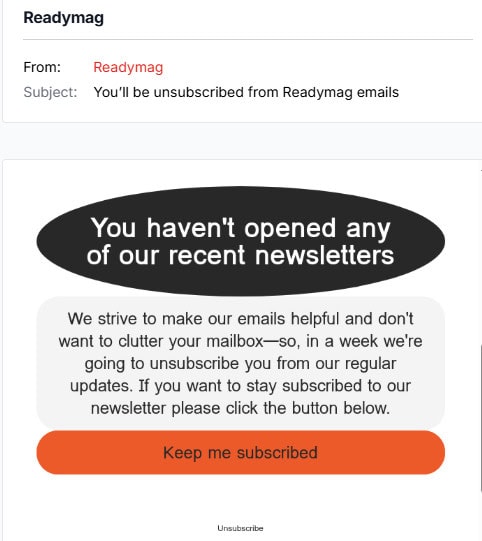
Image via Really Good Emails
Improving email deliverability requires maintaining a clean email list, properly authenticating emails, and sending consistent but just enough relevant content. Monitoring performance metrics and optimizing emails for mobile users helps strengthen your reputation for good inbox placement.
Email marketing automation challenges include misconfigured triggers, inaccurate audience segmentation, inefficient workflows, and complex automation setup.
All these can make managing automated campaigns harder.
Here’s how you can get past these email marketing challenges.
Also Read:
Email marketing communication challenges include using the wrong tone, misinterpretations, and a lack of emotional connection. These issues can affect how well your emails are received and understood.
Here, we explore how to build the best connection through email communication by overcoming the challenges.
Low engagement is a common email marketing challenge that often stems from irrelevant content, weak subject lines, and poor or lack of personalisation.
Getting subscribers to open and engage with your emails is a technique that takes time to master. Still, our email marketing strategies below will help you get started in the right direction.
Improving engagement requires sending more targeted, valuable, and well-timed emails that encourage interaction.
These strategies will help you get started in the right direction.
Here’s an example of an engaging email with a clear CTA.
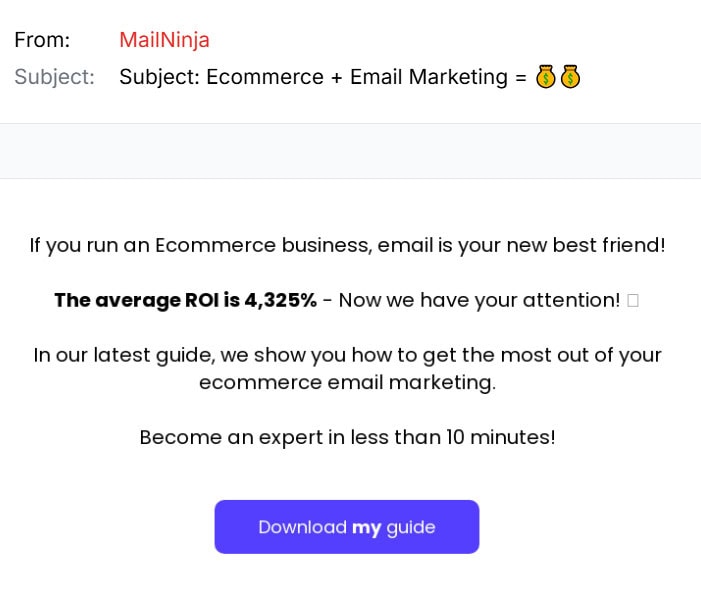
Image via Really Good Emails
By crafting irresistible subject lines, designing eye-catching visuals, and perfecting your call-to-action, you can turn email campaigns from “meh” to memorable.
Personalizing emails and targeting the right people with the right messages are crucial for email campaign success. Common personalization challenges include:
Creating personalized email campaigns at scale is a challenge,especially when personalization relies heavily on automation.
So, how can you overcome these email marketing challenges and come out on top?
Let’s find out.
Striking the right balance between personalization and segmentation means sending relevant and targeted emails.
Here are a few tips to get you started:
Also Read:
Effective email marketing campaigns rely heavily on personalization, relevant content, timely delivery, and clear calls to action. When done well, these help improve engagement, open rates, clicks, and overall campaign success.
Here are the best practices:
You can improve email open rates by using strong subject lines, personalizing emails, and sending them at the right time. Keeping content fresh and relevant also helps encourage more clicks.
Start with captivating subject lines that spark curiosity without revealing too much.
Personalize your emails to make your audience feel seen and appreciated.
Experiment with sending times to find that sweet spot when your audience is most receptive.
Oh, and keep your content fresh and valuable — nobody likes stale surprises.
Lastly, sprinkle in a little emoji magic for that extra flair.
Email list management and segmentation are key to email marketing success because they ensure you send the right message to the right people. Keeping your list clean and sorting new subscribers and inactive subscribers leads to better engagement and stronger campaign performance.
Managing your email list is like curating a VIP guest list for an exclusive party. Regularly clean it up, remove those who’ve moved on, and keep it fresh for the engaged crowd.
Now, segmentation is where the real magic happens. It’s like having a superpower to send the right message to the right people. Strong segmentation based on purchase history and customer behavior improves message relevance and strengthens email marketing success.
And that is the key to email marketing success — making every subscriber feel like they’ve got a front-row seat to a show curated just for them.
Integrating CRM with email marketing helps brands stay organized and streamline customer communication. When combined, these systems can deliver better customer targeting, improved engagement, and an overall better customer experience.
CRM holds the keys to a treasure trove of customer insights. When integrated with email marketing, it helps businesses deliver more relevant content and stronger personalization across digital marketing and social media channels.
Imagine sending emails that aren’t just blasted into the void but are tailored to each customer’s preferences and history. You shift from just sending emails to sending personalized invitations to a one-of-a-kind experience.
Plus, with CRM and email marketing working together, you’re not drowning in data chaos. It’s organized, accessible, and ready to fuel your digital marketing strategies.
So, why integrate?
Because it’s not just about sending emails; it’s about crafting meaningful connections that keep your customers saying, “Wow, they really get me!”
CRM integration matters in email marketing because it helps businesses leverage customer data to craft more personalized emails. When the message is well-received, it strengthens customer relationships.
Picture this: sending emails tailored to individual preferences, purchase history, and behaviors. It’s not just generic messages; it’s like having a personal conversation with each customer.
And let’s talk efficiency. CRM platforms streamline processes, making it easier to manage contacts, track interactions, and measure campaign success. With a good CRM platform, you can craft a customer journey that feels like a tailored experience, building lasting relationships.
So, why leverage CRM for email marketing?
Because it turns ordinary campaigns into extraordinary connections.
Also Read:
Email marketing analytics tools help measure success by tracking key metrics like open rates, click-through rates, conversions, and response times. This data shows what’s working and what needs tweaking to improve future campaign performance.
Using email marketing analytics tools helps you refine your email marketing strategy to ensure each email lands perfectly.
Advanced email marketing strategies focus on audience segmentation, A/B testing, and automation to deliver more targeted, timely, and effective campaigns that boost engagement and results.
First up, let’s talk about segmentation. Dive deep into audience behaviors, preferences, and interactions. Tailor your messages so precisely that each subscriber feels addressed directly.
Then, there’s the dynamic duo: A/B testing and optimization. Refine subject lines, content formats, and visuals to find what resonates most with your audience.
And don’t forget the secret sauce — automation. Set up intelligent, responsive workflows that deliver the right content at the right time.
In this competitive business landscape, it’s not just about being good; it’s about being extraordinary.
Email conversion rates can be improved by using clear CTAs, strong personalization, proper timing, and urgency-driven offers that encourage more clicks and actions. These tactics can help boost overall ROI.
Let’s unlock the treasure chest of tactics to skyrocket your email conversion rates and ROI:
Craft clear CTAs: Use clear CTAs in email templates to guide readers with simple next steps.
Use personalization: Tailor your content to reflect your audience’s individual preferences and behaviors to boost engagement.
Optimize timing: Experiment with sending times to find the right time to send promotional emails when your audience is most likely to open and act on them.
Add urgency and exclusivity: People fear missing out; offer exclusive deals and create a sense of urgency to encourage quick action and boost conversions.
When you combine these tactics, you build stronger brand loyalty and repeat purchases that boost ROI.
Also Read:
GDPR compliance is about respecting your audience’s privacy by getting clear consent, being transparent about data use, and allowing easy unsubscribing. At the same time, businesses must avoid spam filters to improve trust and deliverability.
Conquering spam filters is an art. Craft your emails to avoid trigger words, use clear subject lines, and maintain a positive sender reputation.
Authenticate your emails with SPF, DKIM, and DMARC records. It’s not just about sending emails; it’s about ensuring they reach the right destination.
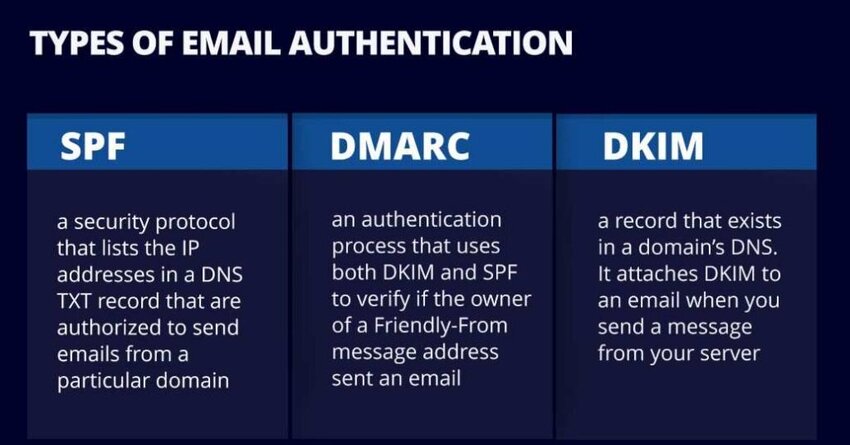
Image via Mimecast
By being GDPR-savvy and following spam filter best practices, your emails can respect privacy, build trust, and land where they belong — in your audience’s inbox. This helps strengthen your email marketing efforts.
Smart solutions for email marketing challenges focus on improving engagement. They use data for personalization, optimize timing, track performance, and build trust, boosting deliverability and ROI.
Want to improve your email marketing performance?
Streamline workflows, optimize automation, and ensure timely, relevant messages using email optimization software.
Improve workflows: Use automation and email tools, such as timetoreply, to streamline communication and track response times.
Embrace email analytics tools to measure performance, analyze key metrics, and refine strategies.
For automation, tools like timetoreply stand out for their detailed analytics and reports. This allows you to streamline communication and track response times.

Image via timetoreply
By implementing these solutions, you’re not just addressing email marketing challenges; you’re transforming your email marketing into a dynamic force for connection, engagement, and success.
Also Read:
1. What is email marketing, and does it matter in 2026?
Email marketing offers brands a direct way to communicate with subscribers who have shown interest. Today, it remains powerful because it delivers high ROI and can help build customer relationships alongside other marketing channels.
2. What are the biggest email marketing challenges?
The biggest email marketing challenges include poor deliverability, low engagement, automation issues, and poor personalization. These problems can reduce open rates, weaken customer relationships, and ultimately lower overall ROI.
3. What are the disadvantages of email marketing?
The biggest disadvantage of email marketing is that it’s difficult to make your emails stand out in a crowded inbox. It is one of the email marketing challenges every marketer faces. But when you get the basics and use the right strategies and best practices, you can easily overcome them.
4. How often should I send marketing emails?
You need to send emails regularly to maintain engagement, but avoid sending so many that they feel irrelevant and overwhelm subscribers. Understanding your audience and testing help reveal the right frequency for optimal engagement.
5. What are email deliverability challenges?
Email deliverability challenges occur when emails fail to reach your audience’s inboxes and instead land in spam or get blocked. It often happens when there is a weak sender reputation, poor list quality, and ineffective email authentication.
6. How can I improve email engagement?
You can improve engagement by using strong subject lines, offering relevant content, personalizing emails, and timing emails properly. When dealing with a large audience, segmenting also helps send more targeted and effective emails.
7. Do email response times matter, and how can I improve?
Yes, email response time matters; slow response can cause your business to lose potential leads or cause customer dissatisfaction. You can improve response times by automating workflows, streamlining processes, and leveraging email analytics tools like timetoreply to track and optimize communication speed.
8. Why are my emails going to spam or getting unsubscribed?
Emails usually end up in spam folders when email providers flag them due to poor sender reputation, ineffective authentication, outdated lists, low engagement, or overly promotional content. Most consumers unsubscribe when emails feel irrelevant, too much, or overly promotional.
timetoreply improves email efficiency by helping marketing teams respond faster, track performance, manage customer conversations more effectively, and enhance overall email communication. It also helps you overcome common email marketing challenges, streamlining responses and improving customer satisfaction.
In 2026, success in email marketing depends on how quickly you can address key challenges such as deliverability, segmentation, personalization, automation, analytics, and response times. Do well in these areas and you’ll enjoy higher engagement, stronger customer relationships, and better campaign performance.
Want to see how timetoreply can help? Book a demo and discover smarter ways to improve your team’s email efficiency and customer satisfaction.
Get live inbox alerts and reply quickly to customer emails with timetoreply

Head of Customer Success @ timetoreply
Barry Blassoples is the Head of Customer Success at timetoreply, where he helps customer-facing teams boost revenue and protect brand reputation by providing actionable insights to improve their business email response times. He has over 15 years of leadership experience across customer success, sales, and marketing roles in high-growth tech companies.



Trusted by high-performing inbound sales teams and customer-facing teams globally.
Close more deals and delight more customers with the faster, smarter, deeper email analytics and performance optimization software that works straight from your team’s inbox.