
Learning how to improve customer experience starts with making interactions simple and helpful. It helps you earn customers’ trust, build stronger relationships, and improve retention. You’ll learn what customer experience means, why it matters, and tips to improve it.
Learning how to improve customer experience can help you increase retention. It’s also the key to building stronger relationships and driving long-term business growth. In a competitive B2B market, a positive customer experience gives you a clear edge.
Today, a good product isn’t enough. Customers want fast resolutions and a smooth experience across the entire buying journey.
The good news? You don’t need to spend your entire budget to improve customer experience. Start with the basics: improve employee training, personalize interactions, and reward customer loyalty.
In this guide, you’ll learn proven ways to improve customer experience. You’ll also discover common challenges and how to get past them.
See how timetoreply surfaces reply times, SLAs and workload inside your inbox.
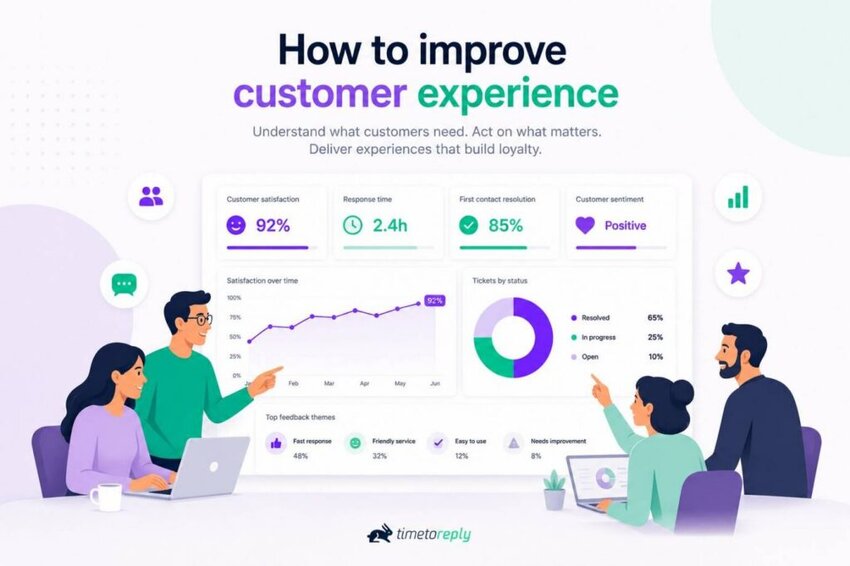
Image via timetoreply
Customer experience (CX) is clients’ perception of your business. It’s shaped by every customer interaction. This includes the first sales conversation, lead response times, and long-term account management.
For B2B companies, great CX helps build trust and stronger customer relationships. It also improves brand loyalty, client retention, and business growth.
A 2025 CX report by Ipsos found that 70% of customers choose brands they know will give them a good experience.

Image via Ipsos
Zendesk’s CX Trends report adds that great CX improves retention rates. Businesses increased customer retention by 22% in 2025.
Learning how to improve customer experience starts by recognizing that every touchpoint matters. Tracking response times and customer experience analytics helps you focus your efforts.
Many confuse customer experience with customer service, but they’re not the same. Service is one piece of the puzzle, while experience is the full picture.
Customer service refers to the support you provide when a client has a question or faces a problem. Customer experience is broader. It covers the entire customer journey, whether a client contacts your support team or not.
Improving customer experience means optimizing every interaction, not only those that involve support. This includes onboarding, email follow-ups, and self-service options that empower customers.
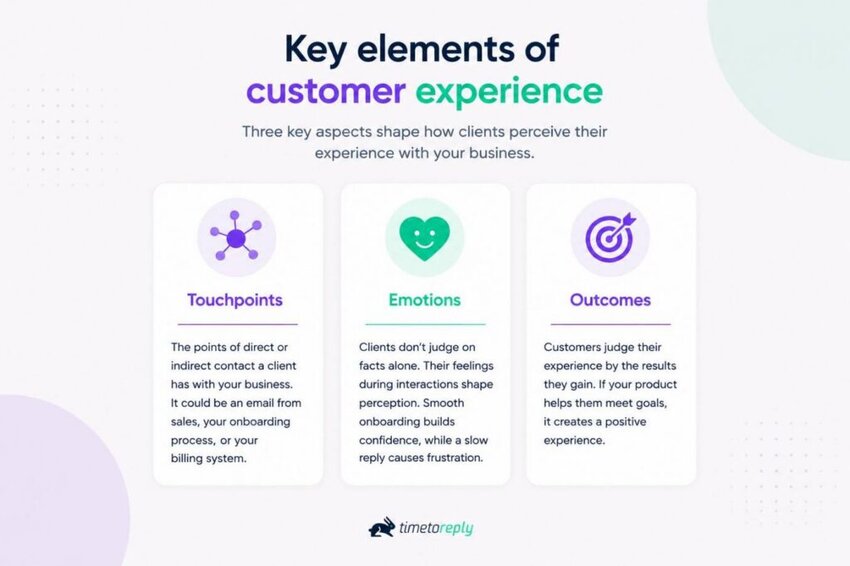
Image via timetoreply
Three key aspects shape how clients perceive their experience with your business:
It’s how customers feel about every interaction they have with your business. Customer service is only one part of it. Improving CX involves every touchpoint, rather than the moments when things go wrong.
Here are eleven proven tips on how to improve customer experience if you’re in the B2B space. Use the table below to scan them at a glance, then read each one for how to apply it.
| Strategy | What it does | When it matters most |
| 1. Build a customer-centric culture | Aligns teams around one shared view of the customer | Cross-team handoffs and account management |
| 2. Improve responsiveness and resolution | Cuts reply and resolution times across channels | High-volume email and support queues |
| 3. Improve employee experience | Motivates the people who serve customers | Frontline and customer-facing teams |
| 4. Know your customers inside out | Turns data into relevant, personalized service | Complex or high-value B2B accounts |
| 5. Design omnichannel experiences | Connects every channel into one journey | Customers who switch email, phone, and chat |
| 6. Use customer journey mapping | Reveals friction at each stage | Onboarding and buying-process drop-off |
| 7. Personalize interactions | Tailors communication to each customer | Accounts that expect a named relationship |
| 8. Leverage technology and innovation | Automates and speeds up service | Scaling teams and repetitive requests |
| 9. Use surveys to collect feedback | Captures the voice of the customer | After purchases, tickets, and renewals |
| 10. Reward loyalty and foster advocacy | Turns happy customers into referrers | Retention and expansion motions |
| 11. Measure, track, iterate | Tracks the metrics that prove progress | Every ongoing CX program |
Put your customers at the center of every business decision and strategy. It aligns key departments, like sales and marketing, around delivering consistent value.
For a culture like this to succeed, leaders must set an example. Something as simple as providing tracking information can help you keep long-term customers. Here’s how FedEx does it:
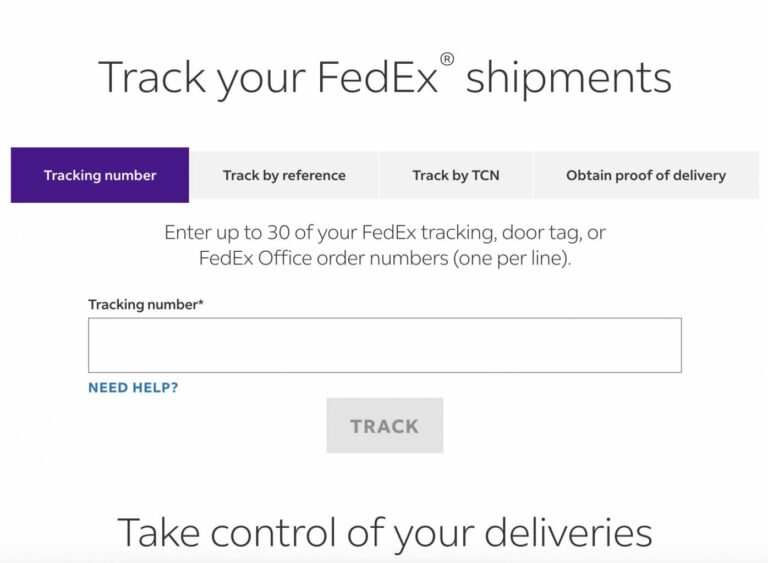
Image via FedEx
Most importantly, a customer-centric culture removes gaps that could harm the experience. Teams that share the same customer information can continue a conversation smoothly.
This culture benefits the customer in the following ways:
Improving responsiveness means reacting to client inquiries, issues, and requests faster. A quick and responsive resolution covers every channel: email, phone, chat, and ticketing.
You should set clear internal targets for response time and track the right KPIs. Your customer-facing teams should also aim to solve problems on the first contact.
Tracking response speed helps you improve customer experience. Shep Hyken’s 2026 State of CX report found that 89% of customers expect fast support responses.

Image via Shep Hyken
Even if you need more time to solve an issue, let customers know you are working on it. Clear updates help build trust and confidence in your business. It also shows customers you value their time.
The payoff is real and measurable.
Lonnie Jackson, the VP of Customer Management at Ontellus, reports better reply times. The share of emails answered within a business day rose from 62% to 86% after using timetoreply. Transactional email volume fell about 20% at the same time.
Kyra Augustus, the Director of Partner Support at Telarus, also reported improvements. Reply times in some teams dropped from 7 hours to 2 hours. Both teams used timetoreply to make reply times visible.
That is where email analytics earns its place. It surfaces reply times, SLA breaches, and workload live inside Outlook and Gmail. Managers can coach teams before a slow reply becomes a lost account.
The benefits of fast responses for customers include:
Happy employees create happy customers. Give your team the training, support, and resources they need to do their jobs well. When employees feel motivated, they improve customer experience.
Improving employee experience goes beyond a salary raise. It also means refining internal communication and offering clear career paths. You should also give teams customer service tools that reduce friction.
Create a positive workplace culture where you recognize employee ideas and contributions. It helps you improve customer experience in the following ways:
Also Read:
Your customers are more than demographics or transaction data. Real people exist behind the numbers you track.
Knowing your customers means understanding their pain points, decision criteria, and long-term plans. You can achieve this using customer feedback tools. Hold regular check-ins, even with customers you haven’t heard from in a while.
Tracking customer behavior through analytics or customer service software also provides valuable insights. You can also build personas that reflect real clients. This helps your teams understand behavior from the customer’s perspective.
The better you know your customers, the easier it becomes to meet their needs. The benefits for customers include:
Give customers a smooth experience across every channel they use. This can include your website, email, mobile app, social media, and customer support.
The goal is to link every platform. When customers switch channels, they should still get quick and helpful support.

Image via timetoreply
A connected system also keeps conversations moving. For example, a customer may email your team first and then call support. The support agent should already see the earlier conversation. Customers don’t have to repeat themselves, which saves time and builds trust.
The 2026 Shep Hyken State of CX survey shows the importance of a consistent experience. It found that 68% of customers switch brands if they have to repeat their issue several times.
Other benefits of omnichannel experiences include:
Also Read:
Customer journey mapping shows the path customers take when interacting with your business. It includes every step from first contact to purchase and support.
This map helps you spot where customers get stuck, confused, or frustrated. It gives you a clear plan for how to improve customer experience. Even small improvements at key moments can make a big difference.
If leads go silent after asking for a product sample, journey mapping can reveal the cause. Often, the follow-up emails are slow or unclear.
Here’s how customer journey mapping benefits customers:
Personalized interactions mean understanding each customer’s preferences and behaviors. You can then tailor their experience instead of treating everyone the same.
For B2B businesses, this can include relevant recommendations or adjusting your communication style. When you remember a client’s history or preferred contact method, it builds trust.
It also lets customer-facing teams respond faster to individual issues. More benefits include:
Also Read:
Emerging technologies like AI are helping B2B companies manage customer interactions more efficiently.
A 2025 Salesforce State of Service report found that 69% of service organizations now use AI. Of these, 53% use generative AI while 39% use agentic AI.
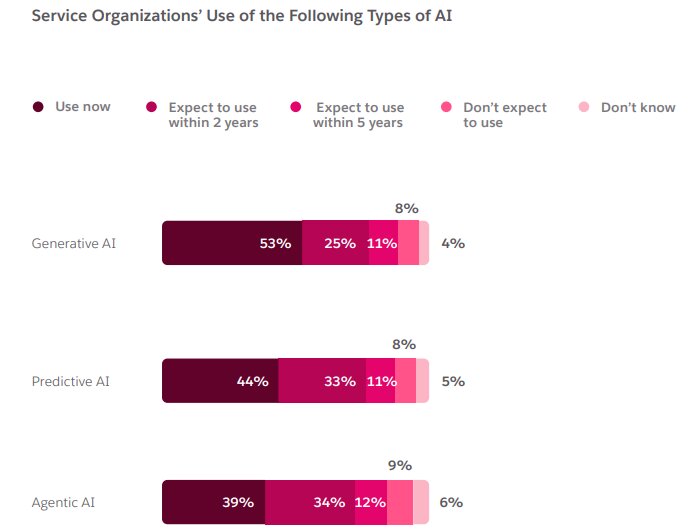
Image via Salesforce
This kind of AI-assisted adoption removes friction in communication and service delivery. Beyond personalized outreach, B2B brands can automate billing, email analytics, and lead identification. This frees teams to handle more complex issues.
Here’s how technology helps you improve customer experience:
The best way to know what customers really feel is to ask them. Surveys capture real opinions from the clients who use your products and services.
They can take many forms. These include post-purchase questionnaires, satisfaction ratings, and open-ended feedback forms. The goal is to learn what’s working and where you can improve customer experience.
Here’s an example of a simple customer feedback survey:
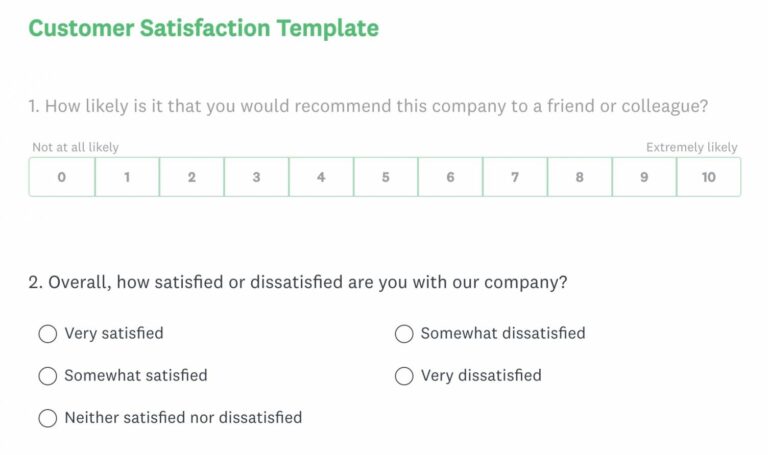
Image via SurveyMonkey
Feedback gives you ideas for how to improve customer experience over time. For B2B companies, surveys also support long-term growth. They provide a feedback loop that helps you spot gaps and measure progress.
Most importantly, act on the feedback you receive. Customers notice when businesses listen and make changes. This improves trust and customer satisfaction.
Key benefits for customers include:
Also Read:
Appreciating existing customers for their continued business is good for your brand. It encourages them to stay loyal and refer new customers, which expands your base.
For B2B companies, this could include loyalty programs or discounts for repeat clients. You can also offer early access to new features or publicly recognize referrals.
Strong advocacy improves customer retention. A customer who feels acknowledged is more likely to keep buying.
More customer benefits include:
The final step in learning how to improve customer experience is to measure progress. You track interactions, analyze the data, and keep improving based on what you learn.
Knowing how to measure customer experience aligns your business with real expectations.
Here are some of the key customer service metrics you can track:
| Metric | What it measures | How to read it |
| CSAT (Customer Satisfaction Score) | Satisfaction with a product, service, or interaction | Higher is better — collect right after an interaction |
| NPS (Net Promoter Score) | Likelihood a client recommends you (0-10) | Track promoters vs detractors to gauge loyalty |
| CES (Customer Effort Score) | How hard it was to get an issue resolved | Lower effort signals a smoother experience |
| Churn and retention rate | Customers who leave vs those who stay | Falling churn and rising retention reflect service quality |
| CLV (Customer Lifetime Value) | Total revenue a customer brings over time | Use it to invest in the relationships that matter most |
| ART (Average Resolution Time) | The duration your team takes to resolve issues | Shorter times usually mean more efficient service |
| FRT (First Response Time) | The time customers wait for the first reply | Faster first responses signal your team is proactive |
CSAT measures customer satisfaction with your product, service, or specific interaction. Ask customers to rate their experience right after buying a product.
Here’s how you calculate a CSAT score:

NPS shows how likely clients are to recommend your company to others. This metric gives you a clear picture of customer loyalty. It also reveals gaps that help you improve customer experience.
Here’s how you calculate NPS:

CES tracks how easy it is for clients to complete a task. This could be getting support or solving a problem. Lowering customer effort helps you improve customer experience for long-term satisfaction.
Here’s the formula for calculating CES:

Churn shows how many customers stop doing business with you. Retention tracks how many stay. These two metrics directly reflect your service quality and relationship management. Reducing your churn rate helps you improve customer experience and retention.
You can calculate customer churn using this formula:

Image via timetoreply
Here’s how to calculate customer retention rate:

CLV estimates the revenue a customer brings over their relationship with your business. Understanding this metric helps you see how to improve customer experience. You can do this by investing in relationships that matter most.
Here’s how you calculate CLV:

ART measures how long it takes your team to resolve customer issues. Shorter times usually mean more efficient service and happy customers. Tracking ART allows you to spot delays. It also helps you understand how to improve customer experience through faster problem-solving.
Here’s how you calculate ART:

FRT tracks how quickly your team responds to a customer’s first inquiry. A shorter FRT shows your team is attentive and dependable. This metric reveals how to improve customer experience through timely communication.
Here’s how you calculate FRT:

Image via timetoreply
FRT = (Total time taken to send first responses ÷ Number of tickets or inquiries)
Put your customers first, respond quickly, understand their needs, and make every interaction easy. Then collect and act on feedback, support your employees, and use the right tools. Finally, reward loyal customers and track your results to improve your strategy.
Also Read:
Learning how to improve customer experience is not always easy. Many B2B companies struggle with scattered customer data, poor teamwork, and inconsistent service. Most problems overlap with common customer service challenges.
Here are the most common problems:
The hardest part of improving customer experience is staying consistent across every touchpoint. To fix this, unify your customer data, align your teams, and give everyone the same view. The experience holds up no matter who replies.
Improve customer experience with faster replies, SLA tracking, and team performance monitoring.
Also Read:
1. How can we improve customer experience?
Here’s how to improve customer experience:
2. What are the 4 Ps of customer experience?
The 4 Ps of customer experience are:
3. What are the 5 steps of customer experience?
The five steps of customer experience include:
4. What are the 3 Es of customer experience?
The 3 Es of customer experience include:
5. What are the qualities of good customer service?
Good customer service starts with clear communication, patience, and fast responses. Your team should listen attentively, solve problems quickly, and keep customers informed. Being professional and reliable also builds trust and improves customer experience.
6. How do you handle difficult customers?
Here’s how to deal with difficult customers:
7. How do you measure customer satisfaction?
You can track customer satisfaction using several metrics, including:
8. What is the biggest challenge in customer service?
Maintaining consistency across all touchpoints is a major customer service problem. Clients expect the same level of attention and accuracy from every department.
Maintaining that consistency helps build trust. It also demonstrates how to improve customer experience through reliable communication and support.
9. What is the difference between customer experience and customer service?
Customer service is the support you give when a customer has a question or problem. Customer experience is the whole journey a customer has with your business. It includes every step from the first sales email to renewal. Service is one important touchpoint, while experience is the full picture.
10. How does email response time affect customer experience?
Email response time is one of the clearest signals of customer experience. Faster replies build trust and show customers they are a priority. Slow or missed replies frustrate them and cost retention. Reducing response time is a key step in learning how to improve customer experience.
11. What are the 5 Cs of customer experience?
The 5 Cs of customer experience are commonly described as:
Also Read:
Learning how to improve customer experience helps B2B businesses build long-term trust. Start by creating a customer-centric culture, responding faster, and personalizing every interaction. Then map the entire customer journey and use the right tools.
Start small. Pick two tips, apply them this quarter, and measure progress before you add more. Customers who feel understood are far more likely to stay and advocate for your brand.
If you want to improve customer experience with faster replies, timetoreply can help. It gives you clear insights into response times, workload, and team performance.
Book a demo today and see your team’s reply times inside the inbox they already use.
Get live inbox alerts and reply quickly to customer emails with timetoreply

Head of Customer Success @ timetoreply
Barry Blassoples is the Head of Customer Success at timetoreply, where he helps customer-facing teams boost revenue and protect brand reputation by providing actionable insights to improve their business email response times. He has over 15 years of leadership experience across customer success, sales, and marketing roles in high-growth tech companies.



Trusted by high-performing inbound sales teams and customer-facing teams globally.
Close more deals and delight more customers with the faster, smarter, deeper email analytics and performance optimization software that works straight from your team’s inbox.