
Some businesses spend more time chasing new customers than retaining existing ones. They spend more resources on ads, promotions, and lead generation than on strategies that keep their customers happy and loyal.
This creates a disconnect that makes it necessary to learn how to improve customer retention. Contrary to what entrepreneurs and managers assume, most customers leave without raising complaints.
They just drift when value drops, communication slows, or their expectations aren’t met. No warning; just fewer logins, fewer purchases, and eventually, silence!
That’s why customer retention matters. It protects repeat sales, builds trust, strengthens loyalty, and supports your business’s long-term stability.
In this article, we’ll teach you how to improve customer retention with strategies that actually work. We’ll also further explain why customer retention strategies are essential. Let’s begin.
Before diving into how to improve customer retention, let’s first understand why it deserves every business’s attention.
Let’s jump in.
Getting new customers often comes with high costs. You’re likely to spend extra on ads, discounts, and sales calls that feel endless. You’ll also need a significant amount of effort.
Let’s not even talk about the pressure. According to a recent eTail Palm Springs report, 80% of marketers are under intense pressure to meet customer acquisition goals. The rising ad costs have made attracting new customers more challenging and expensive.
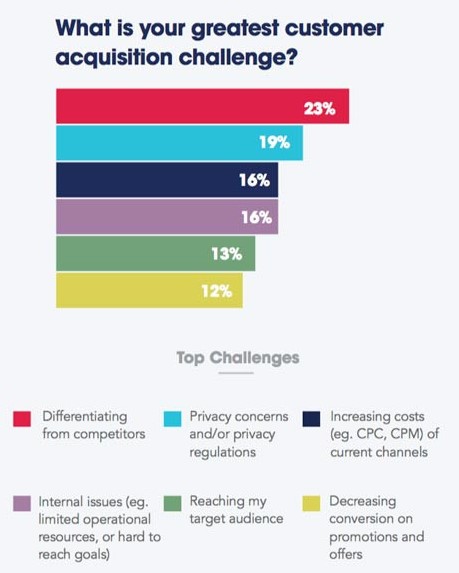
Image via eTail Palm Springs
On the other hand, retaining existing customers costs less because trust and loyalty are already established. You’re not starting from zero or trying to prove your value from scratch.
Improving customer retention doesn’t require massive changes to make an impact. Even modest increases in the retention rate can accumulate profits over time.
When you successfully reduce churn, customers stick around for longer, and customer lifetime value (CLV) naturally goes up. These wins accumulate, allowing you to increase your profits without needing to constantly acquire new customers.
Operations tend to run smoother when you focus on customer retention more than acquisition. You get fewer customer complaints and issues to resolve, and better customer interactions overall.
Because your team spends less time fixing issues, they’ll have more time to improve the customer experience. When they know how to improve customer retention, they can focus on what truly matters.
While happy customers talk, loyal customers talk even more. They’ll post about your business and offerings on social media, recommend your brand to friends and family, and share real experiences.
This word of mouth brings in new customers without you spending an extra dime on marketing.
Also Read:
Every entrepreneur knows how unpredictable it can be to generate revenue. This is why it’s important to learn how to improve customer retention. It creates consistent revenue while reducing revenue gaps caused by customers quietly dropping off.
More repeat customers means easier forecasting and planning for your business. A strong customer retention rate also cushions your business during slow periods.
Your loyal customers don’t just come back; they spend more. A consumer survey by Queue-it shows that 62% of customers spend more when they trust a business.
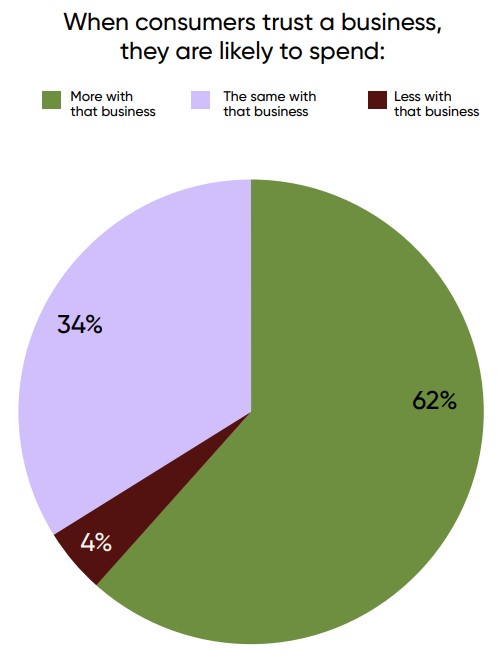
Image via Queue-it
When they trust your brand, they feel comfortable buying your offerings and make purchase decisions with confidence.
As a result, these customers become your most reliable buyers, boosting repeat customer rate and long-term revenue.
Customer retention goes way beyond repeat purchases. Customers can feel more emotionally connected with your brand as they continue interacting with it.
Brand loyalty grows naturally when people feel understood and appreciated. Emotionally connected customers stick around longer, defend your brand, and don’t easily leave at the first sign of better deals elsewhere.
Now that you understand its benefits, it’s time to discuss the steps involved in learning how to improve customer retention. This isn’t about one-off fixes; it consists of continued efforts that shape how customers experience your brand.
Here are effective customer retention strategies worth considering.
While you might want to improvise, it’s best to have a plan to succeed in your customer retention efforts.
To improve customer retention, you’ll need a documented roadmap with the following components:
A good plan gives you an overview of how to improve customer retention. It keeps you focused and aligned, reduces guesswork, and closes revenue-draining gaps in customer retention strategies.
Businesses lose customers during onboarding without even realizing it.
In fact, the quality of the onboarding process determines how well customers understand your brand and see its value.
When customers feel frustrated or overwhelmed, even before seeing the value in your brand, they could leave without warning. That’s why your onboarding process should help customers better understand your brand.
How, you ask? Here are some ways:
An effective onboarding process helps improve customer retention by meeting customer expectations from the start and reducing frustration early on.
The work doesn’t stop when you make your first successful sale.
Existing customers evaluate every interaction with your brand, checking whether it meets their expectations. This means that every stage, communication, support, updates, or product performance must deliver consistent value.
When you do this, you’re not just selling to customers; you’re also supporting them. This reassures returning customers that they made the right choice, which then boosts engagement, trust, and long-term confidence in your brand.
Also Read:
Existing customers want personalized experiences from your brand. They want to feel recognized, not marketed to. More than anything, they want interactions that help them move forward in their journey.
This is the purpose of personalization in learning how to improve customer retention. The image below shows the key factors that make personalization more effective, with 74% of consumers assigning helpfulness as the top one:
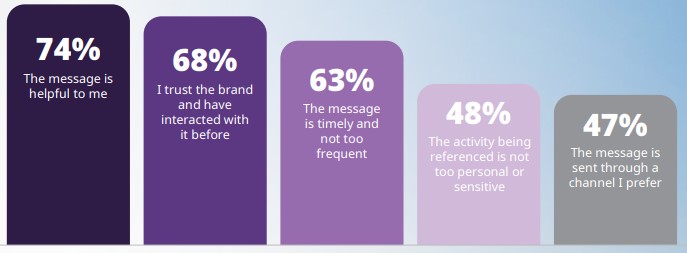
Image via CSG
Using customer data, you can tailor messages, offers, and support depending on where customers are in their journey. These interactions feel timely and useful and improve the overall customer experience.
Over time, this builds stronger relationships, boosts engagement, and helps improve customer retention.
Automation has become an effective customer retention strategy by creating fast, personal, and proactive interactions.
Here’s how it works:
Many businesses now use AI to streamline several functions, with 51% of businesses using it for three or more functions. You can do the same to boost customer retention.
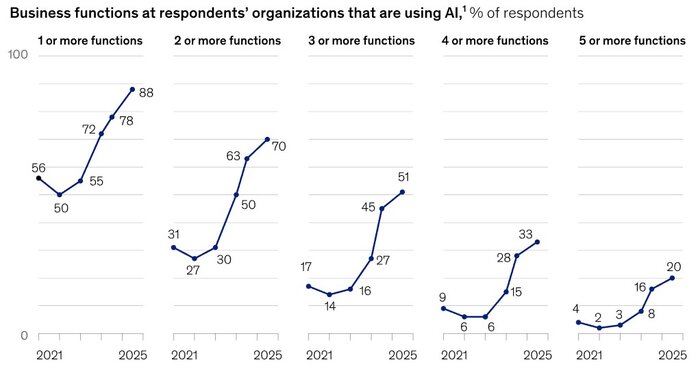
Image via McKinsey
Customers have become advocates of sustainability. When you ensure sustainability in your customer experience, it builds trust and strengthens customer loyalty over time.
It’s not surprising that 62% of Gen Z shoppers choose brands that support sustainability efforts, and 73% are open to paying more for eco-friendly products.
Customers notice every sustainability effort your business makes. They feel good that your values match theirs, and they’re most likely to remain loyal.
Pricing plays a bigger role in customer retention than many entrepreneurs like to admit. According to a recent Bizrite Insights report, competitive pricing is a major factor in driving customer loyalty.
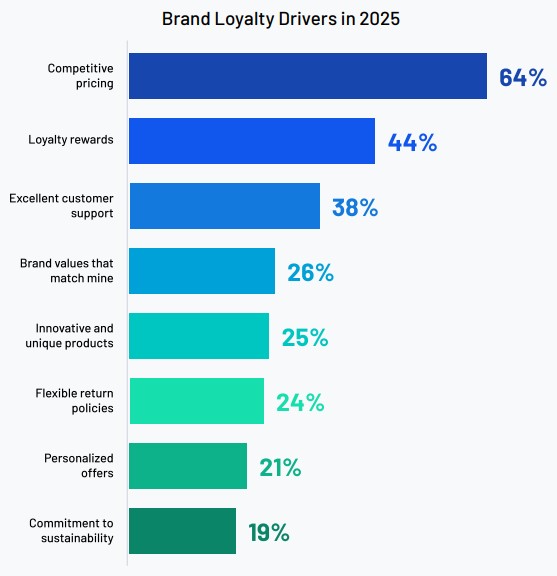
Image via Bizrate Insights
In this case, competitive pricing doesn’t necessarily mean cheap. It means clear, reasonable, and consistent pricing. When you suddenly hike prices or hide fees, you’ll cause a churn event.
On the other hand, transparent pricing builds trust and boosts customer satisfaction, and as a result, builds long-term customers. With competitive pricing, your existing customers get fair value and won’t need to shop around.
Even when everything else looks good on paper, customers will leave when quality decreases.
When you provide high-quality and reliable products and services, customers will likely stay. The earlier-mentioned Bizrate Insights report also shows that product quality is the leading reason why customers continue shopping from a particular brand.
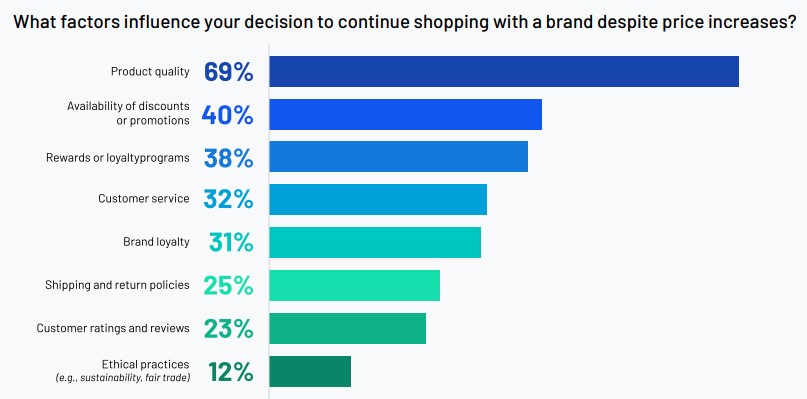
Image via Bizrate Insights
Top-tier offerings build trust and considerably reduce refunds and customer complaints. Over time, this consistent quality turns first-time buyers into repeat customers without relying on discounts and promotions.
Also Read:
Your customers signal where retention problems are. All you have to do is listen.
Customer feedback signals what’s working and what isn’t. Ignoring it often leads to frustrations and increased complaints. The good news is that most customers are willing to share feedback if you ask them for it.
However, it doesn’t stop with just collecting feedback. Valuable feedback is nothing if you don’t act on it.
This step in learning how to improve customer retention shows that you’re willing to do what it takes to improve the customer experience. Additionally, you reduce the chances of customer churn when you address negative feedback early.
Customer service often determines whether a customer stays or not. With poor support, frustration builds, customer churn increases, and revenue declines.
That’s why it’s important to invest in a helpful, knowledgeable, and reliable customer service team that resolves issues fast before frustration increases.
Fortunately, AI-powered tools now help service teams deliver high-quality support. Adopting AI-powered tools like chatbots, ticketing systems, virtual assistants, and schedulers helps achieve faster resolution times.
Eventually, your customers will associate your brand with stellar customer service, and they’ll spread it through word of mouth.
Your customers want recognition for loyalty, not just spending. Well-designed loyalty programs ensure this, effectively improving customer retention.
According to the OPEN LOYALTY report, a well-designed loyalty program encourages repeat or long-term behavior.
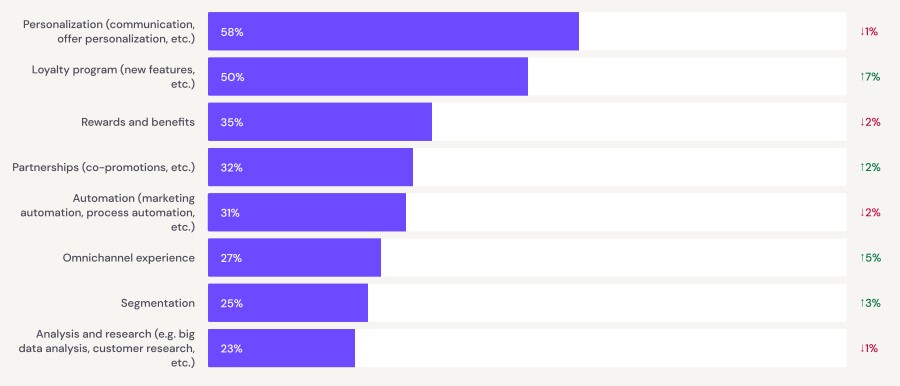
Image via OPEN LOYALTY
Rewards should be simple, relevant, and easy to redeem. It could be early access, exclusive perks, or recognition for continued usage. These programs don’t just improve customer retention. They strengthen your loyal customer base and boost CLV.
Customers tend to remain loyal when they feel appreciated. Loyalty programs like Amazon Prime, Sephora Beauty Insider, and Marriott Bonvoy capitalize on this.
Customers now rank social media as the leading channel to connect with your brand.
What’s more interesting is that 70% of your customers will trust a brand and feel more connected to it if the owner or CEO is active on social media.
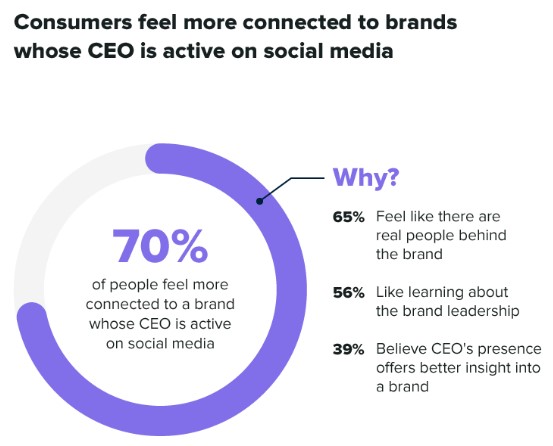
Image via Sprout Social
This is why social media can help in your customer retention strategy.
Customers expect you to be present, responsive, and helpful on social media. Post regular updates to maintain brand visibility. Additionally, respond quickly to comments and messages to build trust, credibility, and engagement.
Moreover, consistently posting content on social media, such as new product launches, behind-the-scenes, or tutorials, encourages conversations and word of mouth.
Educating your customers doesn’t have to end after the onboarding process. Offering a comprehensive knowledge base helps customers maximize what they’ve bought.
For instance, HubSpot learned that education is a simple yet powerful retention driver. The platform offers various courses and certifications for free. Customers who complete these courses tend to stay longer because they know how to use the platform effectively. This strategy significantly improves customer engagement and satisfaction.
Also Read:
J. Willard Marriott once said, “Take good care of your employees, and they’ll take good care of your customers, and the customers will come back.”
Your employees directly influence how customers feel during every interaction with your brand. When you support your team, service quality improves.
To support your employees, you should:
These actions will create engaged and helpful employees who help create positive outcomes for customers.
Revenue quietly slips away if the returns and refunds process feels frustrating or unclear. Customers simply leave and never come back when they struggle to get a refund or feel disregarded.
It’s vital to develop clear, transparent, and fair return and refund policies. These reduce hesitation before buying and lower customer frustration and complaints. They also show that you’re confident in what you’re offering.
A complicated return and refund policy drives customers away and hurts your retention rate.
Customers today have several choices on which platforms and devices to use to interact with your brand.
While some prefer social media, others prefer communicating via email and chat. It’s important to meet your customers where they are and where it’s most convenient and accessible for them.
This omnichannel approach boosts engagement, which also improves customer retention. However, remember that you need to maintain consistent quality and personalization across all channels.
Customers are more likely to stay loyal when they feel valued, appreciated, and respected.
You can reinforce these emotions through exclusive offers such as:
These offers encourage repeat customers and strengthen their emotional connection with your brand. They can also help re-engage lapsed customers who have stopped interacting but haven’t fully churned.
Also Read:
You’ve learned how to improve customer retention. The next step is finding out whether your customer retention strategies are paying off.
For starters, track the following key performance indicators.
This shows the percentage of existing customers who continue to buy from your business over time. It’s one of the simplest ways to understand whether your effort to retain customers is working.
An increasing rate shows a strong customer experience, effective customer service, and success in meeting customer expectations.
This measures how many existing customers leave your business during a specific period. It tells you who left and why.
A high churn rate might be telling you there’s a problem in the customer journey, gaps in customer satisfaction, or friction in customer interactions.
This metric indicates the number of customers who return to make a purchase again. It reflects customer loyalty, habits, and trust developed over time.
A higher repeat customer rate indicates more engaged and loyal customers who appreciate the continued value of your brand.
CLV measures how much revenue a customer generates over the period they interact with your business. It increases when you improve customer retention since customers stay longer and spend more.
This KPI tracks how much customers engage with your brand across various channels, such as social media, email, support, and product usage.
Highly engaged customers are most likely to remain loyal and become long-term customers.
CSAT shows how customers feel after interacting with your brand. Did the interaction go smoothly, or did something go wrong?
High satisfaction doesn’t guarantee retention. However, it does boost brand loyalty and improve customer retention.
NPS shows if customers are likely to voluntarily tell a friend about your business. It’s a good indicator of customer loyalty and the effectiveness of word-of-mouth marketing.
These metrics help you spot recurring problems. While a single complaint may not be concerning, patterns show you where you need to improve your retention strategy.
This metric shows how much revenue existing customers bring in compared to customers you’ve acquired lately.
High revenue from existing customers shows that your customer retention and CLV are improving. It also means more repeat customers and a stable business.
Also Read:
1. What is customer retention?
Customer retention is your business’s ability to keep customers over time. It indicates whether consumers come back after making their first purchase.
More repeat and loyal customers indicate strong customer retention.
2. Why is customer retention important?
Customer retention is important because your business would find it hard to grow when customers keep leaving. You can keep chasing new customers, but that gets expensive fast, and your team and resources will eventually burn out.
Retention gives you stability, better profits, and more predictable revenue. It also builds customer loyalty, which leads to stronger word-of-mouth marketing.
3. Why does it cost more to acquire new customers than to retain the existing ones?
Acquiring new customers incurs extra costs, including marketing, discounts, follow-ups, and sales efforts. Customer retention, on the other hand, doesn’t need as much.
With existing customers, trust and loyalty are already established. They’re familiar with your offerings, so you don’t have to keep spending repeatedly to win them over.
4. What is a good customer retention rate?
There isn’t a single universal customer retention rate for every business. What counts as “good” varies by industry and purchase frequency.
What matters the most is how well your customer retention rate is improving. Consistent improvement shows you’re successfully keeping customers engaged and loyal over time.
5. How do I calculate customer retention rate?
Start with how many customers you had at the start of a period and subtract how many you’ve acquired during that time. Then, divide that result by your starting customers and multiply by 100.
In short:
Customer Retention Rate = ((Customers at End of Period − New Customers) ÷ Customers at Start of Period) × 100
6. How long does it take to see results from retention strategies?
Don’t expect to see your customer retention rate change overnight. You might notice early signs within a few months, such as more repeat customers or increased engagement.
Significant results, however, might take a bit longer because trust builds slowly. The good news is that retention compounds over time, so today’s small improvements become tomorrow’s huge wins.
7. Why are my customers leaving?
Sometimes, all it takes is one unpleasant experience for your customers to leave. Here are some specific reasons for customer churn:
8. Do loyalty programs really work for retention?
Yes, they do. Well-designed loyalty programs reward customers without manipulating them.
These programs improve customer retention and build a strong emotional connection. This strengthens loyalty, giving your customers a good reason to stay with your business.
9. How can I measure if my retention efforts are working?
Success in your retention efforts always goes beyond sales. Track customer retention rate, repeat customer rate, and customer lifetime value over time.
Additionally, pay attention to engagement levels, customer feedback, and how often your customers return.
Now you know how to improve customer retention. As you can see, retention relies on many small but effective strategies over time. It doesn’t improve overnight.
A simple fact remains: you need to start treating customer retention like a daily habit, not a mere metric.
Start with one strategy this week, watch how your customers respond, and build from there. Ready to turn retention into a habit? Book a TTR demo and see how to keep customers coming back—every day.
Get live inbox alerts and reply quickly to customer emails with timetoreply

Head of Customer Success @ timetoreply
Barry Blassoples is the Head of Customer Success at timetoreply, where he helps customer-facing teams boost revenue and protect brand reputation by providing actionable insights to improve their business email response times. He has over 15 years of leadership experience across customer success, sales, and marketing roles in high-growth tech companies.


Trusted by high-performing inbound sales teams and customer-facing teams globally.
Close more deals and delight more customers with the faster, smarter, deeper email analytics and performance optimization software that works straight from your team’s inbox.