
AI customer service platforms help you deliver faster, more consistent responses and customer service across channels. These tools automate routine work, assist human agents when needed, and provide customer support around the clock. This guide covers the leading platforms and their key features, pros, cons, and pricing.
The top AI customer service platforms help businesses automate and improve customer support. They answer common customer questions, solve issues, and deliver fast responses across channels like email, live chat, and social media.
As your business grows, customer service can become tough to manage. There just aren’t enough hours in the day to reply to every single email or chat. Yet customers want quick responses, which means slow replies will drive them straight to your competitors.
Without the right tools, meeting customer expectations becomes harder. Yet not every platform delivers the same results. Some AI customer service platforms focus on automation, while others prioritize analytics. Few focus on measuring and improving your team’s response.
That’s why I reviewed and ranked the top platforms to make your decision easier. You’ll learn what each tool does best, its strengths, weaknesses, and pricing.
AI customer service platforms are software solutions that use artificial intelligence to manage and improve customer service. Sometimes, you’ll see them referred to as AI customer support software.
These tools work across channels like email, chat, and voice. They start by unifying your customer conversations in one place. They then apply AI and automation to resolve issues, assist agents, send replies, or measure performance.
AI adoption in customer service has increased. According to Salesforce’s State of Service report, 69% of service teams use at least one AI tool. Of these, 39% use AI agents and 53% use generative AI.
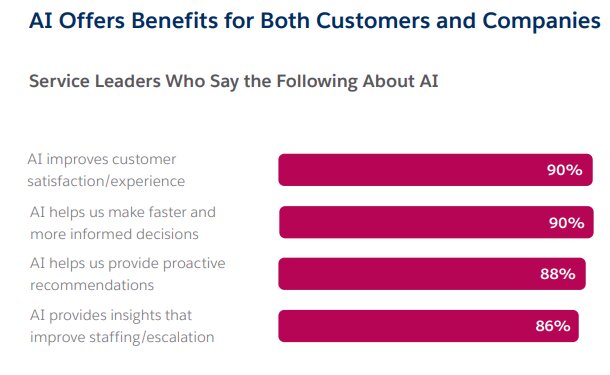
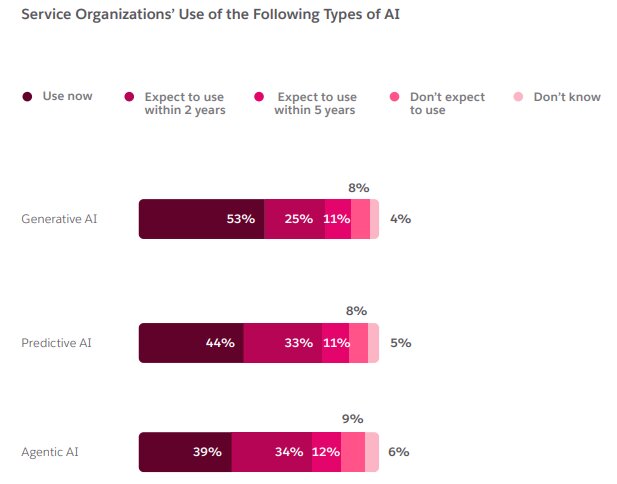
Image via Salesforce
So the question is no longer whether to use AI. It’s the job you need it to do.
AI customer service platforms use AI to resolve issues, assist customers, or measure customer service performance. The best fit depends on which of those jobs matters most to your team.
We selected AI customer service platforms based on features that improve customer experience and team efficiency. These include AI autonomy, channel support, integrations, pricing, customer feedback, security standards, and user-friendliness.
Here’s the criteria we used:
Reliable solutions have strong AI and automation features, support multiple channels, and offer value for money. They also protect your data, earn positive customer feedback, and provide a smooth user experience.
Here are the best AI customer service platforms side by side. Use the table to scan pricing, AI features, and best fit, then jump to any tool for more details:
| Platform | Best for | AI capability | Starting price (USD/mo) | Rating | Free plan |
| timetoreply | Email-led mid-market, and enterprise teams | AI-assisted email response time analytics | $38/mailbox | 4.3 G2 / 4.5 Capterra | ❌ |
| Zendesk | Enterprise omnichannel | AI agents + Copilot | $19/agent/month (billed annually) (AI agents from $55) | 4.3 G2 | ❌ |
| Intercom | Chat-first deflection | Fin AI Agent | $29/seat (+$0.99/Fin resolution) | 4.5 G2 | ❌ |
| Freshdesk | Small to medium businesses (SMBs) and mid-market | Freddy AI | $23/agent | 4.4 G2 | ✅ |
| Salesforce Agentforce Service (formerly Service Cloud) | Enterprise CRM-native | Einstein + Agentforce | $25/user | 4.4 G2 | ❌ |
| Help Scout | Email-first teams | AI Answers + Assist | $30/user | 4.4 G2 | ✅ |
| Ada | Enterprise automation | Autonomous AI agent | Custom | 4.6 G2 | ❌ |
| Forethought | Agentic support | AI agents (Solve API) | Custom | 4.3 G2 | ❌ |
| Tidio | SMB and ecommerce teams | Lyro AI | $29/100 billable conversations | 4.6 G2 | ✅ |
Prices are starting monthly rates in US dollars, verified in June 2026. Always confirm current pricing on each vendor’s site.
The best AI customer service platforms help you automate support and improve overall customer satisfaction. Leading options include timetoreply, Zendesk, Intercom (Fin), and Freshdesk.
Salesforce’s State of Service study shows that 90% of service professionals say AI improves customer satisfaction:
Image via Salesforce
I’ll review the best AI customer service platforms to help you narrow down your options:

Image via timetoreply
timetoreply is an AI-assisted email analytics software. It’s among the best AI customer service platforms for email-heavy teams.
The tool tracks email reply times, SLA performance, and customer sentiment across Outlook, Microsoft 365, and Gmail. It does this in the background without changing your team’s workflow.
timetoreply isn’t a chatbot. Instead of replacing agents, it helps them improve productivity by providing detailed response time insights. Managers can use the data to spot and fix communication delays before customers start walking away.
Telecoms firm Telarus cut response times in some teams from 7 to 2 hours using timetoreply data. Record-retrieval firm Ontellus also lifted responsiveness from 62% to 86% within an 8-hour business day.
Key features
Pros
Cons
Pricing
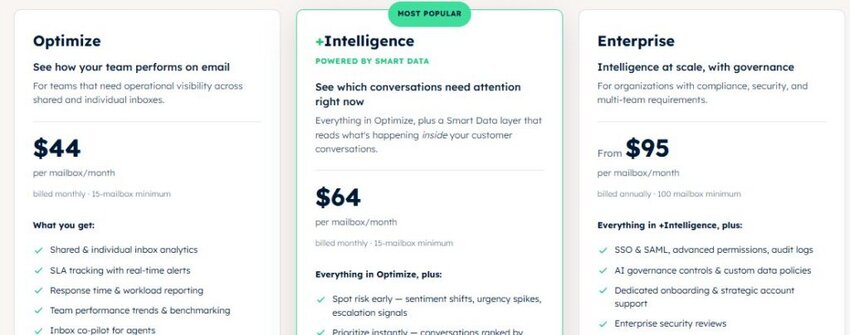
Image via timetoreply
Tool level
Usability
Pro tip: Set reply-time goals by customer tier first. The timetoreply tool then flags at-risk emails before they breach your SLA.
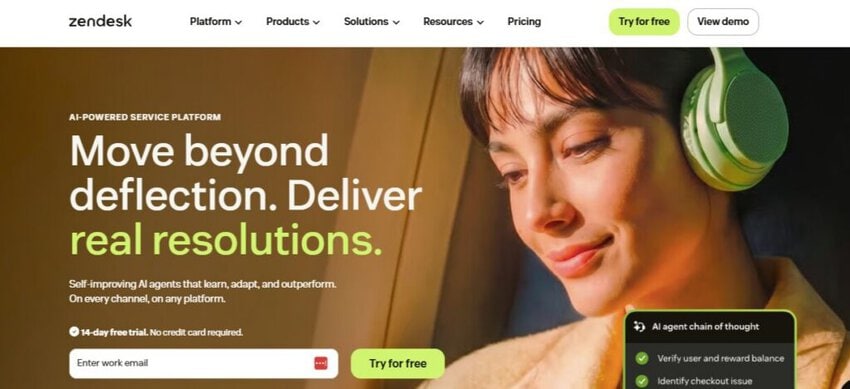
Image via Zendesk
Zendesk is one of the most popular AI customer service platforms for enterprise omnichannel support. It brings AI agents, a copilot for human reps, and ticketing into one unified system.
The tool helps you manage customer conversations across email, chat, voice, and socials. Its AI agents can answer common questions automatically and route complex requests to the right team.
Zendesk also grows with your support operations. This makes it a suitable customer service software for growing and large businesses.
Key features
Pros
Cons
Pricing
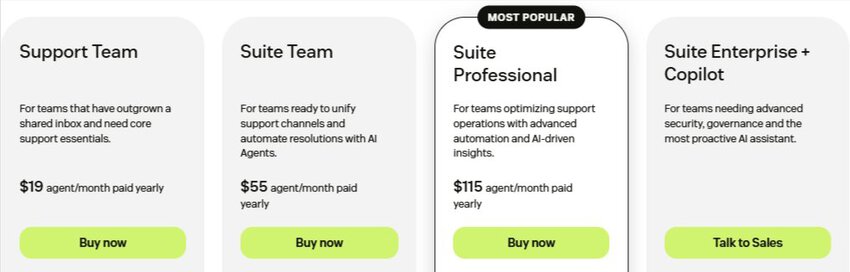
Image via Zendesk
Tool level
Usability
Pro tip: Before you start, plan out how much you want to spend on AI answers. Zendesk charges you based on usage, so planning ahead will save you money.

Image via Intercom
Intercom is a chat-first AI customer service platform built around Fin, its AI agent. Fin resolves customer questions across chat, email follow-ups, and your help center. It’s priced per successful resolution.
Among AI customer service platforms, Intercom stands out for its human-like conversations. Fin learns from your help center and customer support content to provide natural, accurate answers.
Key features
Pros
Cons
Pricing

Image via Intercom
Tool level
Usability
Pro tip: Audit your help center before activating Fin. Better content means more resolutions and lower spend.
Also Read:
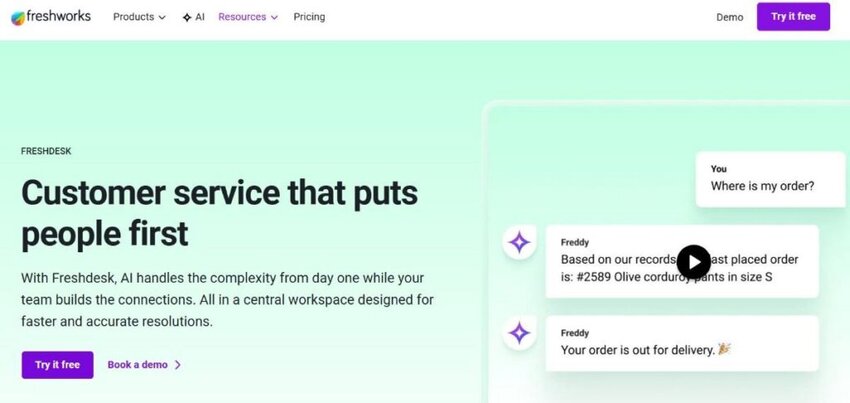
Image via Freshdesk
Freshdesk brings AI customer service to small and growing teams through Freddy AI, its AI agent. Freddy AI helps agents resolve issues and respond to customers quickly. It drafts replies, summarizes tickets, and recommends fitting solutions.
You also get an email AI agent. It sends fast replies, resolves issues, and collects customer feedback.
Freshdesk also comes with a free plan for up to 6 months. This makes it one of the most affordable AI customer service platforms for teams just starting out.
Key features
Pros
Cons
Pricing
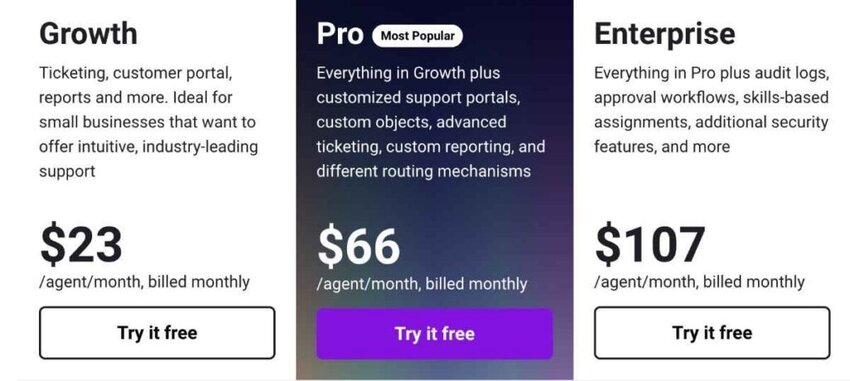
Image via Freshdesk
Tool level
Usability
Pro tip: Start on Growth to learn the workflow. Move to Pro when you need Freddy Copilot.
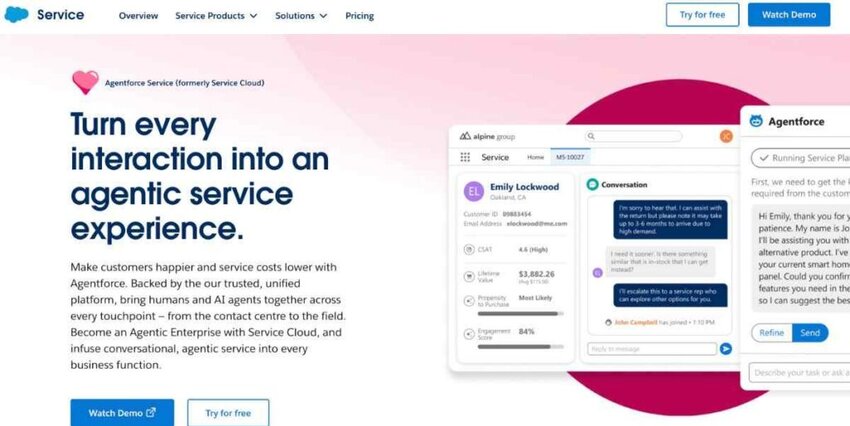
Image via Salesforce
Salesforce Agentforce Service is an enterprise AI customer service platform built on the Salesforce CRM. Its Einstein and Agentforce solutions include AI agents and Copilots that fit large teams already using Salesforce.
These AI agents answer customer questions and guide them through common processes. The Einstein Copilot summarizes conversations and assists human agents with recommended actions.
Salesforce Agentforce Service also connects directly to Salesforce CRM. This helps AI agents deliver more personalized support based on each customer’s history.
Key features
Pros
Cons
Pricing
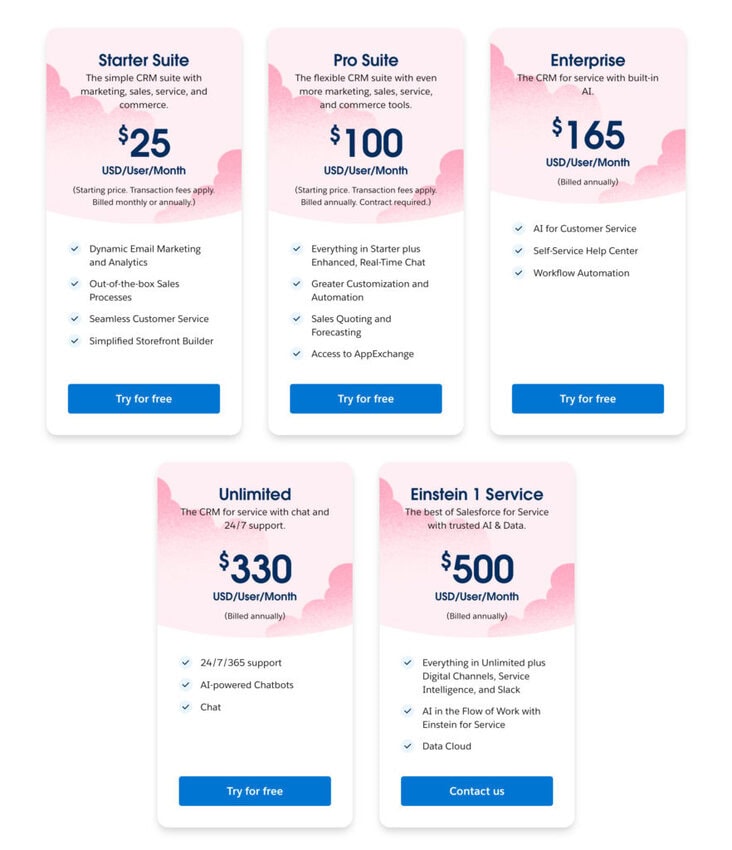
Image via Salesforce
Tool level
Usability
Powerful but admin-heavy. Plan for implementation training.
Pro tip: Choose Agentforce Service if you already use Salesforce CRM. The value comes from shared data.
Also Read:
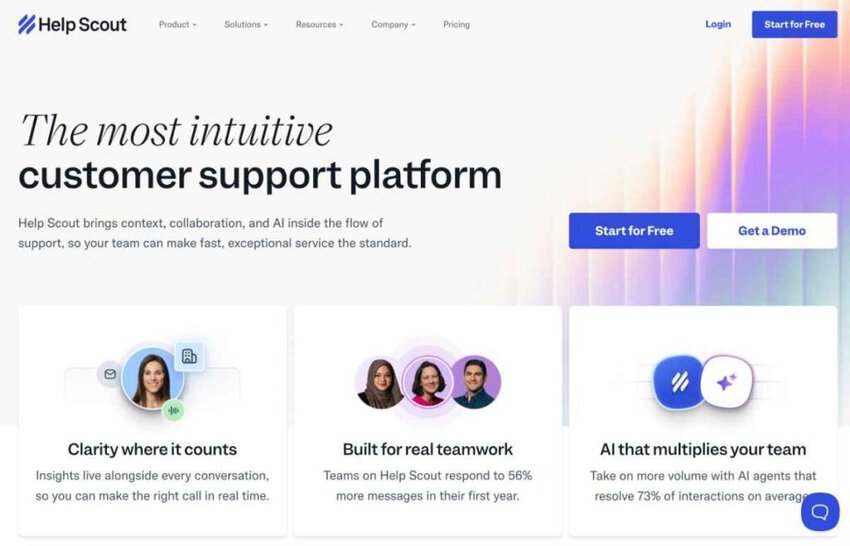
Image via Help Scout
Help Scout ranks among user-friendly AI customer service platforms for small and growing businesses. It’s built to look and feel like a simple email inbox.
Your team can manage customer service through a shared inbox, live chat, and knowledge base. HelpScout’s AI assistant also drafts, summarizes, and answers customer questions.
It’s among AI customer service platforms that help you deliver fast, personalized customer service.
Key features
Pros
Cons
Pricing
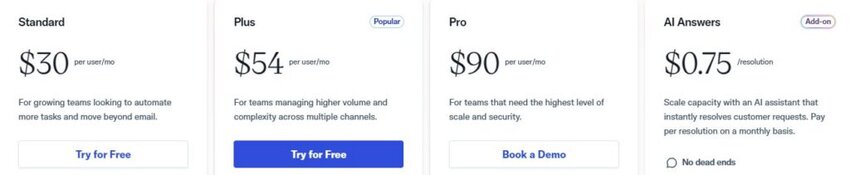
Image via Help Scout
Tool level
Usability
Pro tip: Use AI Answers on your top five repeat questions first. It cuts volume without risking your tone.
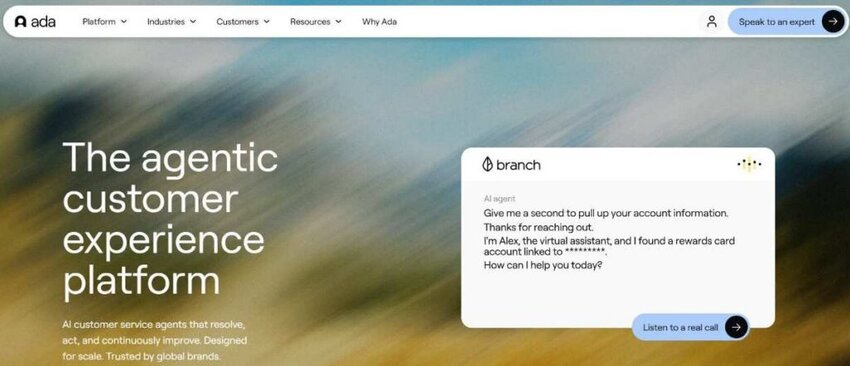
Image via Ada
Ada is one of the leading AI customer service platforms built for AI-powered automation. It runs autonomous AI agents that resolve high volumes of customer conversations. That suits large brands focused on ticket deflection.
The platform uses conversational AI to understand customer requests and deliver accurate answers across channels. When needed, Ada transfers customers to live agents along with the full conversation history.
Key features
Pros
Cons
Pricing
Tool level
Usability
Pro tip: Publish high-quality content before implementing Ada. Automation accuracy will depend on it.
Also Read:
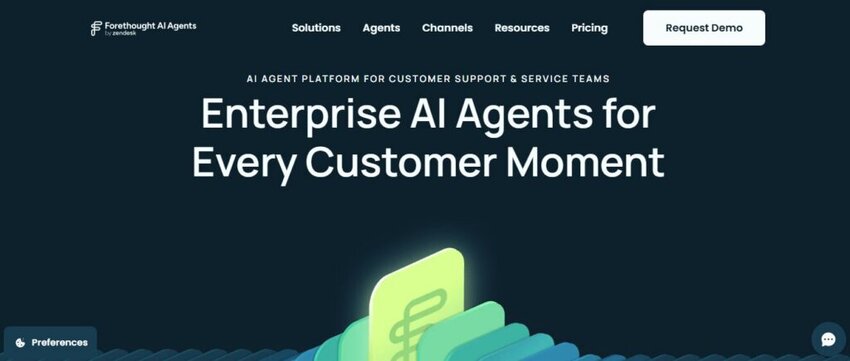
Image via Forethought
If you’re looking for advanced AI customer service platforms, Forethought is worth considering. It works with your existing customer service solution to automate support workflows and improve agent productivity.
Its Solve, Triage, and Assist products help with ticket resolution, routing, and agent support. Large companies with high ticket volumes often choose Forethought to reduce support costs.
Key features
Pros
Cons
Pricing
Forethought provides personalized quotes for its three tiers:
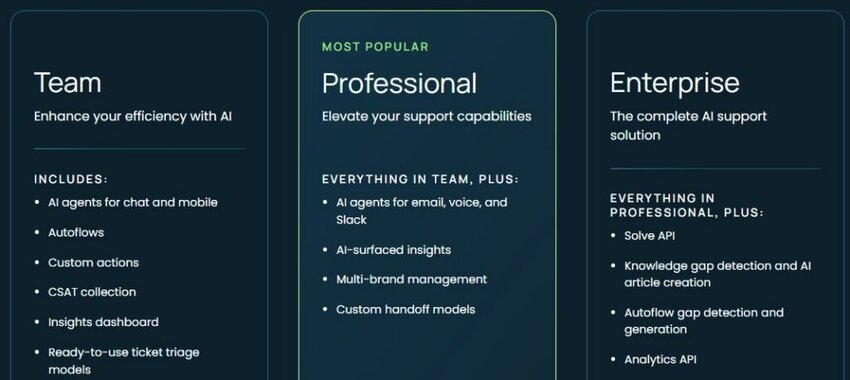
Image via Forethought
Tool level
Usability
Pro tip: Start with Triage to fix routing first. Clean routing makes every later automation work better.
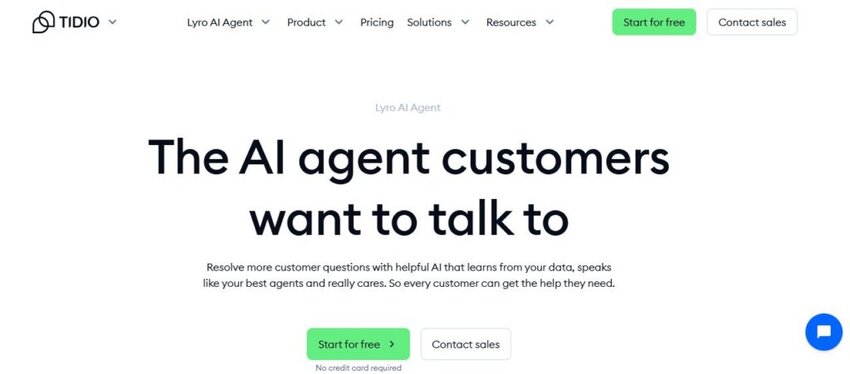
Image via Tidio
Tidio is one of the most affordable AI customer service platforms for small businesses and online stores.
Its Lyro AI chatbot answers common questions and recommends products. It also collects customer information, and hands conversations to human agents when needed. This helps you respond faster while keeping customers engaged.
Key features
Pros
Cons
Pricing
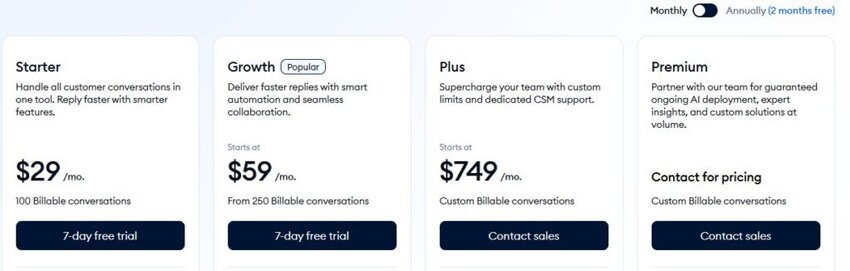
Image via Tidio
Tool level
Usability
Pro tip: Train Lyro on your shipping and product returns FAQs first. Those questions drive most ecommerce tickets.
Also Read:
1. What is an AI customer service platform?
An AI customer service platform uses artificial intelligence to automate, manage, or improve customer service. It can run autonomous agents that resolve tickets. It can also assist human reps with reply drafts and summaries. Others, like timetoreply, even measure response times and SLAs.
2. What are the best AI customer service platforms?
Leading AI customer service platforms include timetoreply for email-led teams. Others, like Zendesk and Salesforce Agentforce Service, work well for enterprise omnichannel support. For smaller teams with limited budgets, Freshdesk and Tidio are worth considering.
3. What is the difference between an AI agent and an AI-assisted tool?
An AI agent resolves customer problems on its own, with little human effort. An AI-assisted tool instead supports your human reps. It drafts replies, summarizes threads, or flags priorities. Agents reduce ticket volume, while assisted tools help agents resolve issues faster and more consistently.
4. Can AI replace customer service agents?
No, AI customer service platforms can’t fully replace human agents. They can handle simple, repetitive questions well, but understanding difficult or emotional problems can be tricky. The best option is to let AI handle the easy stuff, and humans can take care of the rest.
5. How much do AI customer service platforms cost?
The cost of AI customer service platforms depends on the tool you choose. Many offer a free plan to help you get started. Paid plans often start at around $19 to $29 per agent each month. Some platforms also charge extra for AI features. For example, you may pay about $0.99 for each AI-resolved conversation.
6. Do AI customer service platforms work with email, Outlook, and Gmail?
Yes. Many AI customer service platforms work with email, Outlook, and Gmail. However, they don’t offer the same depth. Ticketing platforms like Zendesk and Freshdesk treat email as one of many support channels. Email-first tools like timetoreply connect directly to email clients and track reply times and SLAs.
7. How do I measure if AI is improving my customer service?
Start by tracking a few key metrics. Look at your AI resolution rate to see how many customer questions AI solves on its own. Track first response time and SLA compliance to measure speed. Then check first-contact resolution and customer satisfaction (CSAT) to measure quality.
8. Are AI customer service platforms secure?
Most AI customer service platforms offer strong security, but the level of protection varies by provider. Check where the platform stores your customer data and what information it can access. Look for security certifications such as SOC 2 Type II and ISO 27001. Some tools read full conversations. Others, like timetoreply, only use email metadata.
9. What is the best AI customer service platform for small businesses?
Top AI customer service platforms for small businesses include timetoreply, Tidio, and Freshdesk. Tidio offers affordable AI chatbots and an easy setup. Freshdesk provides AI features, automation, and a free plan for small teams. HelpScout also offers a free plan with essential AI features.
10. How long does it take to implement an AI customer service platform?
The setup time depends on the platform you choose. Simple tools like Tidio can be up and running in just a few hours. Email-focused platforms like timetoreply connect to Outlook, Microsoft 365, or Gmail in about an hour. Larger enterprise platforms with custom AI agents may take several weeks to install and test.
11. Which AI customer service platform is best for mid-market and enterprise teams?
For mid-market and enterprise teams, Zendesk and Agentforce Service Cloud lead on omnichannel scale. Email-led organizations use timetoreply for response-time and SLA visibility. The best fit balances channel coverage, security, integration with your CRM, and the cost of AI at your ticket volume. Start with your primary channel.
Also Read:
The best AI customer service platforms should fit your team’s workflow.
If you run customer support on chat, an AI agent like Intercom’s Fin or Ada can reduce routine volume. Teams that serve customers over email need visibility into reply times and SLAs, not another chatbot.
That’s where timetoreply stands out. It helps email-led mid-market and enterprise teams reply faster and improve performance. Match the platform to your main channel and your most important metrics first. Then test it against real customer conversations.
Want to see how timetoreply tracks and improves your team’s response times? Book a demo today and see how it works with your own inbox.
Get live inbox alerts and reply quickly to customer emails with timetoreply

Head of Customer Success @ timetoreply
Barry Blassoples is the Head of Customer Success at timetoreply, where he helps customer-facing teams boost revenue and protect brand reputation by providing actionable insights to improve their business email response times. He has over 15 years of leadership experience across customer success, sales, and marketing roles in high-growth tech companies.



Trusted by high-performing inbound sales teams and customer-facing teams globally.
Close more deals and delight more customers with the faster, smarter, deeper email analytics and performance optimization software that works straight from your team’s inbox.