
Customers expect your products and services to help them succeed. To achieve this, the best AI tools for customer success management can help.
These tools can help you track, understand, and anticipate evolving customer needs. To stay ahead of competitors, you must spot risks like customer churn early, so you can act on them at the right moment.
Today, we’ll take you through a list of the top AI tools for customer success management that can transform your business. We’ll explore their best features, how they work, and the kind of business each tool is best suited for.
If you want your customer success efforts to pay off, then keep reading.
Customer success is a proactive strategy that helps customers achieve their goals using your product or service. This long-term process focuses on lasting outcomes rather than short-term wins.
The primary goal is to ensure customers see clear results, stay engaged and active, and feel confident about your products and services. To achieve this, you can leverage the best AI tools for customer success.
In 2025, TSIA released a State of Customer Success report stating that 40.4% of surveyed businesses had integrated AI into their customer success frameworks. This number is expected to keep growing as AI technology continues to advance.

Image via TSIA
Moreover, a 2025 Gainsight report shows how different departments use AI. Self-service tools have the highest adoption at 43.9%, followed by AI-powered analytics at 31.7%.
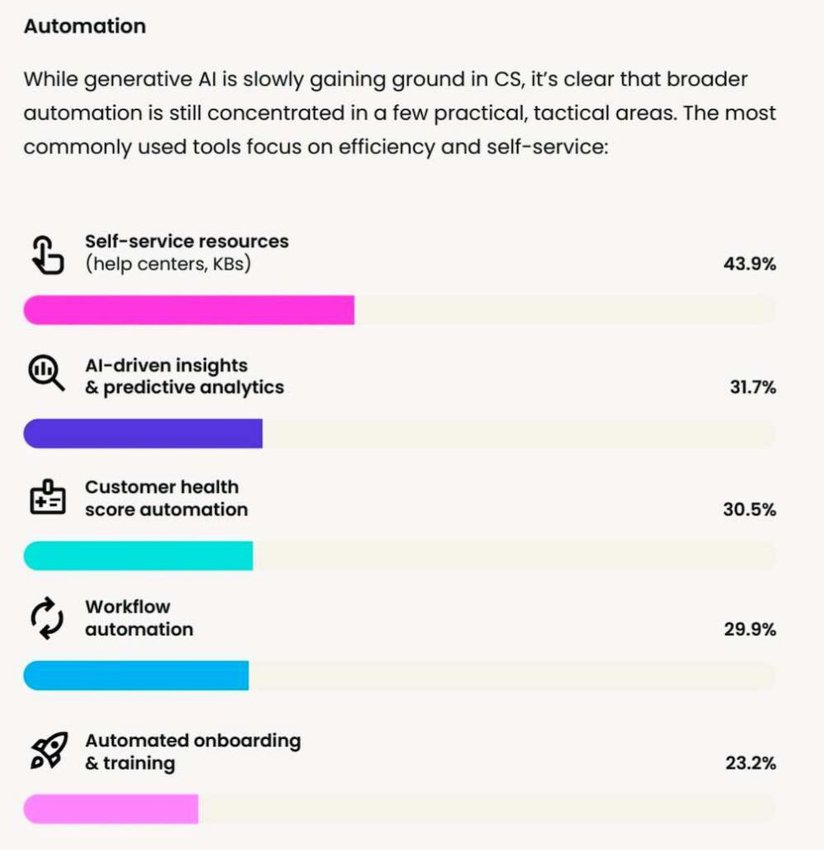
Image via Gainsight
Before we discuss the best AI tools for customer success, here are the factors we considered when making our selections.
Choosing the best AI tools for customer success depends on several factors. Select a tool that scales with growing teams and integrates easily with core systems. It should also be affordable and ensure data accuracy.
After testing several AI tools for customer success, here are the best options we recommend for your business.

Image via timetoreply
First on our list of the top AI tools for customer success is timetoreply. This platform focuses on one of the most visible drivers of customer trust: response time.
timetoreply analyzes email and help desk conversations to show how quickly teams respond, how long customers wait in the queue, and where delays hurt customer satisfaction.
By turning communication data into clear metrics, this tool helps customer success teams improve responsiveness.
Furthermore, managers can see response time trends by account, priority, or customer segment. This way, they can address gaps, helping them improve customer retention.
These insights help customer success leaders coach teams, set realistic expectations, and maintain service consistency at scale.
Key features
Pros
Cons
Pricing
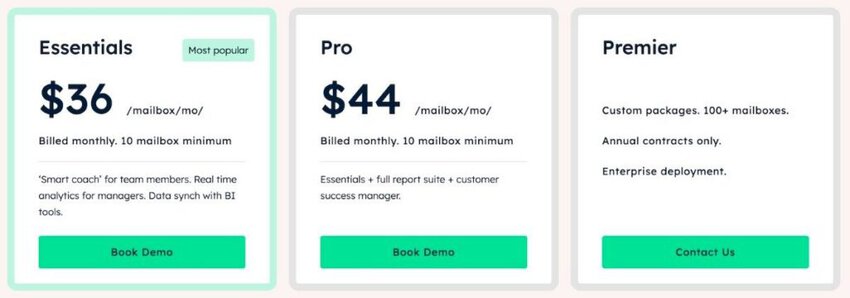
Image via timetoreply
Tool level
Usability
Pro tip: Segment your reports by customer tier, so you can respond faster to high-priority accounts.

Image via Base AI
Base AI unifies all the scattered customer data processed by your business. It drives customer engagement with automation, working without constantly being managed by humans.
The platform then consolidates customer journey data from various systems. It feeds this data into AI agents that provide insights, activate campaigns, and manage relationships at scale.
Base AI is excellent for customer success teams due to its suite of specialized AI agents. These agents manage core customer success tasks automatically and precisely.
They also help build advocacy initiatives, match customer references to active deals, and support the creation of targeted engagement campaigns. Lastly, they analyze customer feedback to inform strategic decisions.
Base AI scales with organizational needs and works for businesses of all sizes.
Key features
Pros
Cons
Pricing
Base AI offers customized pricing.
Tool level
Usability
Pro tip: Connect Base AI to your most critical customer systems first so the platform has full context from the start. This way, it can generate accurate insights.

Image via Gainsight
Gainsight is a comprehensive system that tracks the entire customer journey and delivers insights that boost customer retention and expansion.
The tool is equipped with a CustomerOS platform that combines customer success, education, and product experience. You’ll have access to a unified system, so your teams can see a shared view of every customer from onboarding to renewal.
The platform also uses advanced AI agents to automate repetitive work and uncover patterns that manual analysis might miss. These AI capabilities detect changes in customer sentiment, product usage trends, and renewal risk.
Gainsight serves organizations of many sizes, but it works best for medium and large enterprises with complex customer landscapes. Companies with multiple teams and data sources benefit from its deep integrations.
Key features
Pros
Cons
Pricing
Gainsight offers two plans, Essentials and Enterprise, both of which offer custom pricing.

Image via Gainsight
Tool level
Usability
Pro tip: Start with clear success criteria and clean source data before configuring Gainsight. This helps AI insights and health scores to reflect accurate signals from day one.
Also Read:

Image via ChurnZero
ChurnZero combines real-time customer data, automation, and embedded AI so teams can act fast and keep customer churn low.
The platform gives every team member a 360-degree view of accounts. They’ll gain insight into data like behavior, usage, health, sentiment, and engagement signals in one shared system.
What sets ChurnZero apart is the depth of its AI integration. The platform’s native AI agents and assistants automate routine work. This feature shows you risks and opportunities earlier than you could if you do it manually.
They achieve this by analyzing every interaction and turning unstructured customer discussions into structured insights. ChurnZero can even execute actions autonomously when enabled by teams.
ChurnZero is perfect for small, medium, and large businesses, but its full value is realized for teams managing a sizable book of business. It’s particularly ideal for businesses targeting core customer health and journey automation features.
Key features
Pros
Cons
Pricing
You’ll have to contact ChurnZero’s support team to get estimated pricing.
Tool level
Usability
Pro tip: For ChurnZero to deliver accurate signals, start by mapping your key customer health indicators and integrating core data sources.

Image via Totango
Totango is a customer success platform for businesses of all sizes, bringing key operations together in one place.
This ensures that your customer success teams work from the same information. As a result, this keeps conversations with customers consistent and well-informed.
The platform pulls metrics like product usage, support activity, and customer satisfaction feedback into dashboards. The dashboards then refresh in real time so teams can act before signals become problems.
Additionally, Totango has efficient AI churn intelligence. This helps reps stay aware of early signs of customer churn.
You also get access to advanced features like SuccessBLOCs, which allow you to craft customer success strategies with high chances of success.
Key features
Pros
Cons
Pricing
Totango has two plans, Enterprise and Premier, offering custom pricing.

Image via Totango
Tool level
Usability
Pro tip: Improve prioritization of customer needs by leveraging Totango’s SuccessBLOC program. This results in more simplified workflows.
Also Read:

Image via Vitally
Next on our list of the top AI tools for customer success is Vitally. It’s a platform built for teams that want clear visibility into customer health without heavy overhead processes.
Vitally centralizes customer data from product usage, CRM, instant support, and billing systems into live dashboards. This gives customer success teams a single source of truth and helps them act on up-to-date signals.
The automation is flexible. Your teams can define customer satisfaction goals, track progress, and trigger tasks automatically as customers move through onboarding.
You also get AI-generated summaries and account insights that reduce manual account research and help CSMs prepare for meetings faster.
Key features
Pros
Cons
Pricing
All Vitally plans offer custom pricing:

Image via Vitally
Tool level
Usability
Pro tip: Define your health metrics and goals early, then align automation around them. This allows Vitally’s AI insights to stay focused on outcomes that matter.

Image via Gorgias
Gorgias centralizes support messages from various channels, including email, live chat, social media, and messaging apps. This makes it one of the best AI tools for customer success as it’s not limited to just one channel.
This tool works best for ecommerce businesses scaling quickly. It comes with AI agents that can view order details, shipping status, refunds, and customer call history inside the ticket view without switching tools.
Due to this practical approach, your team can focus on customer issues that require human intervention. Additionally, Gorgias can be adopted by any business, regardless of size.
Key features
Pros
Cons
Pricing

Image via Gorgias
Tool level
Usability
Pro tip: Invest time in setting up intents and automated actions early to allow Gorgias to handle common requests automatically.
Also Read:

Image via Intercom
Intercom has long shaped how teams communicate with customers. The platform combines messaging, automation, and helpdesk capabilities in one system.
What makes Intercom especially effective is how deeply AI runs through its messaging and support workflows. Its AI-powered agent and automation features handle common questions and route conversations intelligently.
It also assists human agents with suggested replies and summaries. This reduces response times and improves customer service quality even as volume grows.
Teams can guide users through onboarding, adoption, and support directly within the product.
Intercom is well-suited for small, medium-sized, and large businesses. This flexibility makes it an ideal option for teams with rapid growth potential.
Key features
Pros
Cons
Pricing
Tool level
Usability
Pro tip: Use Intercom’s AI-powered chatbots to handle preliminary customer queries from customers. This gives your team more time to handle complex issues.

Image via ClientSuccess
ClientSuccess takes a different path by turning customer information into directions for teams.
The platform focuses on accountability, shared visibility, and structured follow-through. This approach makes ClientSuccess a strong contender among AI tools for customer success that prioritize execution.
You get detailed health scores, alerts, and automated tasks that help teams stay ahead of risk.
It also comes with AI assistance, which helps summarize account activity so your teams don’t spend too much time on manual tasks.
ClientSuccess suits small, medium-sized, and large businesses, especially B2B SaaS teams managing long-term relationships.
Key features
Pros
Cons
Pricing

Image via ClientSuccess
Tool level
Usability
Pro tip: ClientSuccess supports a wide range of integrations. Use these integrations to link all your business accounts so you can operate them from one place.
Also Read:

Image via Medallia
Medallia provides exceptional customer experiences. This is one of the AI tools for customer success that captures feedback and experience signals from every touchpoint.
This includes surveys, digital behavior, and contact centers, which allow your teams to act quickly before customer churn becomes a reality. Its AI offers predictive analytics that sift through structured and unstructured feedback to identify what drives customer satisfaction.
Medallia also uses machine learning algorithms to detect patterns in customer interactions. This data helps teams anticipate customer needs.
Real-time alerts and automated workflows help frontline and strategic teams close the loop on issues quickly.
Medallia is among the best AI tools for large businesses that are ready to invest in comprehensive experience management. Its enterprise-scale security and integration ecosystem support global operations and cross-functional alignment.
Key features
Pros
Cons
Pricing
Tool level
Usability
Pro tip: Take advantage of Medallia’s enterprise-grade security to ensure every customer data you handle is safe.

Image via Kustomer IQ
Last on our list of top AI tools for customer success is Kustomer IQ. It offers a suite of artificial intelligence features integrated into the Kustomer customer service CRM platform.
Kustomer IQ combines omnichannel conversation handling with AI classification and routing. This allows teams to spend less time triaging problems and more time providing solutions.
This tool analyzes inbound leads and detects intent. It also suggests the right actions so customer success teams can respond faster.
With automation built into queue routing, your team only intervenes when the issue requires more attention. This saves time and energy, allowing them to focus on improving customer experiences instead of answering repetitive questions.
Kustomer IQ fits businesses of all sizes, with the most pronounced customer value being for operations handling high volumes of personalized interactions.
Key features
Pros
Cons
Pricing

Image via Kustomer IQ
Tool level
Usability
Pro tip: Leverage the sentiment analysis and suggested replies so agents get prompts that match tone and context.
The top AI tools for customer success include timetoreply for timely responses, Base AI for advanced automation, and Gainsight for customer education. Others include ChurnZero, Totango, Medallia, Kustomer IQ, and more.
Also Read:
1. How do you use AI in customer success?
You can use AI to monitor customer activity and spot patterns that signal risk or momentum. AI tools for customer success help you act sooner by highlighting changes in usage, engagement, and support activity.
Furthermore, AI tools for customer success help standardize daily work across your team. Common use cases include customer onboarding guidance and renewal reminders.
2. What is the best AI tool for customer service?
There’s no single best tool for every team because needs depend on business size and service model. The best AI tools for customer success and service combine ticket handling, context tracking, and customer history in one place.
When evaluating options, focus on how the tool fits your workflow. Strong tools usually offer the following:
3. What are the 4 pillars of customer success?
When it comes to customer success, the four pillars include the following:
These pillars define how teams guide customers from signup to renewal. When combined with AI tools, you’ll be able to keep an eye on how close or far off the customer may be from committing.
4. Can AI replace customer success?
AI tools for customer success handle data-heavy tasks, pattern detection, and routine follow-ups. However, AI cannot replace customer success because relationships still rely on trust and human judgment.
Human teams are still necessary to guide strategy, handle edge cases, and manage sensitive moments. The tools function better as assistants that reduce manual effort.
The best results come from pairing AI with experienced customer-facing teams. This ensures that customers get the help they need at any given time.
5. Reviewing the staging and making changes as per client messageHow do you use AI as a customer success manager?
As a manager, you can use AI to prioritize work and guide your team using actionable recommendations. AI tools help you see which accounts need help and where playbooks break down. This keeps decisions grounded in real customer behavior.
AI also helps you scale your team without losing visibility. Common manager use cases include:
When used correctly, AI tools for customer success help you lead with clarity while keeping customer needs front and center.
Also Read:
Modern customers have options, so getting their attention and loyalty requires a well-planned strategy. Using AI tools for customer success is one of the best ways to ensure your business can grow sustainably.
Whether you want to maintain fast responses with timetoreply or use another tool’s advanced automation, ensure your chosen tool fits your needs.
Get live inbox alerts and reply quickly to customer emails with timetoreply

Head of Customer Success @ timetoreply
Barry Blassoples is the Head of Customer Success at timetoreply, where he helps customer-facing teams boost revenue and protect brand reputation by providing actionable insights to improve their business email response times. He has over 15 years of leadership experience across customer success, sales, and marketing roles in high-growth tech companies.



Trusted by high-performing inbound sales teams and customer-facing teams globally.
Close more deals and delight more customers with the faster, smarter, deeper email analytics and performance optimization software that works straight from your team’s inbox.