
Customer success vs. customer support compares two terms that share a common goal: improving the customer experience. Both influence how customers feel about your product, how long they stay, and how much value they get from it.
Support reacts when something breaks or a question arises, while success stays focused on long-term outcomes and ongoing use. For B2B businesses that interact with customers directly, knowing this difference helps prevent overlaps.
When the roles are blurred, expectations are missed, internal friction grows, and customers are left unsure of who to contact. Read this customer success vs. customer support comparison to understand what sets them apart.
Customer success focuses on helping customers achieve the outcomes they expect from a product or service. It spans the full customer lifecycle, from onboarding to renewal and expansion.
The following are the key responsibilities of a customer success team.

Image via Moengage
Customer success is more focused on the long-term relationship it builds with customers. It goes beyond single touchpoints.
Also Read:
Customer support is responsible for helping customers resolve issues and questions as they arise. Its core objective is to quickly resolve customer issues with accuracy using quality solutions for better customer experiences.
The importance of agile and responsive customer support can be seen in the recent State of Digital Customer Experience report, which showed that customers value quick responses more than anything else.

Image via Verint
The following are some of the key functions of a customer support team.

Image via timetoreply
Customer support directly interacts with people to address real issues. Once an issue is solved, the team moves to the next request.
Also Read:
Here are the key differences between customer success vs. customer support.
Customer success is proactive, meaning it takes action before a customer requests assistance. Teams monitor usage patterns, track progress against goals, and reach out when signals indicate risk or missed value.
The team treats engagement as a planned effort tied to outcomes. This keeps momentum steady, not a response to trouble.
On the other hand, customer support operates on a reactive model. The team steps in after a customer reports a problem or asks a question. Engagement starts with a ticket, a chat, or a call, and it ends when the issue is resolved or explained.
Customer success links customer outcomes like reducing costs to revenue, growth, and retention. Teams work closely with sales, product, and leadership to plan how customers attain these outcomes over time.
You see this in account planning, renewal forecasting, and expansion conversations. Customer success teams can influence decisions that shape long-term customer relationships.
In contrast, customer support handles direct customer interactions like inquiries. Its focus stays on resolving issues so customers can continue using the product without disruption.
Metrics matter because they show whether your teams deliver on their purpose. They provide clear signals you can act on and help you spot risks early.
Customer success metrics focus on long-term customer progress and business growth. They include the following.
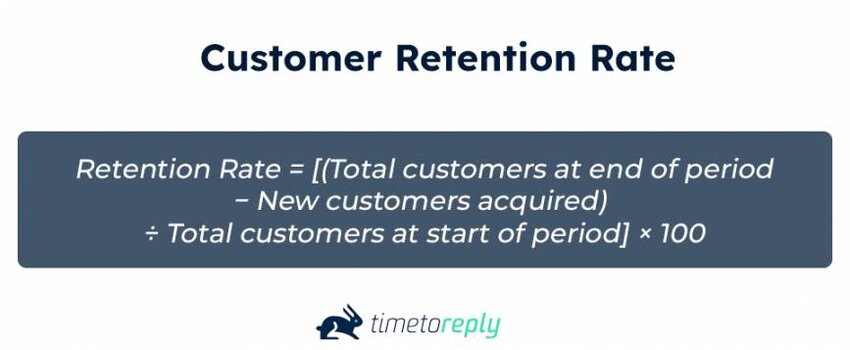
Image via timetoreply

Image via timetoreply
For customer support, metrics track how well issues are handled in real-time. They include the following.

Image via timetoreply
Also Read:
Customer success owns customer outcomes over time.
The team stays accountable for whether the product delivers the results promised during sales. This ownership lasts across onboarding, daily use, renewals, and growth.
Conversely, customer support teams take ownership of a specific issue. Then they work to close it as quickly and clearly as possible. Once the problem is resolved or explained, that ownership ends.
The team’s responsibility stays tied to incident resolution, accuracy, and speed. It moves on to the next issue right after.
Customer success teams usually align by accounts, segments, or revenue tiers. Each manager owns a set of customers and gradually builds relationships with them.
This structure supports long-term planning, regular touchpoints, and shared goals with sales and account teams. Customer success roles require strong communication, a good grasp of business context, and the ability to guide conversations.
For customer support, teams organize around volume and availability. Agents queue tickets rather than accounts and focus on being available to anyone who needs help.
Support managers optimize staffing and reduce customer response times to meet demand spikes. The structure favors shifts, coverage, and clear escalation paths.
These roles demand sharp product knowledge, problem-solving speed, and calm handling of pressure.
Customer support has existed for decades across industries like retail, telecom, and software. Businesses have relied on customer support to answer questions, fix issues, and improve customer experience and trust.
This has been the case for years, with significant evolution over the years. Now, businesses can use innovative technologies like chatbots.
Customer success emerged later with the rise of subscription and usage-based models. As renewals became critical, businesses needed teams that stayed engaged after onboarding.
Early SaaS companies introduced customer success roles to protect retention and long-term revenue.
Also Read:
Customer success and customer success differ in many ways. They have different metrics, team structures, and engagement models.
Better customer experience optimization can be achieved by aligning customer success and customer support roles.
Both teams should stay aligned on customer needs, pain points, and usage patterns.
Customer success can pass along trends and adoption challenges to customer support, helping agents anticipate recurring issues. Support can use customer feedback tools to solve issues, giving success teams context for proactive engagement.
Sharing customer insights gives buyers informed guidance, which improves their relationship with the business.
Clear role definitions prevent overlap and confusion. Customer success owns long-term outcomes, engagement, and adoption, while support handles immediate problem resolution.
Handoffs become smoother when both teams understand their boundaries, and customers receive consistent attention.
Defined roles also allow each team to focus on what they do best. Support can tackle customer feedback without overstepping into strategic planning, while customer success can guide accounts without duplicating reactive efforts.
Unified communication ensures both teams use the same customer engagement strategy. Shared messaging platforms, notes, and updates prevent duplicated outreach and conflicting information.
When customer success and support communicate openly, there’s less friction, and customers get consistent messaging. Teams can coordinate responses, follow-ups, and check-ins efficiently, reducing misunderstandings and accelerating problem resolution.
Also Read:
Escalation protocols define when support issues need the involvement of success teams, and vice versa. For example, repeated complaints can trigger a customer success check-in to uncover and address underlying issues.
Protocols also speed up response times. They allow support teams to hand off responsibility without overstepping, while success teams plan proactive interventions where needed.
Adopting integrated tools and CRMs gives customer teams and support teams clear visibility into the full customer journey.
A shared system reduces duplicated work and lost context by providing a single source of truth.
For example, CRMs and help desk software like Jira can sync data, allowing customer success teams to see support tickets and outcomes.

Image via Jira
Support teams can reference the same usage trends. They can then combine that with support tools to fine-tune their response speeds.
Aligned metrics encourage cross-functional collaboration and ensure both teams track outcomes that matter to the customer.
For example, support metrics like response time can be paired with success metrics like adoption or churn reduction. This can illustrate how reactive and proactive work
Success teams can plan interventions using support trends, while support teams can prioritize issues based on risk signals from customer success.
Cross-training helps teams understand each other’s workflows, goals, and challenges.
Support learns how customer success teams measure customer experiences and plan engagement. On the other hand, customer success teams understand common support tickets and troubleshooting patterns.
This knowledge helps each side anticipate what the other needs and act accordingly. It builds collaboration that directly impacts customer experiences.
Recognizing team members for jointly solving customer issues or improving outcomes is important. It encourages ongoing coordination between customer support and customer success teams.
Focus more on shared results rather than individual performances. This creates a culture where both teams prioritize the customer instead of engaging in unnecessary rivalry.
Customer success and customer success teams can work together without overstepping boundaries. This requires sharing insights, defining roles clearly, and using unified communication.
Also Read:
1. What is the difference between customer service and customer support?
Customer service manages the overall relationship with a customer, covering tone, responsiveness, and sentiment.
Customer support is narrower, and it handles specific problems, questions, or technical issues. You usually contact support when an issue needs fixing. Service shapes perception. Support fixes obstacles.
2. What are the 4 pillars of customer success?
The following are the four pillars of customer success:
3. How do customer success and customer support teams collaborate in practice?
Customer support handles immediate issues while customer success focuses on long-term progress. When customer support spots repeat problems, it can flag the issues for customer success teams.
At the same time, customer success teams can share account context, so support can respond faster.
Both teams use shared tools and notes to avoid duplicate work. They collaborate through check-ins to keep priorities aligned and reduce gaps in the customer journey.
4. What is the difference between customer service and customer experience?
Customer service is about direct interactions like replies, calls, and follow-ups. Customer experience is the full impression prospects form across every touchpoint. That includes product use, billing, onboarding, and support.
Service is one part of the experience, but it reflects how everything fits together before, during, and after a customer engages with your business.
5. When should a company invest in a dedicated customer success team?
You should invest when customers need guidance beyond basic help. This often happens in subscription models, complex products, or longer sales cycles.
For example, if churn rises or customers struggle to see results, then the customer success team fills that gap. It also makes sense once revenue depends on renewals and upgrades, rather than one-time sales.
6. What metrics are used to measure customer success versus customer support performance?
Customer success tracks retention rate, churn, product usage, renewals, and expansion revenue. These metrics show whether customers continue to buy and grow.
On the other hand, customer support focuses on CSAT, first response time, resolution time, and ticket volume. These metrics reflect speed, quality, and efficiency when solving problems that customers actively report.
7. Can small businesses combine customer success and customer support roles effectively?
Yes, small businesses can combine both roles early on. One team can handle issues while also guiding customers through setup and usage. This works best with simple products and low customer volume.
As demand grows, splitting roles becomes necessary to avoid missed follow-ups, slow responses, or shallow customer relationships.
8. How do customer success and customer support impact customer retention differently?
Customer success reduces churn by helping customers reach their goals before problems appear. It keeps them engaged and confident in their decision. Additionally, it prevents frustration from building up.
Customer support protects retention by fixing issues quickly when something goes wrong. This reduces friction between customers and the business and stabilizes revenue in the long run.
Also Read:
Customer success and customer support play different roles, but both shape how customers experience your product.
Support focuses on fixing issues fast so work can continue without disruption. Success stays engaged over time, guiding customers through adoption, progress, and renewals. When these roles blur, customers get confused, and teams pull in opposite directions.
The strongest B2B teams don’t choose one over the other. They align success and support through shared data, clear handoffs, and open communication.
Visit timetoreply and access more informative resources about customer success and support setups more effectively.
Get live inbox alerts and reply quickly to customer emails with timetoreply

Head of Customer Success @ timetoreply
Barry Blassoples is the Head of Customer Success at timetoreply, where he helps customer-facing teams boost revenue and protect brand reputation by providing actionable insights to improve their business email response times. He has over 15 years of leadership experience across customer success, sales, and marketing roles in high-growth tech companies.


Trusted by high-performing inbound sales teams and customer-facing teams globally.
Close more deals and delight more customers with the faster, smarter, deeper email analytics and performance optimization software that works straight from your team’s inbox.