Knowing how to improve first contact resolution starts with fixing the causes of repeat customer contacts. You can improve FCR by training agents, simplifying workflows, using skills-based routing, and giving teams faster access to customer history data.
FCR has become a primary metric for high-performance customer-facing teams. Today’s customers want fast, effortless support with minimal disruption to their day. They want issues resolved without repeating information or waiting through multiple transfers.
The business case is clear. SQM research shows that resolving a customer’s call raises their likelihood of accepting cross-sell offers by 20%. And for every 1% improvement in first call resolution performance, operating costs drop by 1%.
In this guide, we’ll look into how to assess your FCR rate, as well as FCR benefits and best practices. We’ll also explain how to improve first contact resolution using practical tips, better technology, and smarter support processes.
First contact resolution (FCR), also called first touch resolution or first call resolution, is the ability of customer-facing teams to effectively resolve a customer’s inquiry or complaint on the first interaction.
This means the customer service team doesn’t need to escalate the issue or repeat calls to achieve a satisfactory resolution. This metric indicates the quality, efficiency, and effectiveness of your customer service team.
A contact center that prioritizes learning how to improve first contact resolution rate can see measurable improvements in customer satisfaction, customer loyalty, and more.
High-performing support teams understand that FCR isn’t just about customer service speed. Learning how to improve first contact resolution entails delivering accurate, complete solutions to your customers promptly.
By minimizing repeat interactions, you can reduce problem resolutions and free up valuable resources. This enables your customer service team to focus more on high-value interactions, such as customer retention and upselling opportunities.
It further emphasizes the importance of knowing how to improve first contact resolution rate strategically.
It’s important to note that first contact resolution is often used interchangeably with first call resolution (FCR). However, there’s a slight difference. First call resolution refers to resolving a customer’s issue during the first call, making it more relevant to call centers or voice-based support.
First contact resolution, on the other hand, is a broader term that includes all communication channels, such as email, live chat, SMS, and social media.
Also Read:
Learning how to improve first contact resolution (FCR) rate can bring several tangible benefits for your organization. Let’s take a closer look at the positive impact of first contact resolution on your business.
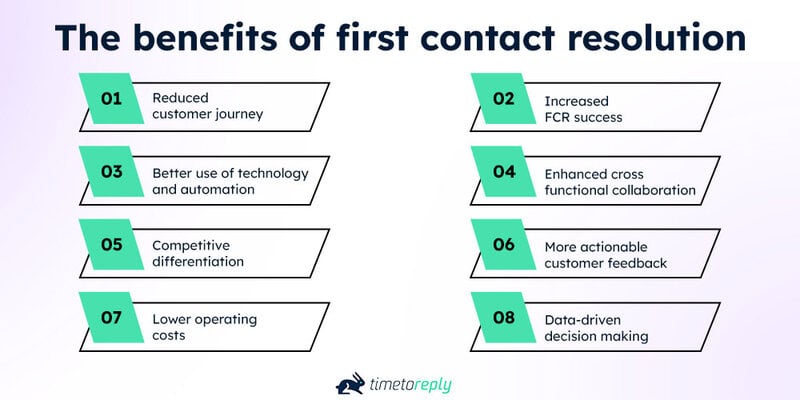
When your team resolves issues in a single touchpoint, customers can move through the service experience without delays. For example, during onboarding, prompt issue resolution means customers can start using your product or service right away.
Also, learning how to improve first call resolution can mean that support agents will have fewer tickets to resolve. This means they can continue their tasks without prolonged interruptions. Brands that excel in how to improve first contact resolution rate streamline their customer journey.
First contact resolution (FCR) can positively influence other customer service metrics, such as average handle time (AHT) and customer effort score (CES). When customers’ issues are resolved at first contact, they don’t have to repeat themselves, wait for callbacks, or be transferred to other agents. This reduces friction and streamlines service delivery.
It shows them that your service is efficient, showcasing your team’s ability to solve problems quickly and professionally. So, if you’re tracking multiple performance indicators, learning how to improve first contact resolution rate is a great place to start.
You need to strategically invest in smart customer service tools like timetoreply when considering how to improve first contact resolution rate. If customer service agents have the right tools, they can find answers faster, personalize interactions, and resolve issues more efficiently within the first point of contact.
For example, knowledge bases and self-service portals allow both the call center agent and the customer to quickly search for accurate, up-to-date information. Also, chatbots can guide users through step-by-step troubleshooting processes.
Integrating technology in customer support workflows can standardize quality. It can also help with your goal of learning how to improve first contact resolution rate in a digital-first environment.
Also Read:
Your first contact resolution rate can uncover internal inefficiencies that would otherwise go unnoticed. For example, if the customer service team repeatedly handles the same type of complaint, it may indicate broader issues beyond their control.
By analyzing FCR metrics along with response time data, support teams can identify recurring patterns. They can then share insights with developers to fix bugs or with content teams to improve FAQs and documentation.
By focusing on how to improve first contact resolution rate, you benefit the customer and strengthen your organization’s agility and responsiveness.
Features and prices alone don’t win long-term loyalty in crowded markets. What truly differentiates brands is the experience they offer, especially when things go wrong. Getting it right at the initial contact shows that your company cares, responds quickly, and values customer time.
Companies that prioritize how to improve first contact resolution rate are often seen as more competent and easier to do business with. This can directly influence buying decisions, customer retention, and word-of-mouth referrals.
When you successfully resolve your customers’ problems, they’re more likely to respond positively to post-interaction surveys. They’ll be more open to providing detailed, thoughtful input when the issue resolution is still fresh in their minds.
This kind of feedback is valuable because it reflects the voice of your customers at a moment of high engagement. By learning how to improve first contact resolution rate, businesses can unlock a steady flow of actionable customer feedback that will help them improve their service.
When the same customers call repeatedly about the same issue, your team wastes time and resources that could be better spent elsewhere. This is true whether the conversation happens via chat, email, or phone.
Conversely, unlocking how to improve first contact resolution rate leads to fewer repeat inquiries, follow-up calls, and escalations. This enables companies to lower staffing needs, minimize time spent per customer issue, and ultimately reduce the overall cost per contact.
Also, contact center agents will become more productive, handle more cases with confidence, and spend less time repeating steps. This way, you can increase customer satisfaction without increasing overhead.
Also Read:
Customers share their experiences through reviews, social media, and online forums. A company known for resolving issues quickly and effectively on the first contact earns a reputation for reliability. This public perception enhances your brand value, especially in industries where trust and service matter most.
A high first contact resolution rate also empowers your support team to confidently represent your brand, reinforcing its commitment to customer care.
Genuine customer advocacy is hard to replicate with marketing alone. Therefore, businesses that master how to improve first contact resolution position themselves as both service providers and dependable partners their customers can rely on.
Tracking FCR provides detailed insights into how customers interact with support services. The FCR rate itself is a high-value customer success metric. It pairs well with contact center software that segments data by contact channels, contact center agents, issue type, and resolution time.
Together, these insights help expose common bottlenecks and recurring issues, enabling smarter, data-driven decisions that improve both customer experience and operational efficiency.
For instance, timetoreply Extension allows you to see the time it takes individual agents to resolve issues, the number of unreplied emails, and breached customer service SLAs.
This granular view gives you a clear understanding of how to improve first contact resolution rate, as you can easily pinpoint where and why FCR failed. You’ll also be able to identify training needs and improve staffing decisions.
Turning first contact resolution data into actionable strategies allows you to enhance customer experience, streamline operations, and drive continuous improvement. This makes your effort to improve first contact resolution both measurable and impactful.
Also Read:
You assess FCR rates by dividing the number of customer issues resolved on first contact by the total number of contacts received. Then, multiply the result by 100.
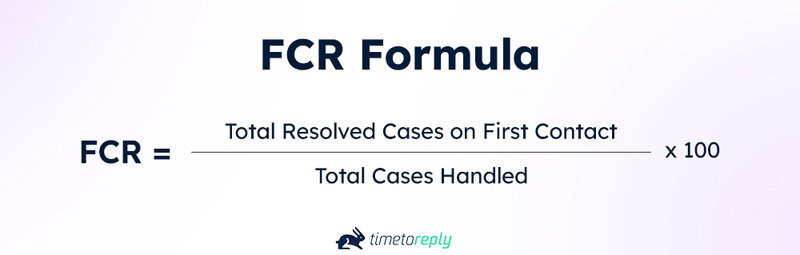
This contact resolution metric shows how many calls or interactions your team closed without a follow-up. Gathering accurate data isn’t always straightforward, though.
Large contact centers typically integrate their software with a CRM to automatically log and tag interactions as “fully resolved” or “follow-up required.” While this makes it easy to generate real-time data, it’s often too complex for smaller teams.
A more practical approach is manual tracking using the FCR formula on a daily, weekly, or monthly basis. Your team can also use spreadsheets, basic CRM features, or shared dashboards where agents self-report resolution status per ticket.
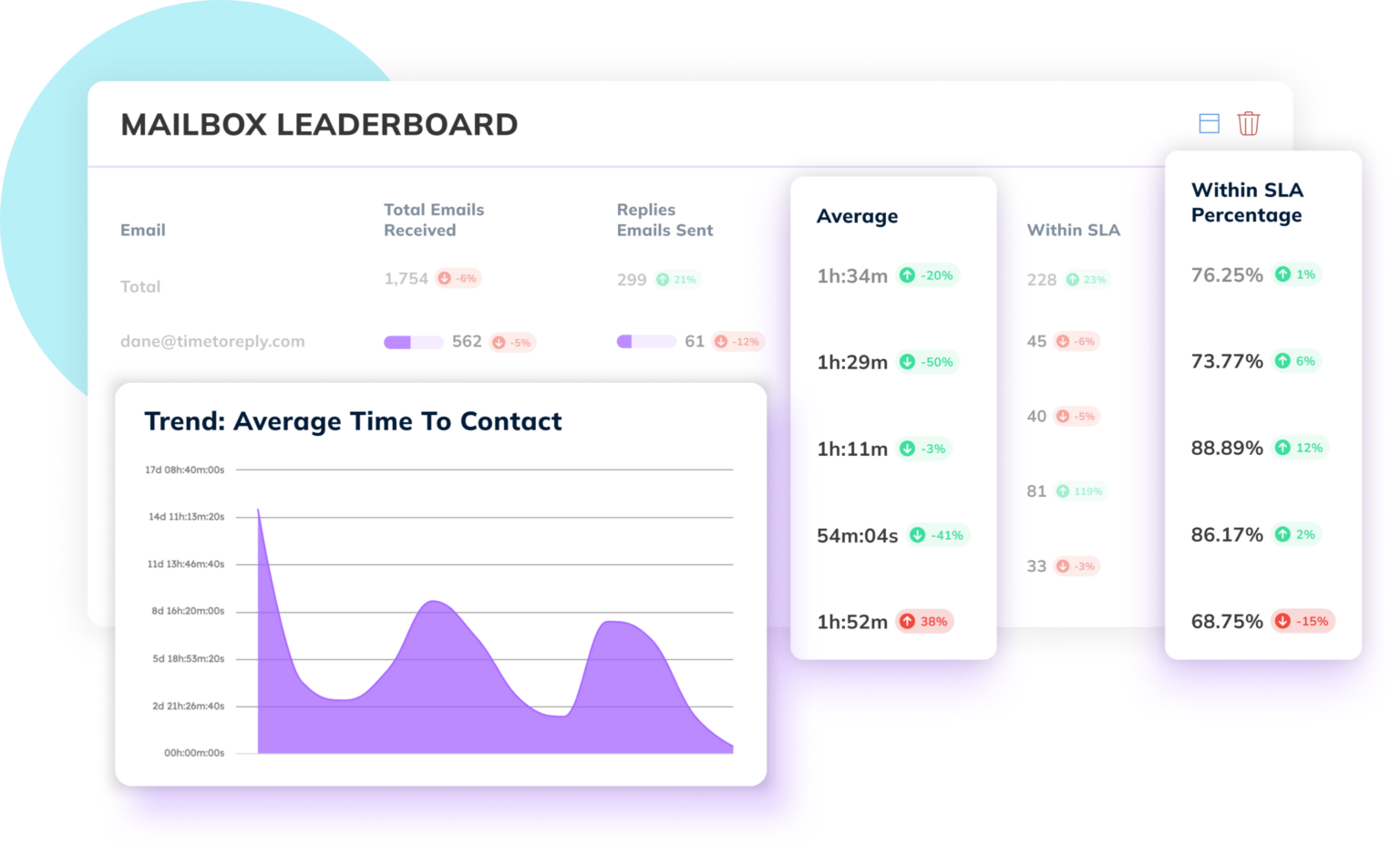
For teams handling high email volumes, an email performance tool like timetoreply may be more accessible.

Image via timetoreply
It can track first response time, average response time, average resolution time, and more. It also gives you the actionable customer history data needed to understand where breakdowns happen and how to improve first contact resolution consistently.
By combining simple tracking methods with the right technology, teams of all sizes can reliably monitor resolution performance. This can help you spot trends that meaningfully impact customer satisfaction and growth.
Also Read:
A good first contact resolution rate usually falls between 70% and 79%. According to SQM, any contact resolution metric below 70% often signals the need for improvement. A world-class FCR rate is 80% or higher, but only 5% of call centers achieve this.
The average sits at around 70%, meaning roughly 30% of customers still need to repeat contact over the same issue. Many contact centers struggle because complex customer issues often require multiple follow-ups or cross-team involvement.
FCR rates vary by industry and support complexity.
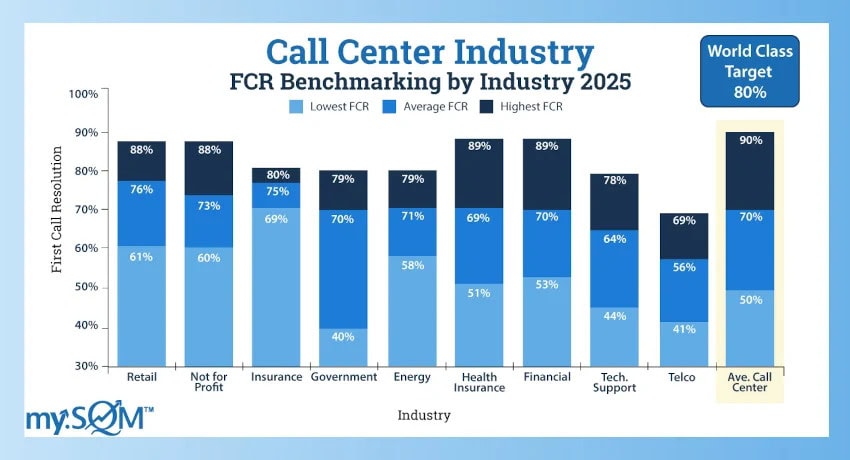
Image via SQM
Technical support teams usually handle more detailed troubleshooting, which can lower resolution performance. In contrast, teams serving customers with simple account or billing requests typically find it easier to improve FCR.
Here are the average-to-highest FCR rates by industry:
These benchmarks are crucial in understanding how to improve first contact resolution within your industry.
Also Read:
A low first contact resolution rate often stems from training gaps, poor knowledge access, or communication barriers. As you explore how to improve first contact resolution, begin by addressing these underlying causes.
Here are the main reasons your first contact resolution rate might be lower than expected.
One of the top reasons for a low first contact resolution rate is that customer support agents lack the knowledge or skills to resolve issues quickly. This is especially common among new hires or undertrained staff who aren’t yet familiar with product details, troubleshooting procedures, or communication techniques.
If your team isn’t equipped to handle a wide variety of customer inquiries confidently, they’ll always need to escalate or request additional help. This can lead to repeat contacts, negatively impacting customer satisfaction.
This is why improving your training program is crucial in figuring out how to improve first contact resolution rate.
Even the most skilled customer support agent can’t succeed without easy access to accurate information. When knowledge is siloed, outdated, or disorganized, agents waste precious time hunting for answers or asking colleagues for help.
This leads to delays in resolution, incomplete responses, and follow-up interactions that lower FCR rates. In understanding how to improve first contact resolution rate, one of the key steps is investing in a centralized and user-friendly knowledge base.
Miscommunication is a common problem when exploring how to improve first contact resolution rate. If agents don’t ask the right questions, misunderstand the issue, or provide unclear responses, the customer may need to reach out again to resolve their issue.
This situation commonly happens when agents are under time pressure, lack sufficient training, or don’t have access to the full customer history. This makes it harder to fully understand and resolve the issue in a single interaction.
You can’t improve what you don’t measure consistently. Your team should track first contact resolution data accurately across all channels and interaction types. Otherwise, you won’t have a reliable response time benchmark to assess performance and make improvements.
Manual tracking, inconsistent tagging, or vague definitions of what counts as a “first resolution” can distort your data. Organizations looking at how to improve first contact resolution rate must implement consistent tracking practices.
A low first contact resolution rate usually comes down to four fixable causes: inadequate agent training, poor or siloed knowledge access, communication breakdowns, and inconsistent FCR tracking. Each one forces customers to make repeat contact over the same issue. Fixing them, starting with better training and a centralised knowledge base, is the foundation for every other FCR improvement.
Also Read:
The best way to improve first contact resolution rate is to combine strong agent training, faster access to information, and efficient support processes. Businesses that improve FCR often use better communication, smarter technology, and clear workflows to resolve customer issues during the first interaction.
Here are 12 proven strategies to get you there.
Well-trained agents can handle a wider range of customer concerns confidently, which leads to faster resolutions and better customer experiences. That’s why investing in agent training is one of the most critical steps in learning how to improve first contact resolution rate.
By investing in your employees’ knowledge and competence, you achieve greater consistency in your service levels and build more adaptable teams. Here’s how to make call center agent training work for your team:
Training should cover product knowledge, communication skills, and de-escalation techniques. It should also be ongoing rather than limited to onboarding.
A well-maintained knowledge base helps teams resolve customer issues quickly and consistently. It also reduces internal delays caused by waiting for approvals or clarifications from other departments.
Businesses focused on how to improve first contact resolution rates need a centralized and updated knowledge management system. Agents lose valuable time when information is outdated, scattered across multiple systems, or difficult to locate during customer interactions.
Companies interested in mastering how to improve first contact resolution rate should invest in customer-facing resources. You can extend your knowledge base to customers to encourage self-service, enabling them to find solutions to common problems themselves. This may mean adapting your internal documentation in a simpler form, such as how-to guides, video tutorials, and help center articles.
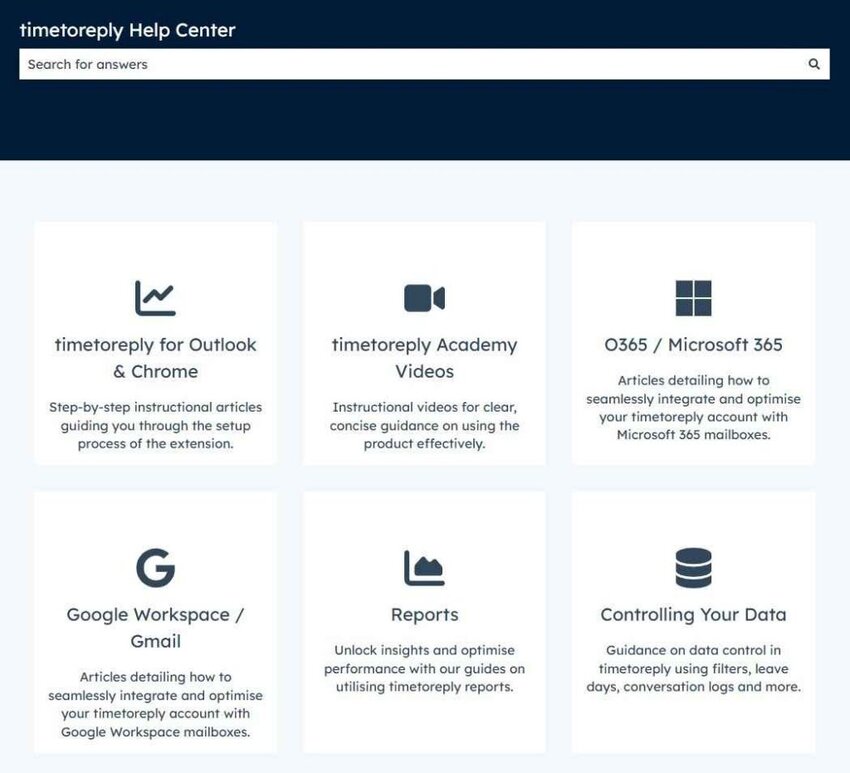
Image via timetoreply
Developing a centralized repository ensures everyone can quickly access accurate product details, common troubleshooting steps, and FAQs.
Strong communication skills help agents understand customer concerns faster and reduce misunderstandings. Active listening, empathy, and clear explanations also improve customer trust and create more satisfied customers.
No matter how well-trained an agent is, poor communication can lead to poor customer service. The better teams communicate, and the quicker they can understand and empathize with customer issues, the quicker they’ll be able to resolve customer queries.
Even experienced agents may struggle to resolve issues if communication with customers is unclear or rushed. That’s why effective communication is essential for businesses learning how to improve first contact resolution rate.
To achieve this, support teams must master active listening, clear and concise language, and emotional intelligence. This can help them fully grasp the customer’s needs and deliver accurate, effective solutions.
For example, showing empathy to customers can reduce tension and build trust. This, in turn, encourages customers to provide necessary details upfront. Open-ended questions, clarifying prompts, and summarizing statements are essential techniques for teams considering how to improve first contact resolution rate.
CRM platforms, AI-powered chat tools, and automated workflows can improve FCR by speeding up ticket handling and routing. You can also use skills-based routing to connect customers with the most qualified agents immediately.
Learning how to improve first contact resolution rate means embracing technology. That means streamlining processes, automating repetitive tasks, and speeding up access to vital information. Taking these steps ensures your customer-facing teams are equipped to resolve customer queries quickly and efficiently.
Chatbots provide 24/7 support, helping customers resolve issues even outside normal business hours. CRM platforms and automation workflows enhance productivity and agent knowledge. Paired with email response tracking tools, these solutions ensure faster replies, better prioritization, and improved customer experiences.
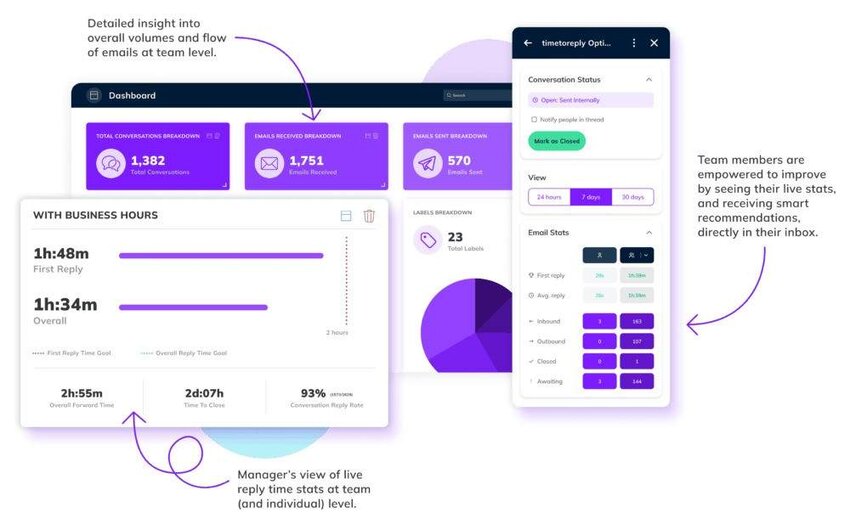
Image via timetoreply
They also offer agents real-time access to case histories, recommended actions, and solution databases. More so, the growing maturity and power of AI tools can accelerate first contact resolution rate. AI-driven ticketing platforms can use Natural Language Processing and predictive analytics to anticipate customer needs and route issues to the right agent instantly.
Email performance optimization tools like timetoreply play a vital role. They continuously track email response times, alert customer-facing teams of customer emails that were left unattended, and monitor compliance with customer service SLAs.
The data you’ll get from timetoreply can also provide insights into the performance of one agent or the broader contact center team. This helps managers provide targeted agent training and tech support as needed.
Also Read:
Well-designed standard operating procedures (SOPs) give teams a proven process for resolving common concerns quickly and accurately. They also reduce confusion for new employees and help standardize support quality across teams.
Efficient internal processes are just as vital as skilled agents. For businesses learning how to improve first contact resolution rate, clear processes and SOPs ensure uniform service quality and faster resolution times. They guide agents in following a consistent and proven path when resolving common issues.
When hiring new call center agents, SOPs can help them master your first contact resolution procedures quickly. This shortens training cycles and improves team performance. You should regularly audit your workflow to identify any inefficiencies, redundancies, or gaps.
Businesses committed to understanding how to improve first contact resolution rate should continuously benchmark their current processes against standard response time. Streamlining workflows, removing bottlenecks, and introducing automation for routine steps can lead to improvements.
Empowered agents can solve problems faster without transferring customers between teams. Therefore, businesses learning how to improve first contact resolution rate should give agents more authority to resolve routine customer issues independently.
This improves resolution performance and reduces unnecessary repeat contacts. When agents must wait for approvals or escalate simple requests, resolution times increase and customer satisfaction drops.
Understanding how to improve first contact resolution rate involves empowering front-line staff to make certain decisions autonomously within pre-set guidelines. You must support this trust by providing proper agent training, clear escalation protocols, and risk management systems.
When you authorize agents to act independently, they feel more accountable and invested in the customer experience. This empowerment, when done right, builds a culture of ownership that increases FCR rates.
Real-time collaboration tools help businesses improve first contact resolution by speeding up internal communication. Tools such as Slack, Microsoft Teams, and integrated CRM chat systems allow agents to get answers quickly. The best part? They’re able to do so without placing customers on long holds or scheduling callbacks.
Many support issues require input from multiple departments like billing, logistics, technical support, and others. When agents can integrate multiple systems and tap into the right expertise in real time, first contact resolution rates improve naturally.
Having access to subject matter experts at the moment of need prevents unnecessary ticket transfers and repeat contact. That’s why if you’re considering how to improve first contact resolution rate, you should invest in cross-functional collaboration tools. They ensure that help is always one message away without losing the customer in the process.
Tracking the first contact resolution metric helps businesses identify recurring problems, coaching opportunities, and workflow gaps before they affect customer satisfaction. While essential, these insights only create value if they feed into a structured improvement cycle.
As such, regular monitoring is essential for companies focused on how to improve first contact resolution rate over time. Tools like timetoreply let you monitor agent resolution performance in real time and access periodic reviews that highlight patterns.
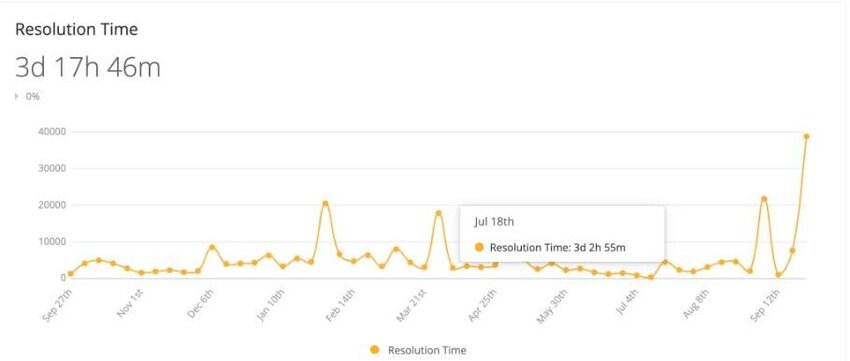
Image via timetoreply
This allows you to see who is doing more work, how fast and efficiently they’re responding to customers, and who needs more training. You can also trace successful first contact resolutions, reinforcing them as best practices across the team.
Moreover, sharing mailboxes and first contact resolution dashboards with team members can help agents understand how their work contributes to overall first call resolution goals. When contact center agents see the impact of their work and get consistent feedback, they become more motivated and productive.
Ensure to check in on your support team regularly via team huddles and stand-up meetings. They provide an avenue for feedback, which is critical for companies tat are serious about knowing how to improve first contact resolution rate.
Also Read:
When customer issues aren’t resolved during the first interaction, feedback helps teams understand what went wrong and where improvements are needed. Post call survey responses, customer satisfaction scores, and Net Promoter Score (NPS) data can reveal common service gaps or recurring pain points.
This feedback helps businesses improve communication, workflows, and agent training programs. Integrating it into your improvement cycle is one of the clearest ways to understand how to improve first contact resolution rate over time.
NPS data can help you gauge the customer’s overall satisfaction with the support they received. It also lets you know how likely they are to recommend your company based off that. This strategy on how to improve first contact resolution rate offers insight into the effectiveness of your team’s resolution efforts.
Additionally, patterns in survey responses can pinpoint training needs, broken processes, or product flaws. By tying Voice of the Customer (VoC) data back to agent performance and resolution workflows, you can build a more holistic framework that’s essential for improving first contact resolution.
Intelligent or skills-based ticket routing facilitates the immediate allotment of customer inquiries to the right agent. It reduces delays, minimizes transfers, and improves the chances of resolving issues during the first interaction.
This not only frustrates the customer but also delays customer service response, increases the chances of repeat contact, and lowers first contact resolution rate. This can also result in inconsistent service and wasted internal resources.
To rectify this problem, contact centers can implement an intelligent routing system. This ensures that incoming requests are sent to the most qualified agent or team right from the start.
This way, there’ll be less chances that agents will need to transfer or escalate calls. You can configure an automated ticket routing system using AI algorithms, as it continuously learns from past resolution data.
This leads to faster responses and a higher first call resolution rate. If you’re serious about how to improve first contact resolution rate, intelligent routing is necessary.
Setting realistic expectations reduces frustration and helps customers feel informed throughout the resolution process. Honest communication is an important part of how to improve first contact resolution, especially regarding requests requiring third-party approvals, verification, or follow-up.
In such cases, it’s not a lack of effort or skill but the nature of the issue that prevents immediate resolution. Hence, the need to set clear expectations at the beginning of the customer interaction. Inform the customer early in the discussion about the timeline for a response or the scope of what can be handled immediately.
Transparent communication like this is a key factor in managing expectations and is an important strategy when focusing on how to improve first contact resolution rate. Customers are more likely to wait patiently or cooperate if they understand the process. It also helps manage the customer’s journey more effectively.
Rewarding strong performance encourages agents to focus on faster resolutions, stronger communication, and better customer experiences during every interaction. Positive reinforcement motivates teams while creating healthy competition among agents.
Incentives can reinforce the right attitude to work. Encourage managers to recognize and reward agents who consistently contribute to higher first contact resolution rates. Incentive programs work best when they’re tied to clear, measurable targets and reviewed regularly so they stay relevant as your FCR goals evolve.
These incentives can come in the form of bonuses, recognition programs, or career progression. Timetoreply features an agent leaderboard for sharing comparative reports with team members. You can easily set first contact resolution goals, monitor average reply times to customers, and reward the best-performing agents.

Image via timetoreply
That said, ensure you balance the incentives to avoid shortcuts or rushed customer interactions. You can pair first contact resolution goals with quality assurance measures to ensure agents aim for thorough and accurate solutions. When done thoughtfully, performance-based rewards can help you master how to improve first contact resolution rate.
Also Read:
The best practices for how to improve first contact resolution center on consistency, channel readiness, and giving agents helpful context. Businesses that improve FCR across email, chat, phone, and social channels often deliver faster resolutions and create more satisfied customers.
Here are the most essential best practices for how to improve first contact resolution rate across all support channels:
Clear ticket categories help businesses improve first contact resolution by routing issues faster and more accurately. When customer requests are categorized properly at intake, teams can assign the right agents, prioritize tickets correctly, and reduce unnecessary delays.
If exploring how to improve first call resolution rate, develop a clear and comprehensive framework for classifying tickets across all communication channels. Use consistent labels for product issues, billing problems, technical support, account management, and so on.
This way, contact center agents or the ticket management software can route incoming requests appropriately. This makes it easier to resolve issues without delay.
Channel-specific templates help deliver clearer and more consistent communication. Since email, live chat, phone, and social media all work differently, support should tailor responses based on each channel’s strengths and limitations.
Emails require structure and completeness, chats emphasize speed and friendliness, and social media focuses on tone and brevity. This channel-specific approach ensures every customer gets a response that fits their context.
Channel-specific response templates makes resolution more likely to happen during the first contact. Also, it’s an effective way to strengthen your execution of how to improve first contact resolution rate.
Providing proactive support via contextual help tools, guided prompts, and onboarding tips can reduce confusion and prevent common customer issues from escalating. It’s a crucial strategy companies focused on how to improve first contact resolution rate can use.
You can integrate proactive support directly into your website or app interface, especially on pages or steps where users frequently get stuck.
As you anticipate issues and offer preemptive solutions, you reduce the need for contact in the first place. You also enable the customer to resolve the issue themselves without needing follow-up contacts.
Also Read:
Shared customer profiles provide visibility into previous conversations and customer history data for agents handling follow-ups across multiple communication channels. Without them, customers are forced to repeat themselves and contend with delayed responses, lengthening resolution time and undermining satisfaction.
It’s a major barrier to first contact resolution is when customers switch channels, say, from email to chat, and the new agent has no idea what happened previously.
One proven way for teams exploring how to improve first contact resolution is to keep shared customer profiles accessible across every support channel. These profiles should include recent interactions, case histories, preferences, and previous resolutions.
Providing unified visibility allows agents to pick up where the last interaction left off. This is essential to ensure that strategies for how to improve first contact resolution rate are implemented properly, especially in omnichannel environments.
Connecting self-service tools directly with live support channels can facilitate smooth customer movement from FAQs or help articles to live assistance. Customers who can’t easily escalate from a help article to a live agent submit incomplete requests, grow frustrated, or abandon the process entirely. This drives repeat contact and lowers FCR.
The best practice is to build clear escalation paths within self-service tools. For example, add “Still Need Help?” buttons that launch chat with context or use AI tools to summarize articles.
This integration is necessary for businesses learning how to improve first contact resolution rate without sacrificing customer autonomy.
Consistent standards help businesses improve FCR across every customer-facing department. Whether teams handle billing, technical support, or account management, everyone should follow the same first contact resolution goals and reporting practices.
Some businesses, especially established ones, may have various customer-facing teams, such as Tier 1 support, billing, technical service, or success management. In this case, you need to consistently measure, prioritize, and communicate first call resolution data across the board.
A common mistake is that only front-line teams focus on first call resolution, while other departments operate under different standards. This inconsistency can break the customer journey, leading to unpleasant experiences.
For companies serious about how to improve first contact resolution rate, aligning goals, processes, and accountability across teams is a non-negotiable.
Creating a dedicated review committee helps businesses improve first contact resolution through ongoing analysis and collaboration.
Form an internal committee responsible for reviewing FCR data regularly, identifying recurring problem categories, and driving improvements. Bring in members from customer support, operations, QA, product, and marketing to ensure blind spots don’t go unaddressed.
This level of collaboration can help you discover systemic patterns, suggest content updates, drive process changes, and refine workflows. It also helps ensure you’re implementing how to improve first contact resolution rate into your entire workforce, not just your help desk scripts.
Also Read:
1. Why is first contact resolution important in customer service?
First contact resolution (FCR) is important because it directly impacts customer satisfaction and operational efficiency. When customers get their issues resolved during the first interaction, they feel heard, respected, and valued, leading to greater trust and loyalty.
2. What is the benchmark for first contact resolution?
The industry benchmark for first contact resolution varies, but a strong FCR rate typically falls between 70% and 75%. This means most customer issues are resolved during the first interaction, which is a key metric in evaluating support effectiveness and performance.
3. What is the first point of contact for customers?
The first point of contact is the initial interaction a customer has with your business, whether through phone, email, chat, social media, or in person. It’s crucial because it sets the tone for the customer experience and influences their satisfaction level.
4. What strategies can help you learn how to improve first contact resolution rate?
Here are some strategies when learning how to improve first contact resolution rate:
5. What are the six measures of customer experience?
The six key measures of customer experience include:
6. How can customer history data improve first contact resolution?
Customer history data helps agents understand previous conversations, unresolved issues, and past actions before responding. This reduces repeated questions, improves personalization, and increases the chances of resolving customer issues during the first interaction.
7. Why do repeat contacts lower customer satisfaction?
Repeat contacts frustrate customers because they increase effort, delay resolutions, and often require customers to repeat information. Reducing repeat interactions helps businesses create more satisfied customers and improve long-term customer loyalty.
8. How does skills-based routing improve FCR performance?
Skills-based routing improves first call resolution performance by directing customers to agents with the right expertise immediately. This reduces misrouted tickets, cuts handling time, and means more customer issues resolved on the first attempt.
Also Read:
You can improve first contact resolution by combining strong agent training, smarter workflows, better communication, and faster access to customer information.
Teams that understand how to improve first contact resolution often reduce repeat contacts, lower support costs, and create more satisfied customers.
Email remains one of the most important support channels, which makes performance visibility essential. Tools like timetoreply help teams monitor response times, resolution performance, and customer interactions more effectively.
To see how timetoreply works, book a demo and see what it looks in practice.
Get live inbox alerts and reply quickly to customer emails with timetoreply

Head of Customer Success @ timetoreply
Barry Blassoples is the Head of Customer Success at timetoreply, where he helps customer-facing teams boost revenue and protect brand reputation by providing actionable insights to improve their business email response times. He has over 15 years of leadership experience across customer success, sales, and marketing roles in high-growth tech companies.



Trusted by high-performing inbound sales teams and customer-facing teams globally.
Close more deals and delight more customers with the faster, smarter, deeper email analytics and performance optimization software that works straight from your team’s inbox.